YEDNÁ has launched a social network exclusively for Ukrainians: access via “Diyu”

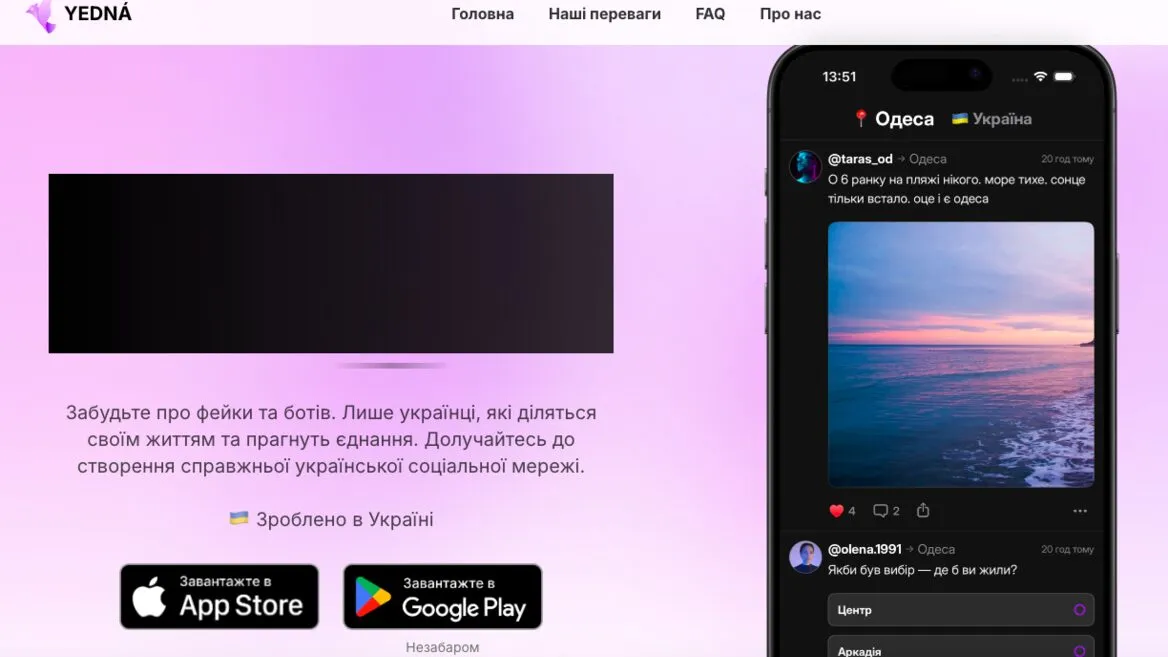
On the YEDNÁ website, the service is described as a social network “with no bots, no fake accounts, only Ukrainians”. It also states that during registration, users are redirected to “Diya” and verify their identity using “Diya.Signature”. The developers claim that following successful verification, the platform receives only the user’s full name and tax identification number.
It is precisely this login model that has sparked a wave of discussion. Speculation has emerged on Threads that YEDNÁ might be a “state-run messenger”, but in a comment quoted by dev.ua, “Diya” explained: it merely provides the technical means for verification, whilst the service itself is accessed by the user within the app. The public “Diya ID” agreement also shows that partner information systems, not just government services, can connect to the Diya Portal.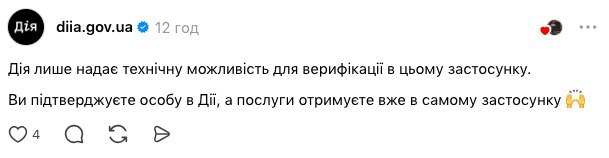
Content on YEDNÁ is tied to geolocation. This is how the creators explain the logic behind the feed: connections, events and recommendations should come from people nearby, rather than being generated by abstract algorithms. Odessa was the first city to launch the service, and there are plans to scale it up across the whole country. The Android version has only been announced so far, whereas the iPhone app is already available on the App Store.
Little is known about the team from publicly available information. dev.ua reports that the project’s founder is Igor — a developer from Odessa with experience in mobile development. According to him, two people are currently working on YEDNÁ — an iOS and a backend developer — and the project itself is currently self-funded without external investment. The same founder explained that Odessa was chosen as the first city for a reason: the team wants to populate a single local feed first, rather than launching the service nationwide straight away and risking an ‘empty’ network.
YEDNÁ’s terms of use confirm that the service is registered as a private initiative. The document explicitly mentions sole trader 3356317417, and the platform itself is described as a “social network for Ukrainians”. It also lists the basic functionality: creating posts, viewing the feed for one’s city, region or the whole of Ukraine, likes, comments, interaction between users and notifications. Separately, the service prohibits the creation of bots, automated and duplicate accounts, as well as the use of the platform for manipulation and disinformation.
The section on personal data raises the most questions. YEDNÁ’s privacy policy states that the platform may process a user’s name, profile photo, and data obtained following verification via “Dii”, including first name, surname and Taxpayer Identification Number (TIN), which is stored only in encrypted form, as well as other information that the user voluntarily adds to their profile. The same document states that the service does not store copies of documents and does not have access to the full set of personal data from “Dii”.
At the same time, on the YEDNÁ page in the App Store, the developer lists a broader range of data that may be processed. This includes precise geolocation, name, other user contact details, email, device identifiers and data on interaction with the product. Apple notes separately that this information is provided by the developer itself and has not been verified by the company.
Another sign of an early launch is the product’s technical state. The App Store shows several updates within a very short period, and there are already complaints in the reviews about authorisation issues. This does not invalidate the launch itself, but it shows that YEDNÁ currently exists as a test product rather than as a stable, fully-fledged platform.
There has been a particular buzz around YEDNÁ on social media and Reddit, where users have greeted the launch not only with curiosity but also with noticeable scepticism. In the comments, the project is compared to both a “Max-like service” and a local version of Threads; users question the necessity of a new social network in a country where the audience has long been split between Telegram, Instagram and Threads, and also point out the low initial online presence. There is separate discussion regarding verification via “Diyu”: some users are directly asking why the service requires a Taxpayer Identification Number (TIN) and exactly what data might be transmitted during authorisation. There are also harsher assessments – ranging from suggestions that it is a raw product to suspicions that the service could be potentially dangerous in terms of fraud or personal data protection. It is precisely this wave of scepticism that is currently accompanying the launch of YEDNÁ no less than the interest in the very idea of a Ukrainian social network.
At this stage, based on open sources, the following can be stated: YEDNÁ is a private Odessa-based project that has indeed launched a social network with verification via ‘Diyu’, is available on the App Store, started in Odessa, and is attempting to build a local feed for verified users. However, claims regarding the complete absence of bots, fake accounts or Russians remain part of the service’s stated concept rather than a result that can be independently verified using only publicly available data.
As a reminder, a new security warning is set to appear on Telegram: users will be able to see if their contact is communicating via an “unofficial” client. The warning will be displayed directly on that user’s profile.