Zaluzhny described demobilisation during the war as political populism

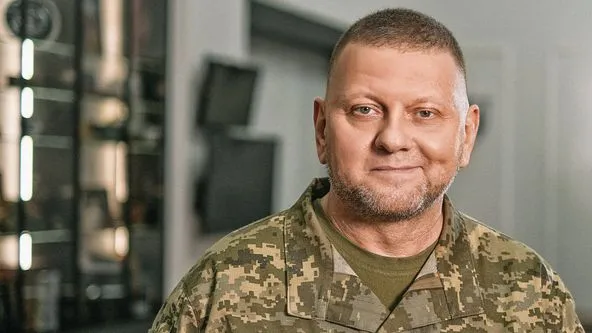
This was stated in a speech by Valerii Zaluzhnyi, Ukraine’s Ambassador Extraordinary and Plenipotentiary to the United Kingdom and Northern Ireland and Commander-in-Chief of the Armed Forces of Ukraine from 2021 to 2024, at the Defence24 Days conference in Warsaw.
Valeriy Zaluzhnyy stated that Ukraine needs to review its approach to mobilisation, as modern warfare no longer follows the logic of the First or Second World Wars.
According to him, almost three years ago he warned of significant changes on the battlefield due to the emergence of new tools, primarily unmanned systems. It is these that have made the battlefield transparent and effectively brought the war to a ‘dead end’, where old methods of warfare yield only limited results.
Zaluzhny noted that Russia had attempted to break out of this situation through tactical manoeuvres and new technical solutions, but had in fact continued to use people as expendable resources.
He acknowledged that Ukraine, having lost the initiative on the battlefield, was forced to react to the enemy’s systematic operations across many sections of the front and, in some cases, paid for this with heavy losses.
Mobilisation has become a flashpoint
Separately, Zaluzhny emphasised that Russia is conducting an information campaign against Ukrainian mobilisation. According to him, this campaign has been successful and has revealed yet another challenge to the resilience of Ukrainian society in a protracted war.
He noted that the issue of mobilisation and the methods used to carry it out is increasingly becoming a point of conflict between the population and the state authorities.
According to Zaluzhny, this campaign began in late summer 2023, when Ukraine attempted to mobilise the reserve forces, which were intended to replenish losses and, possibly, create a strategic reserve for future operations.
Why the old system no longer works
Zaluzhny stated that the main issue now is not just mobilisation or demobilisation, but the broader process of restoring and maintaining the state’s combat capability.
According to him, Ukraine is in its 13th year of war and its fifth year of full-scale invasion, and an end to the war is becoming increasingly less certain.
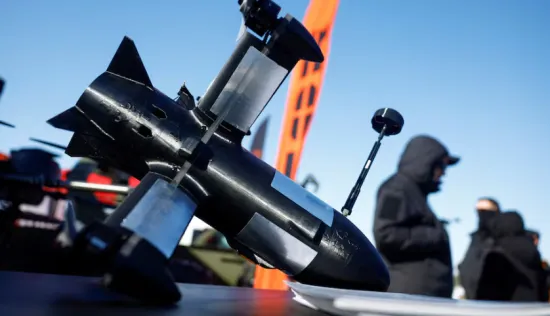
He emphasised that modern combat capabilities are already based on unmanned and robotic systems, which are gradually transitioning from remote control to semi-autonomous and autonomous combat systems.
That is precisely why, according to Zaluzhny, the mobilisation system cannot remain at the level of a First World War doctrine.
He explained that, due to the development of new weapons, the front line almost entirely excludes the mass physical presence of personnel. Instead, analytical support, technical maintenance and combat systems support teams operate in the second echelon, whilst launch, coordination and command centres are located in the operational depth.
Zaluzhny also noted that due to strikes on the economy, infrastructure and civilian facilities, the line between the front and the rear is effectively blurring, and the entire territory of the state is becoming a combat zone.
What is “smart mobilisation”?
According to Zaluzhny, Ukraine needs “smart mobilisation” that takes into account the technological nature of warfare, the protracted nature of the conflict and the demographic crisis.
He outlined several possible approaches.
The first type is mobilisation in which the majority of the population does not experience the war directly, and some of the functions of war are gradually transferred to private military companies or individuals recruited through financial incentives.
The second type is a nationwide mobilisation with clearly defined scope and timeframes for different categories of citizens. It must entail high standards for personnel, transparency of the process, and clear terms for training, service and rotations.
Zaluzhny compared this approach to a model in which the state lives in a state of constant readiness for defence, similar to Israel. At the same time, he noted that the most sensitive issue in this case would be the age limit, where preference might be given to younger and higher-quality recruits.
He described the third type as temporary. This involves the partial transfer of certain functions to private companies and the parallel improvement of the existing system through open dialogue with society, particularly with young people, regarding the new system of military service, training periods, service terms and future prospects.
Demobilisation cannot be an end in itself
Zaluzhny emphasised that without reforming the Armed Forces, the system for training the mobilisation reserve, combat training, the military-industrial complex, and the transition to the production of weaponry that reduces human casualties, a “sensible” approach is impossible.
According to him, demobilisation can only become possible as a result of the measures taken, and not as an end in itself.
“At present, Ukraine is fighting a war for survival against an enemy that outnumbers us in terms of population and resources. Therefore, in the current Ukrainian context, all calls to demobilise the military are nothing more than political populism that makes no sense whatsoever,” Zaluzhny stated.
He emphasised that mobilisation and the rules of service form the basis for any scenario regarding the continuation of the war.
In his view, this issue cannot be resolved through declarations, but rather through a complex process of identifying the necessary steps and developing a detailed step-by-step plan.
Zaluzhny also noted that such a strategy, involving the public, could serve as a unifying factor for Ukrainians around shared goals and restore confidence and hope to society.
As reported by ThePublic, Zaluzhny outlined his vision of Ukraine’s victory and possible scenarios for ending the war
Follow us on Telegram