

Women are forbidden entry: how London's gentlemen's clubs are organized

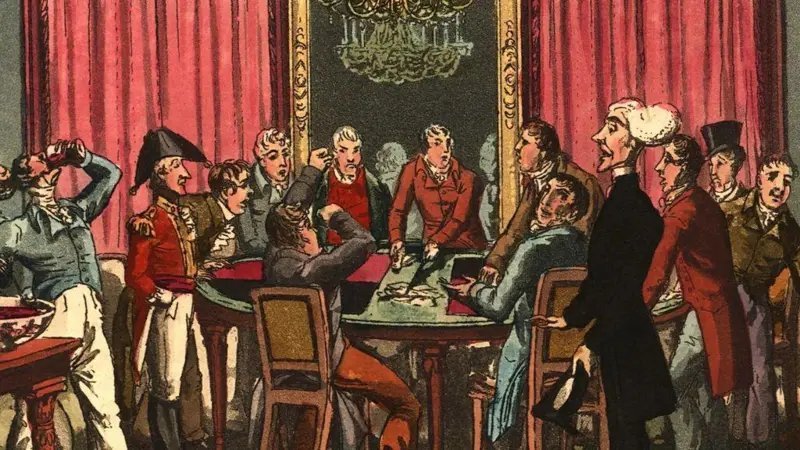
Gentlemen's clubs are a unique phenomenon of English social life and a reflection of the history of English society, reports BBC.
In Britain, they have a special resonance, believes historian Alexander Tevoz.
"Britons have always liked the club tradition. They love associative culture: from young people joining various fraternities to older people enthusiastically attending dramatic circles," he told BBC.
How it all began
It all started with coffee. In the second half of the 17th century, when this beverage was first drunk in England, coffeehouses became a desirable alternative to taverns and were associated with good conversation.
People gathered there to discuss news, argue, gossip; the very "civic spirit" inherent to the English was formed there, notes Tevoz.
In 1660, the famous diarist of Londoners' everyday life Samuel Pepys described his evening in a coffeehouse in Cornhill: "It is pleasant to be here, with various companies and conversations."
The first club called White's opened in London in 1693. Initially, it was an ordinary coffeehouse with hot chocolate, but soon it transformed into a club focused on gambling. This was the main function of men's clubs in the early years of their existence: they allowed gambling and betting without fear, which was forbidden outside clubs at the time.
White's still operates today, and among its members are King Charles III, Prince William, and former British Prime Minister David Cameron (who, incidentally, left the club in protest over the exclusion of women but later returned). King Charles held his bachelor party at White's before his wedding to Princess Diana in 1981.
During the Georgian era, club culture flourished, influencing London's architectural style, reports BBC historian Tevoz.
Clubs became a powerful means of identification: by which club a person belonged to, one could assess their education, origin, income level, and political views. Since wealthy members demanded, besides gambling, food and other entertainment, management was taken over by professionals from the hotel industry.
Brooks's (founded in 1764) is another Georgian club that has survived to this day, along with Boodle's (1762), which was originally called Almack's.
On St. James's and Pall Mall streets, one can find numerous magnificent palaces in Palladian style, which over time have been converted for club needs.
The boom of club culture
The true flourishing of British clubs occurred in the 19th century: there were over 400 various men's clubs in London alone. It was in the 19th century that the gentlemen's club was finally formed in the way we see it in classic literature.
It is a standardized institution with a certain set of premises - a restaurant, a smoking and card-playing room, a lounge, and a library. Clubs became a kind of bastions, where outsiders were forbidden entry. They had statutes with dress codes, conduct rules, membership conditions, and guest policies.
What is especially important, they began to play a central role in British politics.
White's was considered a hub for Tories (the political party in England representing the interests of the aristocracy and higher clergy, which later became the Conservative Party - Ed.). At the same time, Brooks's attracted Whig members (the predecessor of the Liberal Party - Ed.). These were not only places for rest and entertainment but also political centers where the fate of the country was decided and important agreements were made.
Membership in such clubs became essential for the so-called "establishment" - an influential circle of people including politicians, businessmen, and public figures who determined the country's course.
Clubs were exclusively male establishments. Even today, in times of equality, there are places where women are not allowed.
For many aristocrats and members of the highest London class, clubs practically became a second home - so much so that their personal correspondence was sent not to their home address but directly to the club.
Clubs were also famous for their tradition of betting. Jules Verne's hero Phileas Fogg made a bet at the London "Reform Club," promising to circumnavigate the globe in 80 days.
"The best club in London"
When in October 1834 a great fire destroyed the old Parliament buildings, many government functions moved to clubs.
The new Westminster Palace was built for parliament members modeled after a private club: with tea rooms, smoking rooms, and libraries.
It is no coincidence that in 1864 Charles Dickens said that "The House of Commons is the best club in London."
One of the first clubs for men and women, the Albemarle Club, was founded in 1874. From the very beginning, it was associated with the women's rights movement. The club gained notorious fame when its member, the famous writer Oscar Wilde, encountered the Marquis of Queensberry there, the father of his lover Lord Alfred Douglas. This marked the beginning of the infamous libel case that led to Wilde's conviction and imprisonment.
Royal persons have always favored London clubs, but most of all - Albert Edward, Prince of Wales, later King Edward VII. The prince, a passionate bon vivant, was fed up with the gossip leaking from White's about his amorous affairs, explains Tevoz.
In 1869, he decided to establish his own club, Marlborough, named after his London residence. The first 400 members were personally selected by the prince, who reserved the right to veto anyone he did not trust.
At the beginning of the 20th century, London clubs fueled the imagination of science fiction writers. According to Tevoz, the Drones club, appearing in Wodehouse's works, resembles Buck's, founded in 1919 in Mayfair.
The establishment immediately became popular thanks to its American-style cocktail bar. The signature drink then and now is Buck's Fizz - a spicy mix of champagne and orange juice.
Ian Fleming was a member of Boodle's, which inspired the creation of the Blade's club in his James Bond novels.
In Evelyn Waugh's novel "Return to Brideshead," the protagonist Charles Ryder is gathering with friends at Bratt's, most likely inspired by Pratt's, a small club in St. James's owned by the Duke of Devonshire's family since 1926.
In 2023, this most conservative establishment for the first time opened its doors to women, surprising many. Women's clubs flourished at the end of the 19th and beginning of the 20th centuries. According to Tevoz, there were 86 of them.
Some clubs were visited by wealthy women visiting the city for shopping and theater. Others offered affordable accommodation for single women starting their careers in the capital.
In the last 100 years, nine out of ten prestigious London clubs have closed.
The prolonged decline, which began in the early 1920s, worsened after World War II, reaching its peak in the 1970s. Changes in social customs, the decreasing number of members who aged relentlessly, and higher fees played a role in this.
Those clubs that still exist often had a pronounced individuality and served specific groups, such as military personnel (In and Out Club), actors (Garrick), or horse racing enthusiasts (Turf Club).
Of many old private women's clubs in London, only one remains - the University Women's Club in Mayfair.
Modern renaissance
The first attempt to launch a series of "new" clubs was made by Mark Birley in 1963. He opened the private night club Annabel's on Berkeley Square.
He used his connections among the upper classes to promote Annabel's. It is said to be the only nightclub where Queen Elizabeth II ever set foot.
But the true renaissance of London clubs began in 1985 with the opening of Groucho - an antipode to the old gentlemen's club.
It quickly became a popular spot among writers, actors, musicians, and other cultural figures.
The club is known for its relaxed yet sophisticated atmosphere, where interesting people meet and communicate freely. Membership is based not on social status but on achievements.
Stephen Fry established the club's first rules, based on traditional British prudence.
In 1985, writer Oberon Waugh and Victoria Glendinning founded the "Academy" Club.
"My grandfather's intolerance of any display of arrogance inspired him to create the 'Academy'," said WBBC grandson Pierre Waugh. "He saw that London clubs were dominated by cliques of bores and fools, self-absorbed, self-proclaimed guardians of high culture."
The Waugh club still attracts literary figures. Tevoz describes it as: "Everything is quite modest here, but there is a certain charm in it."
A new generation of fashionable private clubs is gaining popularity, promising something more interesting than their "stifling old counterparts".
And although you do not need to be a graduate of an elite school or university to attend, high fees and strict checks still apply.
Soho House has 18 branches worldwide, including New York, Istanbul, Berlin, and Mumbai.
In London, these establishments include venues on Greek Street and Dean Street, where Harry and Meghan, the Duke and Duchess of Sussex, reportedly went on their first date.
Past experience suggests: the London club will continue to be part of the city's life, reflecting the unchanging interest of its residents in socializing, food, and drinks in places they can somewhat call their own. Clubs will undoubtedly remain subjects of fascination and gossip.

Anna Neplyakh spoke about her romance with businessman Gudkov and the lavish gifts they gave each other
Anna Neplyakh, winner of the ‘Miss Ukraine Universe 2021’ beauty pageant, is no longer keeping her private life under wraps. The model spoke about her relationship with Kyiv-based businessman Oleksandr Gudkov and revealed the surprises they treat each other to.
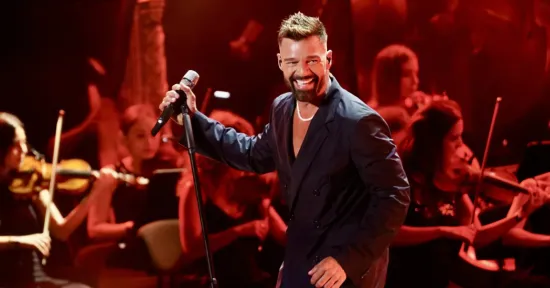
Ricky Martin, who had wanted to visit Ukraine, surprised everyone with a cynical act at a concert in Kazakhstan
Puerto Rican singer Ricky Martin, who had previously expressed his support for Ukraine and had hoped to come here for a concert, unexpectedly addressed the audience in Russian during a performance in Kazakhstan. The Russians in their propaganda media are delighted with the artist’s gesture.

Anna Trincher has named the popular artist she has been dreaming of marrying ever since her school days
Singer Anna Trincher unexpectedly revealed that ever since her school days she had dreamt of marrying Vladimir Dantes, and it seems this crush has not faded to this day.

An investigation is underway in Poland into the beating of two children for speaking Ukrainian
In the Polish city of Legnica, an unidentified woman attacked two 13-year-old girls from Ukraine on the evening of 18 July: the police are already investigating the incident.

The national cashback for May and June will be paid out in August
Participants in the ‘National Cashback’ scheme will receive two payments in August — for purchases made in May and June. The money will be credited to their cards in separate instalments.

