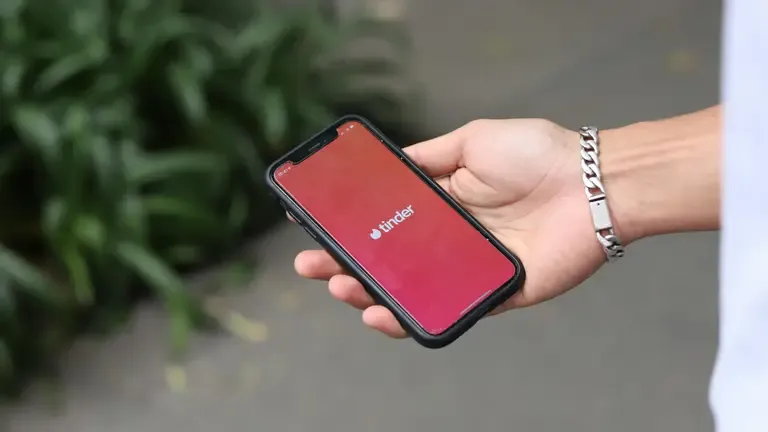
Dating on Tinder is set to become a little safer: the service is testing biometric authentication

This is reported by Futurism.
Tinder is launching trials of an unusual user verification method – via iris scanning.
The idea is to confirm that a profile belongs to a real person, rather than a bot or a scammer.
The dating service has announced a partnership with Project World, linked to Sam Altman.
As part of this initiative, users are invited to verify their identity by having their iris scanned using a special device called Orb.
The technology is being developed by the start-up Tools for Humanity. The company positions it as a way to prove that an account belongs to a human.
The problem of fake profiles has long been a major issue for dating services, so the new verification process should help combat bots and scammers.
During the presentation, Sam Altman stated that there will soon be more content on the internet created by artificial intelligence than by humans.
According to him, the key challenge is to learn to clearly distinguish between the two.
To encourage users to undergo biometric verification, Tinder is offering bonuses.
After scanning and receiving World ID, the user receives five boosts. This feature increases the profile’s visibility for 30 minutes.
Usually, such options are paid and can cost up to $10 per activation.
The World project previously operated under the name Worldcoin.
Its concept was similar: people scanned their irises, received an identifier and WLD cryptocurrency.
However, this model attracted a lot of criticism. Users were effectively encouraged to hand over biometric data in exchange for tokens.
The value of WLD fell significantly: from $7.50 at launch to around 25 cents.
Furthermore, an investigation by MIT Technology Review highlighted questionable methods used to encourage people to undergo scanning, particularly in poorer countries.
Governments and regulators have already responded to these risks.
In the European Union, the company was ordered to delete iris scan data collected within the region.
In Kenya, Worldcoin’s operations were suspended as early as 2023.
The regulator in the UK has also announced an investigation.
Despite the controversy, the partnership with Tinder could provide World with an opportunity to scale up.
The service currently claims to have 18 million users with World ID.
Tinder’s audience is significantly larger – around 50 million active users every week.
It is this user base that the new biometric project is aiming to reach.
As reported by ThePublic, Elon Musk has filed a new court petition demanding the dismissal of OpenAI CEO Sam Altman and President Greg Brockman.
Follow us on Telegram