A potential war by China over Taiwan would cost the EU around $2 trillion a year

Concerns are growing within the European Union over the potential consequences of an escalation of the situation surrounding Taiwan. The incident on 17 January, when a Chinese military drone entered the airspace over the Pratas Islands in the South China Sea, which are controlled by Taiwan, for the first time, has sparked fresh debate, reports Bloomberg.
Beijing described the flight as a routine training mission, whilst Taipei characterised it as a provocative and irresponsible move. European officials saw this as part of China’s long-term strategy to increase pressure on Taiwan.
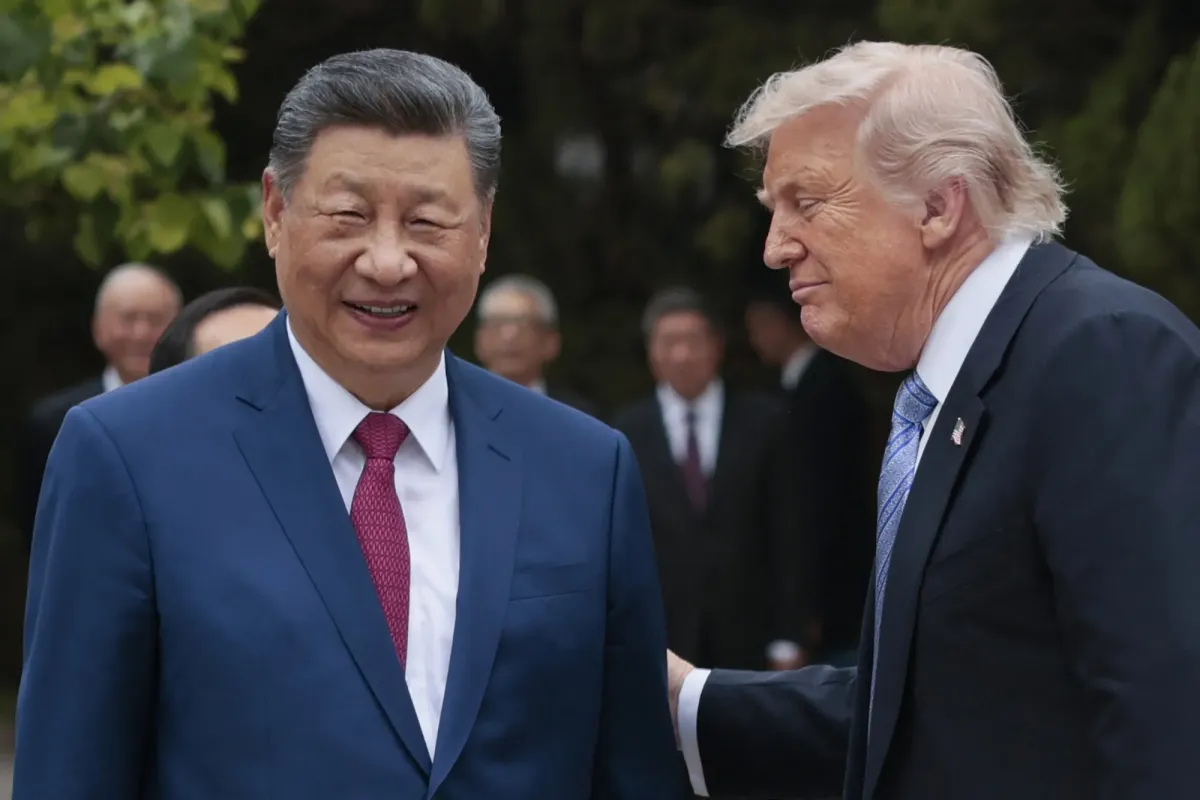
In Brussels, there are fears that a possible thaw in relations between US President Donald Trump and Chinese President Xi Jinping could weaken the containment of China and create additional risks for the region.
Despite the lack of signs of preparations for an immediate invasion, European governments are considering scenarios of a possible escalation. According to estimates by Bloomberg Economics, in the event of a war between the US and China over Taiwan, the European Union’s economy could lose around $2 trillion in the first year. Germany could be hit hardest, with its economy forecast to contract by around 14%. Italy is expected to see a decline of 8.8%, France 6.5% and Spain 7%.
Analysts note that global GDP could shrink by more than 8% in such a scenario, and the world would face a shortage of a range of high-tech goods and medical equipment, the production of which relies heavily on Taiwan.
European officials also acknowledge that the EU is not yet sufficiently prepared to respond rapidly to a crisis surrounding the island. Special exercises have considered scenarios involving the violation of Taiwan’s airspace, the blocking of supplies of critical minerals, inspections of vessels flying EU flags, and even a complete blockade of the island.
Of particular concern is European industry’s dependence on Taiwanese semiconductors and Chinese rare-earth metals. During one of the simulations, representatives from Taiwan and the US emphasised that in the event of a major crisis, the US would prioritise meeting its own demand for microchips, which could leave Europe without access to a significant portion of supplies.
At the same time, the European Union is seeking to expand cooperation with Taiwan. The EU is currently the island’s largest source of foreign direct investment and its fifth-largest trading partner. Taiwan is also positioning itself as an alternative to China as a centre for the production of drones and other high-tech products.
Taiwan’s Ministry of Foreign Affairs stated that the island will continue to strengthen its own defence capabilities and cooperate with the US and other partners to maintain stability in the Taiwan Strait.
Taiwan’s Deputy Foreign Minister François Wu noted that the consequences of a potential crisis surrounding the island would be felt across the globe. According to him, modern economic life, to which the world has become accustomed, could face serious upheaval in such a scenario.