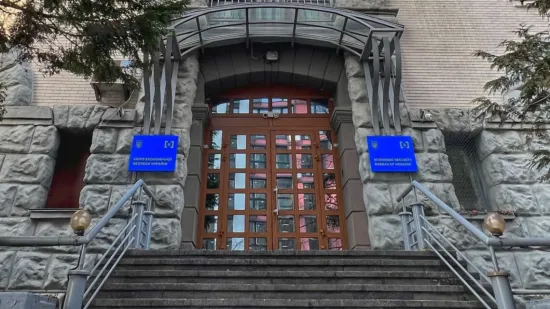
The film fund and the e-ticket system are still not ready: the government has failed to implement some of the recommendations
This has been reported by the Audit Office following an audit of the implementation of recommendations arising from the audit of the film industry.
What is the State Film Fund?
Despite its name, this is not a fund intended to distribute money to film producers. The State Film Fund is responsible for receiving, recording and storing original materials and copies of Ukrainian films.
Put simply, the state must know exactly where films produced with its money are stored, what condition they are in, and who is responsible for their preservation.
The regulations governing the State Film Fund, the procedure for transferring films to it and the rules for storing materials were due to be approved by 1 July 2026. However, the fund has not yet been established. The State Film Agency has so far only set up a working group to deal with this issue.
Why is an electronic ticket needed?
The ‘single electronic ticket’ is not a universal ticket that can be used to visit any cinema. It refers to a state system for recording all tickets sold by cinemas.
It is intended to show how many people watched a particular film and how much box-office revenue it generated. This is particularly important for films produced with public funding: the state needs to understand whether a film attracted an audience and what revenue its release generated.
The system was due to be fully operational by 1 July 2026. The State Film Agency reports only that work on improving it is continuing. Work on the online accounts for film competition entrants has also not been completed.
Furthermore, the agency is still drawing up its medium-term plan, even though the deadline for this passed on 31 March.
What issues did the auditors find?
The Accounting Chamber audited the use of 856.4 million UAH earmarked for supporting the film industry in 2022–2024.
During this period, the state provided the industry with 743 million hryvnias. Thanks to this funding, 61 films and TV series were completed, and production began on a further 85 projects.
At the same time, the auditors found that 80.9 million hryvnias had been spent without complying with the established rules and regulations. This does not mean that the entire sum was stolen: it refers to expenditure where the established requirements were not met.
The state risked losing a further 55.8 million hryvnias due to the State Film Agency’s delayed action against debtors. In some cases, the agency failed for years to make claims against film producers who had received budget funds but had not fulfilled their contracts.
Furthermore, 19 contracts totalling 9 million hryvnias were concluded with eight companies and organisations that were not listed in the state register of film producers, distributors and exhibitors.
At the time of the audit, two films, the production of which had begun back in 2017 and 2020, had not been completed. The state had provided 13.2 million hryvnias for these projects, and the completion deadlines had been postponed several times.
What has already been achieved
The Dovzhenko Centre has approved a development plan for 2026–2030 and carried out an expert assessment of its archive and museum collections. Experts confirmed that the collections are of cultural and historical value and are properly recorded and preserved.
The State Film Agency has restructured its organisation and created a separate post for internal control. Overall, the Cabinet of Ministers, the Ministry of Culture, the State Film Agency and the Dovzhenko Centre have implemented seven out of the 18 recommendations made by the Accounting Chamber.
The deadlines for implementing some of the other recommendations have already passed. The Accounting Chamber continues to monitor whether the promised changes will be completed.
Follow us on Telegram.