A seed plant equipped with artificial intelligence has begun operations in Volyn

This has been reported by Perry of Oakley Ltd.
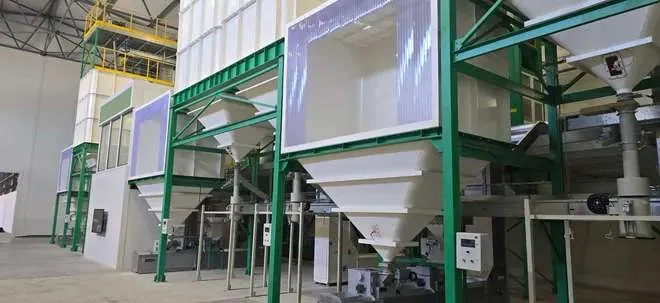
According to the company, the plant was established to fully meet the holding’s internal requirements for high-quality seed and to minimise dependence on imports. Thanks to a strategic partnership with equipment manufacturers Perry (UK) and Westrup (Denmark), the plant has become a leader in Ukraine in terms of automation and the implementation of the latest agricultural technologies.
The production line is designed to handle a wide range of crops (wheat, soya, barley, peas) and ensures benchmark uniformity of the finished product – up to 99.99 per cent. The key factors behind this quality lie in a complex, multi-stage processing route:
- AI-assisted calibration: a gravity separator selects the most viable grains using a programmable controller with artificial intelligence features.
- Optical sorting: the final check is carried out by a Japanese Satake photo-separator equipped with multispectral cameras and AI support.
- Pharmaceutical-grade seed treatment: automatic chemical dosing ensures uniform coverage of each seed without wastage.
- Heat-free drying: the seeds are dried using air at room temperature, which completely prevents thermal stress to the embryo.
According to Roman Belikov, Perry’s regional manager in Ukraine, a mistake in choosing equipment for a seed plant compromises field germination rates and, consequently, the future harvest. For his part, David Perry, the head of the British company, emphasises the fundamental engineering principle:
“In seed production, the task of transport is not simply to move the material, but to preserve its biological potential.”
Follow us on Telegram