Almost 70 per cent of Ukraine’s flood defence infrastructure is dilapidated: audit findings

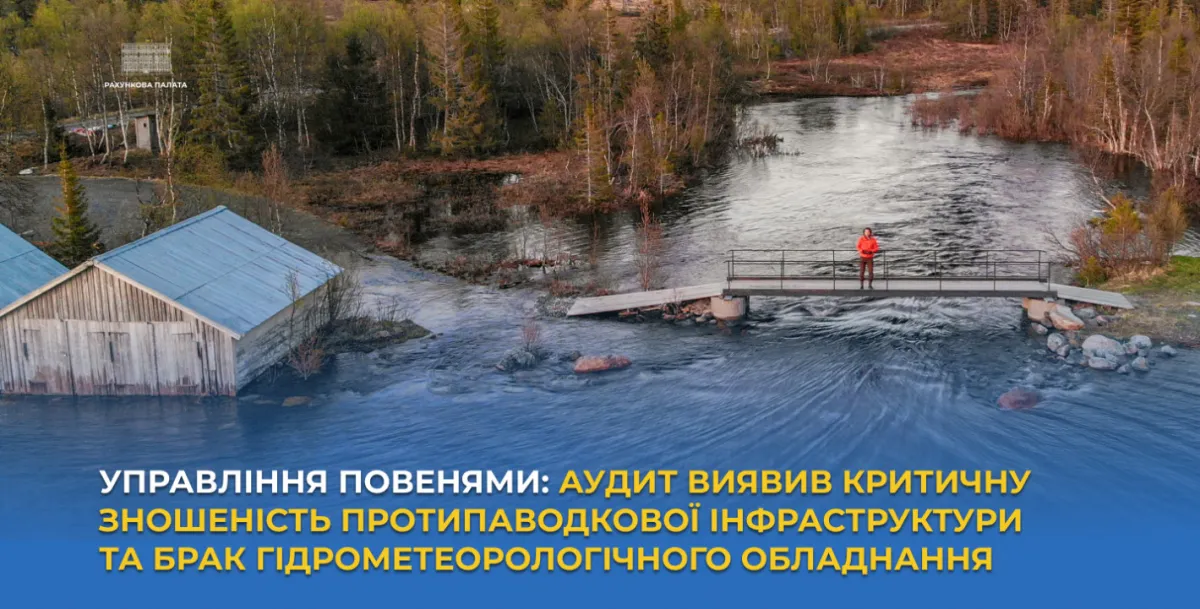
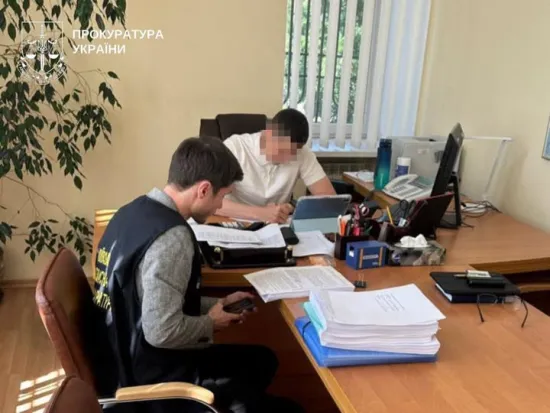
This is stated in the Audit Office’s report on the results of the audit of the effectiveness of flood management in Ukraine for the period 2022–2025.
The audit revealed that, although Ukraine has a regulatory framework for flood risk management, the system is still not capable of operating proactively to the full extent.
Among the main problems, the auditors cited insufficient coordination between state bodies, the critical condition of flood defence infrastructure, a lack of modern forecasting equipment, the incomplete readiness of warning systems and a shortage of material reserves.
Furthermore, Ukraine still lacks a single central executive body responsible for formulating state policy in the field of flood risk management.
Ukraine has lost part of its monitoring system
According to the audit, due to the temporary occupation of territories, the number of meteorological stations has fallen by 28 per cent, and that of hydrological stations by 22 per cent.
Of the 14 automated observation systems, only nine are operational, meaning that a significant proportion of measurements are still carried out manually.
An additional problem was the destruction in 2022 of the country’s only modern Doppler meteorological radar. According to the auditors’ assessment, at least five such radars are required to provide full coverage of Ukraine’s territory.
Forecasting is also complicated by the cessation of the exchange of hydrometeorological data with Russia and Belarus. This makes it more difficult to forecast water inflows into the Dnipro and Pripyat rivers and to make decisions regarding the operation of reservoirs.
There is a shortage of equipment and warning systems
Between 2022 and 2025, only 22 per cent of the equipment required for the hydrometeorological service was procured.
Consequently, the quality of forecasting hazardous events is deteriorating, and warnings about potential flooding do not always arrive in good time and do not specify the exact areas at risk.
Another problem is the public warning system.
Regional automated centralised public warning systems are operational in only 8 out of 24 regions, and only 12% of local authorities have completed the modernisation of their local systems.
The use of SMS messages, messaging apps and other channels partially compensates for these shortcomings; however, according to the auditors’ assessment, it does not guarantee that the public is informed in a timely manner.
Furthermore, the level of awareness among Ukrainians regarding the rules of conduct during emergencies stood at just 11% in 2025, although the plan is to increase this to 90%by 2030.
Flood defences are in a critical state
The audit revealed that around 70% of flood defence infrastructure is in a critical state of disrepair.
The average level of wear and tear across the entire infrastructure stands at 86 per cent.
Between 2023 and 2025, the responsible authorities implemented only a third of the measures set out in the flood risk management plans.
Only 9 per cent of the planned infrastructure restoration work was carried out, whilst funding amounted to just 8.5 per cent of the actual requirement.
At the same time, nearly 156.9 million UAH, or 31.8% of the allocated funds from the special fund, remained unspent.
Flood protection has been provided for only 23 per cent of the settlements that require it.
The State Emergency Service’s operational reserve has been built up to only 12 per cent of the approved levels, regional reserves to 54 per cent, and local reserves to 48 per cent.
For residents of regions that regularly suffer from flooding, the audit findings mean that the state does not yet have sufficient technical and material resources to forecast major floods in a timely manner and minimise their consequences.
That is why the Audit Office has recommended designating a responsible central authority, modernising the hydrometeorological network, speeding up the upgrading of warning systems, completing the inventory of flood-protection infrastructure, and increasing funding for its restoration.
The report and the Audit Office’s recommendations will be forwarded to the Verkhovna Rada of Ukraine, the Cabinet of Ministers of Ukraine and the relevant parliamentary committee.
Follow us on Telegram