US oil companies stand to make billions in profits as a result of the war in the Persian Gulf

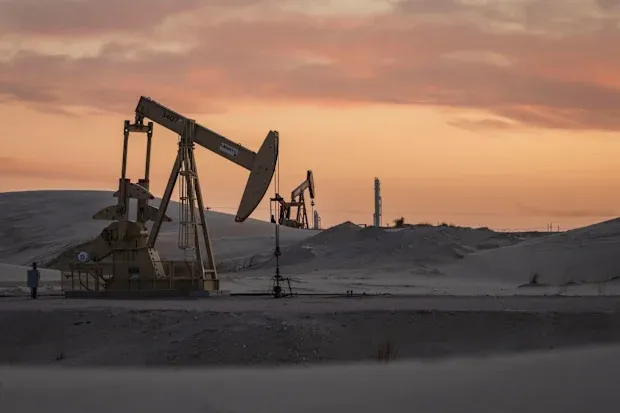
US oil companies could see over $60 billion in additional revenue this year if oil prices remain at the levels seen since the start of the conflict involving Iran. This is reported by The Public, citing the Financial Times.
According to calculations by investment bank Jefferies, US producers could see an additional $5 billion in cash flow as early as this month. This forecast is based on an approximate 47 per cent rise in oil prices since the conflict began on 28 February.
Energy research firm Rystad notes that if the average price of oil in the US remains at $100 per barrel throughout the year, additional revenue from production could reach $63.4 billion.
Against the backdrop of a sharp rise in Brent prices, which exceeded the $100 per barrel mark, US President Donald Trump wrote on social media that the United States is the world’s largest oil producer and that rising prices mean increased revenues.
The US benchmark West Texas Intermediate (WTI) closed trading on Friday at $98.71 per barrel.
The additional cash flow could benefit US shale oil producers, as their operations have limited ties to the Middle East. At the same time, the situation is more complex for major international oil corporations.
ExxonMobil and Chevron, as well as the European firms BP, Shell and TotalEnergies, have significant assets in the Persian Gulf region and are more heavily reliant on the Strait of Hormuz.
Production has been suspended at several sites where these corporations hold stakes. As a result, Shell has declared force majeure on liquefied natural gas supplies from the Ras Laffan plant, owned by QatarEnergy.
The difficulties of operating in the region are also evidenced by a profit warning from SLB, formerly known as Schlumberger, the world’s largest provider of services to the oil industry.
Martin Houston, CEO of Omega Oil and Gas, stated that there are no winners in this situation. According to him, international oil companies would prefer the situation that existed before the crisis began, even despite the temporary rise in prices.
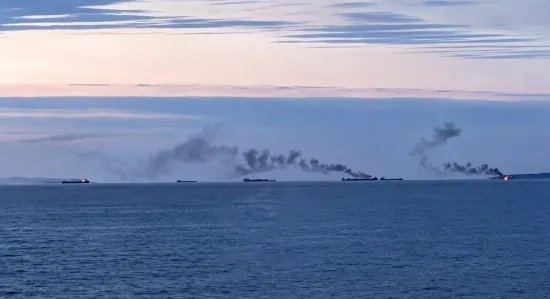
He also drew attention to the closure of the Strait of Hormuz, through which a significant proportion of the world’s oil supplies pass.
Iran’s new Supreme Leader, Mojtaba Khamenei, stated that the Iranian military would continue to block this narrow sea route, through which approximately one-fifth of the world’s oil and gas supplies are transported.
According to Goldman Sachs estimates, around 18 million barrels of the approximately 20 million barrels of oil that passed through the strait daily remain blocked.
The consequences are particularly severe in the liquefied natural gas (LNG) sector. Around a fifth of global LNG production has been temporarily halted.
Analysts at RBC Capital Markets believe the conflict could last until at least spring, and Brent prices could exceed $128 per barrel within three or four weeks.
Rystad analyst Thomas Lille noted that the closure of the strait would harm state-owned oil companies in the Middle East. At the same time, international oil corporations, which account for approximately 20 per cent of production in Qatar, the United Arab Emirates, Iraq and the neutral zone between Saudi Arabia and Kuwait, may also be significantly affected.
According to Rystad’s estimates, BP and Exxon derive more than a fifth of their expected 2026 free cash flow from oil and LNG operations specifically from the Middle East. For TotalEnergies, this figure stands at 14 per cent, for Shell at 13 per cent, and for Chevron at 5 per cent.
In recent years, major oil corporations have expanded their presence in the region, signing deals in Syria, Libya and other countries to increase reserves and production.
Total noted in its trading report that rising oil prices are offsetting losses from reduced production in the Middle East.
Exxon CEO Darren Woods stated that the company is adapting to the situation arising from the closure of a major source of global supplies. At the same time, he noted that this would affect all industry players.
Analysts are also highlighting the performance of energy company shares. Exxon’s share price rose by approximately 2 per cent to $156.12, whilst BP and Shell shares rose by 11 and 9 per cent respectively.
Shares in the Norwegian company Equinor showed even more significant growth, as it has no assets in the Middle East. The company is also a major supplier of gas to Europe, where prices have risen sharply following the suspension of LNG supplies from QatarEnergy.
Significant share price rises were also seen among oil refining companies, notably Neste and Repsol, following a reduction in supplies of aviation fuel and other petroleum products from the Middle East.
Analysts note that companies with a limited presence in the region stand to gain the most.
Paul Sankey, founder of Sankey Research, believes that the crisis in the Middle East could accelerate many countries’ efforts to develop their own energy sources in order to reduce their dependence on supply disruptions.
He also noted that some Asian countries, notably Taiwan, may reconsider their stance on nuclear energy.