Reuters analytics: drones have become the main force in the war in Ukraine

This was reported by The Public with reference to Reuters.
Ukrainian tank platoon commander Valentin Bogdanov said that the use of armoured vehicles has been significantly limited due to the constant threat of FPV drone strikes. According to him, such drones are capable of quickly detecting and hitting equipment, so tanks are forced to act cautiously or remain in cover.
His T-72 tank, captured from Russian troops, is currently being used near the front line in the Kharkiv region as a stationary firing position. According to the soldier, open movements of armoured vehicles have become too risky due to the constant presence of drones in the air.
According to the French Institute of International Relations, the share of losses caused by drones has increased from less than 10% in 2022 to approximately 80% in 2025. The report notes that combat operations are increasingly determined by the use of technology, rapid adaptation and the use of unmanned systems.
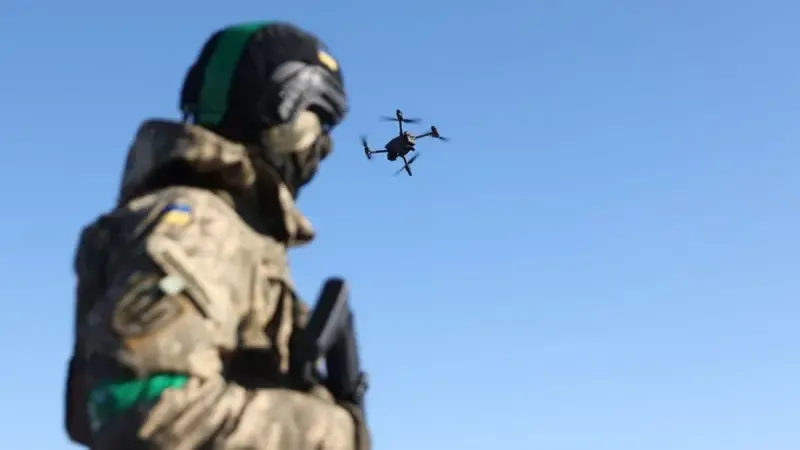
Drones are actively used by both sides in Russia's war against Ukraine for reconnaissance, strikes and control of territory along a front line of approximately 1,200 kilometres. Military units also use mobile groups to detect and destroy enemy drones.
Ukrainian soldier Andriy Meskov reported that while carrying out a mission, he and his comrades came under attack from a drone that pursued them even after they tried to hide in a building. According to him, the speed of FPV drones significantly exceeds the speed of human movement.
Ground-based unmanned platforms are increasingly being used to evacuate the wounded. Ukraine's Minister of Digital Transformation Mykhailo Fedorov said last week that such systems had completed more than 7,000 missions in January alone. Ukraine plans to increase their production and procurement.
The chief physician of the military hospital in Kharkiv said that due to the threat of drone strikes, the average evacuation time for the wounded has increased and can exceed three days, making it difficult to provide timely medical care.
Military analyst Rob Lee said that tanks continue to be used, particularly in urban environments or in adverse weather conditions, but large-scale armoured attacks have become less common. According to him, the role of armoured vehicles has diminished, and further changes may depend on the development of new technologies.