Church holiday on 9 March: what not to do on Forty Saints Day

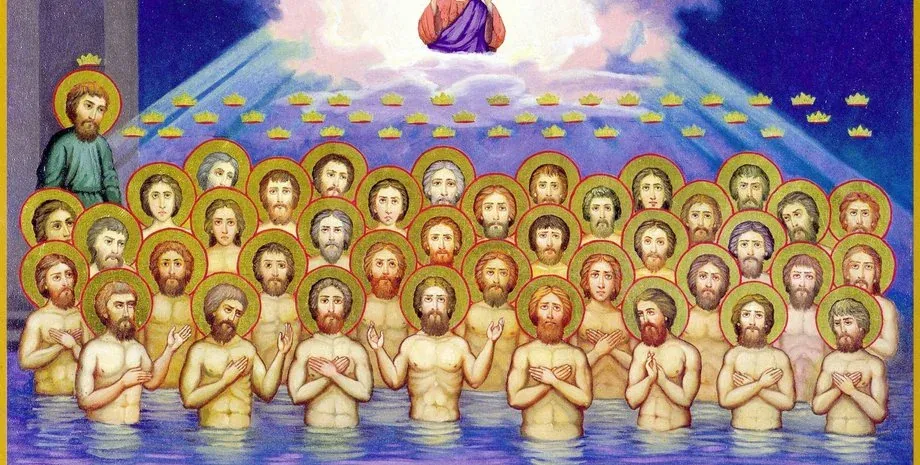
According to the new calendar of the Orthodox Church of Ukraine, 9 March commemorates the Forty Martyrs of Sebaste, soldiers who were martyred for their Christian faith. According to the old Julian calendar, this day is celebrated on 22 March.
According to legend, the Sevastopol Martyrs served in the army in the city of Sevastopol, now located in Turkey. They lived in the 2nd century during the reign of Emperor Licinius and were known for their bravery.
When the ruler ordered the army to be purged of Christians, the soldiers were forced to make sacrifices to pagan gods. They refused to renounce their faith and were imprisoned for it.
According to church tradition, the martyrs were forced to enter a frozen lake naked and left there overnight. A bathhouse was specially heated on the shore to tempt them with warmth. One of the soldiers could not withstand the test and ran to the bathhouse, but died immediately.
At that moment, according to legend, the ice on the lake melted, the water became warm, and shining crowns appeared above the heads of the martyrs. Seeing this, one of the guards believed and joined them. As a result, they all died a martyr's death.
Also on this day, according to the new church style, the martyr Urpasian, Saint Caesarius — brother of Saint Gregory the Theologian, and the righteous Tarasius of Lycaonia are honoured.
According to the Julian calendar, 9 March marks the first and second finding of the head of John the Baptist.
What is customary to do on the Forty Saints
On this day, believers try to visit the temple, light candles and pray. They pray to the Forty Martyrs for strength of faith, courage and the strength to endure life's trials.
There is also a tradition of baking forty buns or cookies in the shape of larks. It is believed that birds symbolise the souls of saints flying to God, as well as the arrival of spring. It is customary to treat children, relatives and neighbours with baked goods.
In the folk calendar, this day is considered the second meeting of spring. The first was celebrated on Candlemas, and the third is traditionally celebrated on the Annunciation.
What not to do on 9 March
On this church holiday, it is not customary to quarrel, offend people and animals, or refuse to help. The church also condemns lies, envy, greed, and despair.
The holiday falls during Lent, so those who are fasting continue to observe the restrictions.
According to popular belief, heavy physical work such as cleaning, washing, repairs or needlework should be avoided on this day. It is believed that excessive work can "scare away" good luck.
It is also not recommended to lend or borrow money on this day, so as not to invite financial difficulties.
Folk omens for 9 March
There are many weather omens associated with the Feast of the Forty Saints.
In particular, it is believed that whatever the weather is like on this day, it will remain so for another 40 days. A warm wind portends a rainy summer, and a large number of jackdaws and magpies indicates a rapid warming.
If larks or swallows arrive on this day, it is considered a sign of an early and fruitful spring.
There is also a sign: if you count forty birds on Soroka, the year will be a happy one.