Donald Trump announced the creation of a coalition of Latin American countries against drug cartels

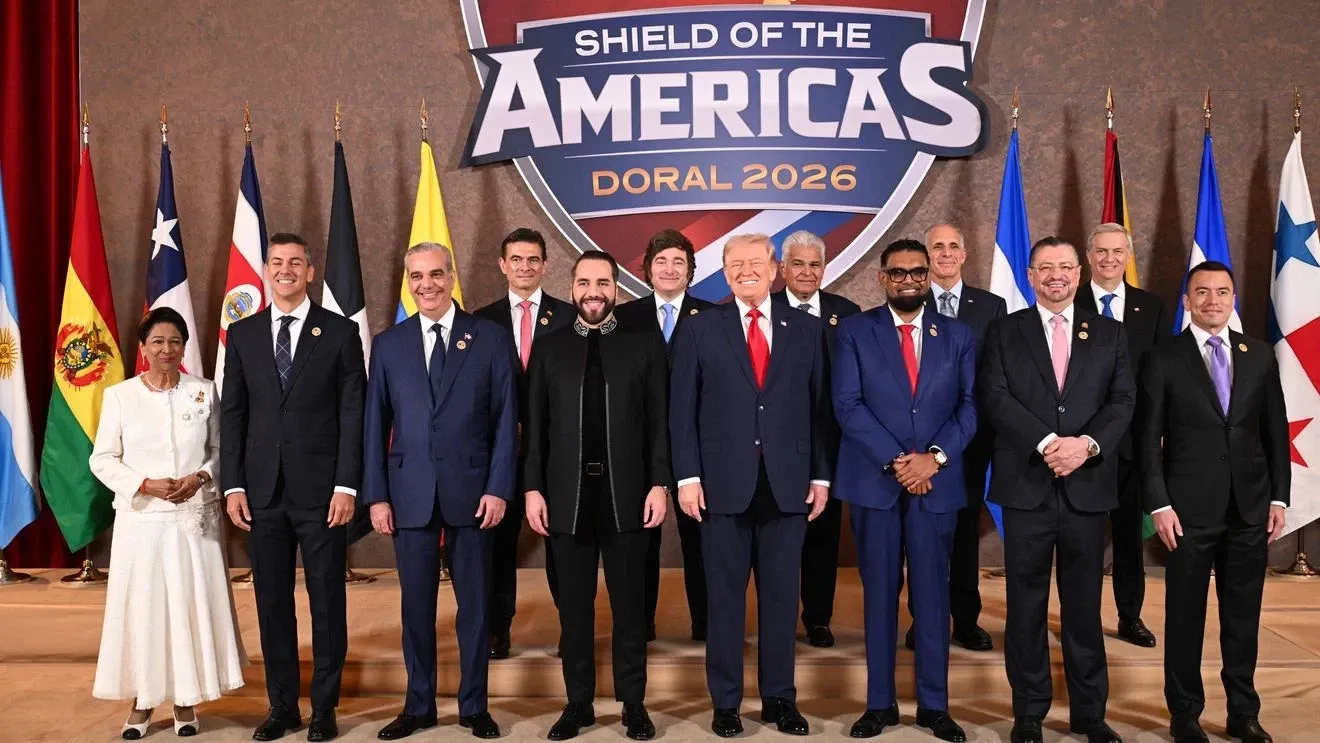
On Saturday, US President Donald Trump welcomed Latin American leaders to Florida to launch a new coalition against drug cartels.
During the summit, called Shield of the Americas, Trump signed a declaration on the creation of a regional alliance. At least twelve leaders from Central and South America, as well as the Caribbean, took part in the meeting.
Donald Trump said the campaign was aimed at combating drug cartels, which he called one of the main reasons for the United States' increased role in the region.
"The leaders of this region have allowed large areas of the Western Hemisphere to fall under the direct control of transnational gangs, and they are running parts of your country," he said. "We will not allow that to happen."
The US president also mentioned Mexico as a hub for drug cartels. Separately, he said he expects significant political changes in Cuba and repeated previous statements about negotiations between Cuban officials and himself and Secretary of State Marco Rubio.
In his speech, which lasted more than 30 minutes, Donald Trump touched on other international issues, including Iran, Ukraine, Pakistan and India.
He also joked about the language differences between him and the leaders, most of whom speak Spanish. "I'm not learning your damn language. I don't have time," he said.
Marco Rubio followed with a short speech in English and Spanish. US Defence Secretary Pete Hagseth also supported the president's position.
"I only speak English," he joked.
Among the summit participants were Argentine President Javier Milei, Chilean President-elect José Antonio Kast, and Salvadoran President Nayib Bukele. The policy of fighting gangs in El Salvador, which has been criticised by human rights organisations, has become an example for some of the right-wing political forces in the region.
The meeting was also attended by Honduran President Nasri Asfura, who won a controversial election with the support of Donald Trump, and Ecuadorian President Daniel Noboa. He had previously announced joint operations with the United States to combat drug trafficking.
During the summit, Donald Trump also spoke about the growing influence of foreign powers in the Western Hemisphere. He said that the US would not allow "hostile foreign interference" to take root in the region, particularly in the Panama Canal area.
Although China was not directly mentioned, these statements were made against the backdrop of Beijing's growing economic presence in Latin America.
According to the Centre for Strategic and International Studies, trade between China and countries in the region reached approximately $518 billion in 2024. China also provided Western Hemisphere governments with more than $120 billion in loans.
The growth of China's presence, including satellite facilities in Argentina, a port in Peru being built with Chinese support, and economic support for Venezuela, has long been a cause for concern in Washington.
In response, the Donald Trump administration has called on governments in the region to limit China's participation in strategic infrastructure projects, particularly in ports and energy.