EU court has banned the distribution of Russia Today, even via free websites

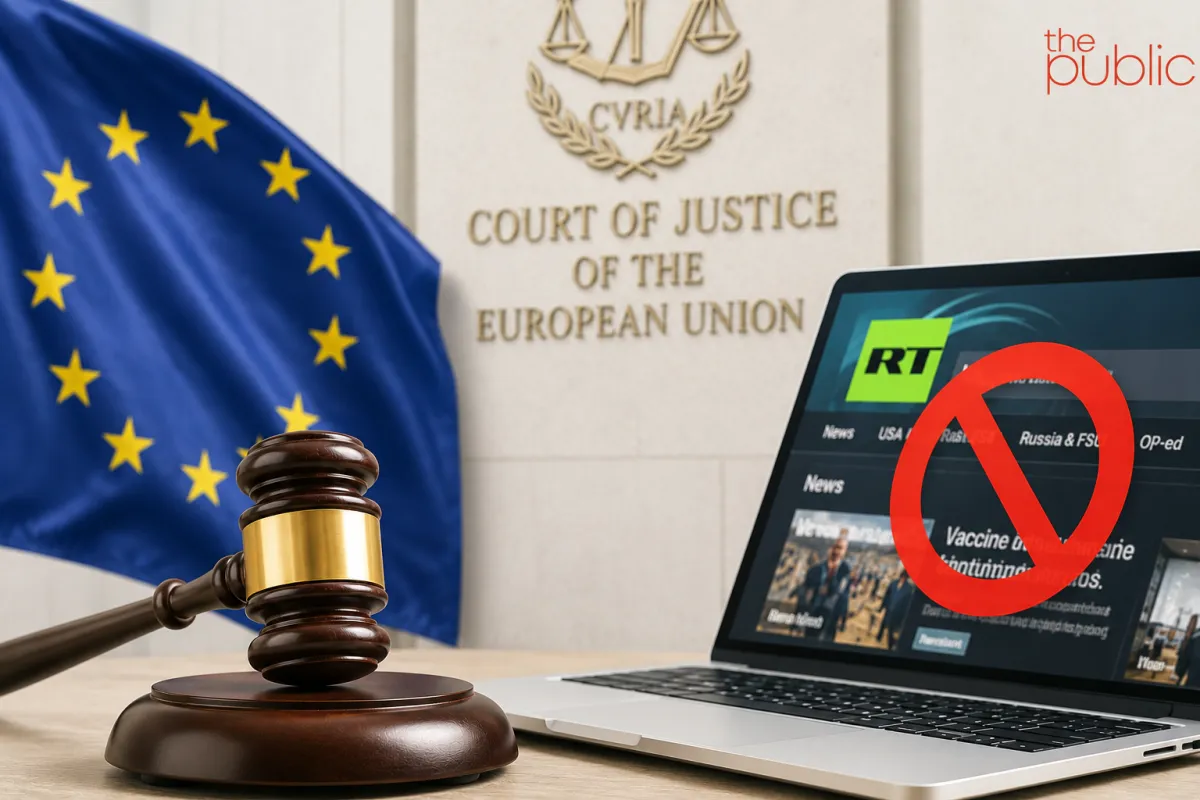
The Court of Justice of the European Union has reported the following:
The judgment was delivered on 2 July in Case C-67/25 Traugott Ickeroth, following a request from a German court.
The European Court of Justice clarified that the term ‘operator’, as used in EU sanctions legislation, covers any person or organisation that directly or indirectly provides access to RT content.
It is irrelevant whether the website owner derives a profit from their activities. Nor is the scale of the dissemination of the material or the duration of its publication taken into account.
Why the case came before the Court of Justice of the European Union
The clarification was required during the hearing of a criminal case in Germany.
Three individuals are on trial there, accused of repeatedly distributing RT Deutsch video content via a public website.
The site operated free of charge, did not display adverts and was funded exclusively by voluntary user donations. This is why the German court asked the Court of Justice of the European Union to clarify whether the sanctions apply to such websites.
The European Court of Justice confirmed that they do.
Why profit is irrelevant
The ruling emphasises that the sanctions were introduced to limit Russia’s ability to disseminate state propaganda within the European Union.
Therefore, the commercial nature of the activity cannot be a criterion for applying the restrictions. Any platform that provides access to prohibited content may fall under the sanctions regime.
The court also emphasised that, for the purposes of applying the ban, it is irrelevant whether RT’s material was accessible to a wide audience, how long it remained on the website, or the volume of content that was disseminated.
Why RT is subject to sanctions
The European Union banned the broadcasting of RT and other Russian state-owned media in March 2022 following the start of Russia’s full-scale invasion of Ukraine.
The EU considers that these media outlets are under the control of the Russian authorities and are used as a tool for systematic propaganda and information manipulation to justify the war against Ukraine and destabilise the European information space.
The new ruling by the Court of Justice of the European Union has effectively confirmed that the sanctions apply to any method of distributing RT content, regardless of the online platform’s operating model.
Follow us on Telegram