Heraskevich disqualified from the Olympics because of his "memory helmet"

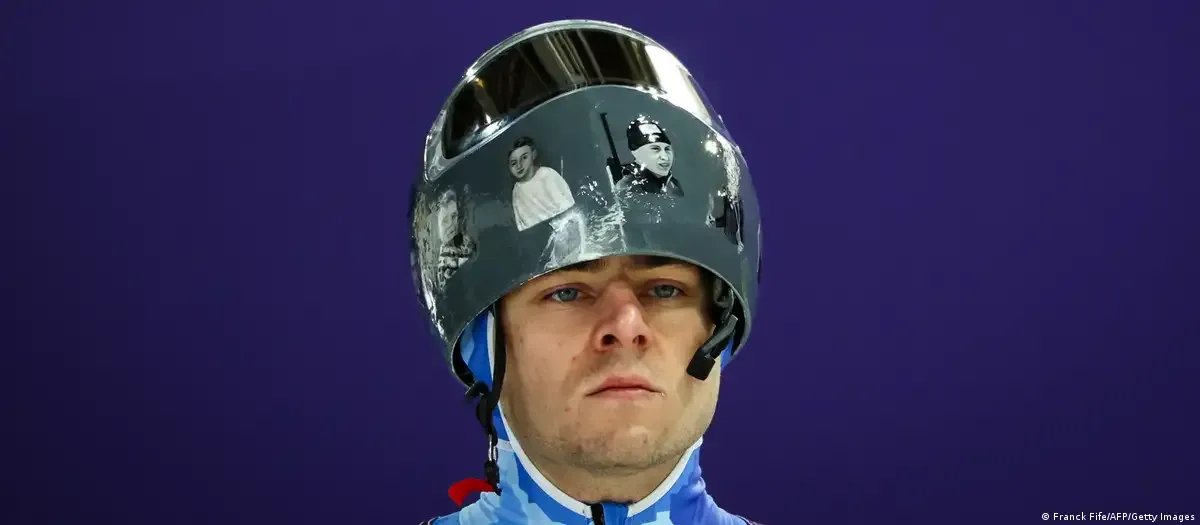
Ukrainian skeleton racer Vladyslav Heraskevych was barred from participating in the men's races at the Winter Olympics on 12 February because of his refusal to compete without a so-called "memorial helmet". The decision was made by the International Olympic Committee.
According to the Associated Press, the athlete arrived at the track at around 8:15 a.m., approximately 75 minutes before the start of the first race. IOC President Kersti Coventry was waiting for him at the top of the track. They had a brief conversation in a private area, but she was unable to convince the Ukrainian to change his helmet.
The National Olympic Committee of Ukraine confirmed that Heraskevych had been disqualified. They noted that he had planned to start in a "memorial helmet" as a sign of respect for the deceased Ukrainian athletes and heroes. The committee emphasised that the athlete did not start, but remained a symbol of position and dignity.
The IOC stated that they wanted to see the Ukrainian among the participants, but he did not agree to any compromise. The committee stressed that the helmet was allowed to be used during training and suggested that it be displayed after the competition. In addition, the IOC pointed out that multi-faith centres and places of mourning have been set up in the Olympic villages, and that under certain circumstances, athletes may compete wearing black armbands.
The IOC also recalled that after Russia's full-scale invasion in 2022, a solidarity fund was created to support Ukrainian sport, and Geraskevich himself was a scholarship holder of the Olympic Committee during the last three Winter Games.
The athlete himself commented briefly on the disqualification: "This is the price of our dignity." In his address before the start, he called on the IOC to lift the ban on the "helmet of remembrance," apologise for the pressure and provide electric generators for Ukrainian sports facilities as a sign of solidarity. He stressed that he did not seek scandal and considered the interpretation of the rules to be discriminatory.
The men's skeleton competition started on 12 February, with the final runs scheduled for the evening of 13 February. Heraskevich was considered a real contender for a medal and, according to him, was ready to risk his chance at a medal in order to honour the memory of the victims.