How Ukrainians used to tell fortunes using eggs, and why they were punished for it

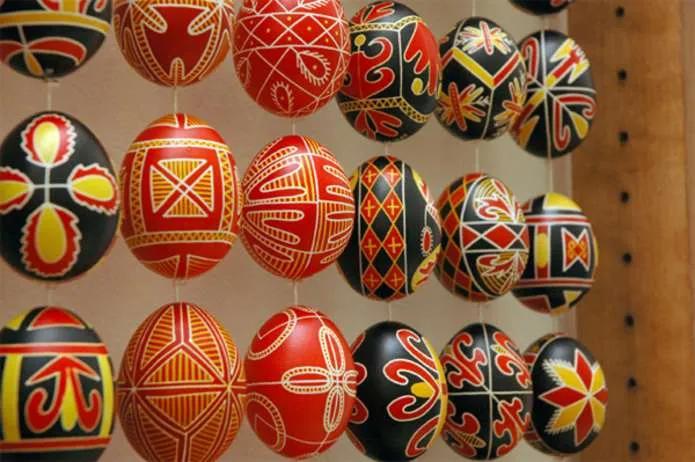
The banned pysanka: how a symbol of life survived
Valentyna Borysenko emphasises that Easter was perhaps the most enduring holiday for Ukrainians. Soviet ideology attempted to erase it from the people’s memory by imposing strict bans. Schoolteachers were tasked with scrutinising the children’s hands, especially those of girls. If traces of Easter dye were found under their fingernails or on their fingers, this became a pretext for reprimanding the parents and bullying the child. But despite this pressure, people continued to paint pysanky in secret in every home, passing on the nation’s heritage.
The pysanka is a ‘living’ universe
For our ancestors, the egg was not food, but a sacred object.
-
Why weren’t they boiled? A genuine pysanka was kept ‘raw’ to preserve the seed of life. It wasn’t used for games of ‘egg-tapping’ — it was given as the strongest talisman to godchildren or as a promise of love to young men.
-
Symbols on the shell: The patterns were ‘orders’ to fate. A pysanka with the ‘osnivtsi’ pattern guaranteed newlyweds that there would never be a shortage of linen in the home. And ‘pig tracks’ were drawn to ensure the livestock remained healthy.
The night when treasures burn
Easter night was considered a time when the boundary between worlds becomes thin. Lights were never extinguished in homes, in the belief that this would help angels find their way to the house. There were legends that it was precisely at the moment of the first cry of ‘Christ is Risen’ that the Earth revealed its hidden treasures. However, people were advised not to search for them — gold without a blessing brought no happiness.
Consecration as protection for the home
The Easter basket was an arsenal of magical items. In addition to Easter cakes, it contained millet (against illness), salt (against witches) and a knife (for protection). Girls would roll a blessed Easter egg over their cheeks for beauty, whilst the householders would bury an egg in the winter crops to protect the harvest from hail and fire.
Renewing one’s wardrobe: a symbol of dignity
An important feature of the holiday was the complete renewal of the person. Just as nature is adorned with flowers, so too did Ukrainians have to wear something new. Even in the hardest times, people tried to sew at least a shirt or buy a new ribbon. Taras Shevchenko described this tradition: his characters boast of their ‘new clothes’ at Easter — from boots to hats. This was a sign that life goes on.
Purification with water and bells
Wet Monday holds a special place. It was a ritual of magical purification: young men would douse young women and householders with water to ensure their good health. And the three-day Easter bell-ringing was meant to ‘awaken’ nature to life through the power of its melody and give impetus to the growth of all living things.