

What is the forecast for the hryvnia exchange rate at the end of the year?

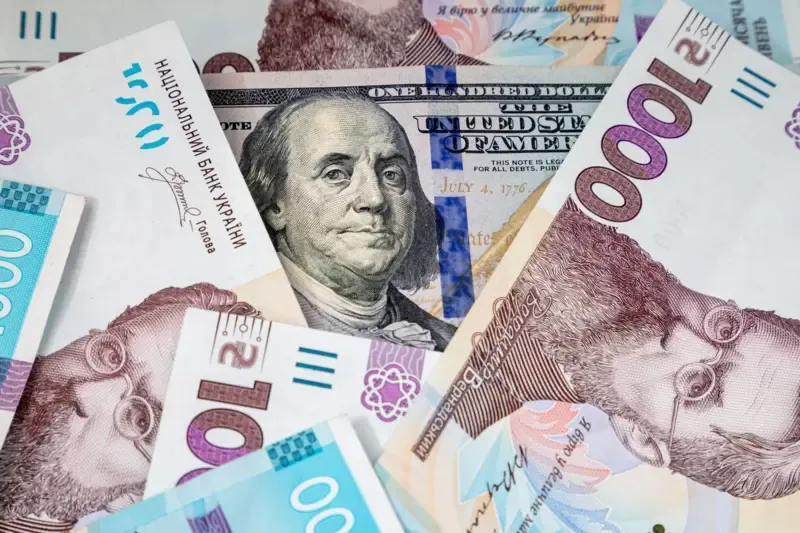
The official dollar exchange rate has reached 42 hryvnias and continues to rise. Experts say there is no need to panic and rush to exchange hryvnias at exchange offices. According to them, the rate will not fall too sharply, reports ThePublic.info, citing BBC News Ukraine.
What is the current situation
A week ago, Bloomberg reported that the International Monetary Fund (IMF) is pressuring the National Bank of Ukraine to devalue the hryvnia. This news prompted many to buy currency now, before the rate increases further.
Economist Serhiy Fursa writes that the IMF has been talking about the problem with the fixed currency rate in Ukraine for almost a year. They say that financing the budget deficit would be easier if the hryvnia's rate decreased. "Then international aid would simply convert into a larger amount of hryvnias. That’s why the IMF, in its desire to slightly weaken the hryvnia (by about 10% annually), has always supported the Ministry of Finance," Fursa wrote.
According to him, the National Bank does not go along with the IMF. The position of the NBU is based on its responsibility for inflation. Additional devaluation would mean additional pressure on prices. The economist also notes that the hryvnia is gradually devaluing against the euro. "And since Europe is our main trading partner, the hryvnia's relation to the euro is crucial for business," Fursa emphasizes.
He is supported by economist and former NBU Council member Vitaliy Shapran.
He states that since the beginning of the year, there has been a strong weakening of the dollar against the euro, which has also affected Ukraine. This process has led to the official euro to hryvnia rate rising from 43.68 to 48.97 since the start of the year.
"And since, due to the maritime and air blockade during the war, Ukraine's dependence on trade with the eurozone has increased, the impact of the euro to hryvnia rate on inflation in Ukraine has become greater," Shapran told BBC News Ukraine. "The NBU tried to reduce the effect of the strong euro by supporting the weakening of the US dollar against the hryvnia, but this strategy probably attracted the attention of Ukraine's international partners. Therefore, I believe that the current weakening of the hryvnia against the US dollar will have some inflationary effect, but it will not be catastrophic."
Economist Vitaliy Shapran believes that the surge in demand for currency mainly occurred in the cash market, while in the non-cash market it was short-lived, so despite the official rate weakening to 42.07 UAH/$ (similar to the 42.28 UAH/$ rate on January 11), there have been no drastic changes in the dollar/hryvnia market.
Is something unusual happening?
"Unusual events occurred in the first quarter of this year when the euro to US dollar rate soared from 1.02 to 1.17 dollars per euro. Ukraine was not fully prepared for such a scenario, as the currency market used the US dollar as an anchor currency," explains Vitaliy Shapran.
However, during the war, euro trading increased, and a stable dollar amid rising euro rates caused inflationary pressure in Ukraine due to events that were largely unrelated to the Ukrainian market. This is why discussions about changing the anchor currency to the euro have emerged in Ukraine.
But the current situation shows that if the euro returns to a more usual range of 1.05-1.15 dollars per euro, changing the anchor currency for Ukraine's raw material market would be premature.
"I think the NBU should prepare for the inflationary impact of the dollar/euro market on our market, and market participants should make access to forward contracts for the euro/dollar pair more comfortable so they can hedge their risks. Citizens should diversify their savings in currency and not forget about profitable hryvnias," Shapran advises.
At the same time, financial analyst Andriy Shevchishin states that the NBU, despite a moderate interbank deficit, allows the rate to rise.
"There are resources in reserves to curb the rate, but the NBU considers the demand for currency and its own assessments of its stability, and therefore begins to conserve reserves," Shevchishin wrote. He emphasizes that the moderate rate increase now aligns with IMF recommendations and the position of some NBU Council members. This devaluation, in the expert's opinion, is "managed".
"That is, there will come a moment when the NBU will say 'stop,' because it will already be turning into panic, and the devaluation will be very rapid, or it will start to significantly affect the attractiveness of the hryvnia and put pressure on inflation," Shevchishin writes.
Serhiy Fursa notes that those who believe the hryvnia is too strong point to a large trade deficit (more imports than exports). Usually, in this situation, the currency is devalued, but this will not help Ukraine, as high imports are mainly military goods and energy equipment, which do not depend on the rate. Instead, Fursa proposes introducing taxes and canceling import privileges (for example, for electric vehicles and Chinese parcels) to reduce unproductive imports.
Should you buy currency
"In Ukraine, people tend to buy freely convertible currency in any uncertain situation. The NBU was a few days late with communication, and there was a surge of interest in currency, primarily in dollars and euros," says Vitaliy Shapran.
In his opinion, in the current situation, it is not worth buying currency. He believes that if devaluation occurs at the IMF's request, it will not be significant.
More than 72% of Ukraine's public debt ($192.58 billion) is external and tied to currency. If the hryvnia devalues sharply (for example, to 45-50 UAH per dollar), servicing costs will significantly increase. Therefore, the expert considers such a sharp rate fall unlikely without creditor approval for debt write-offs.
In which currency to save savings
The National Bank of Ukraine (NBU) decided in October to keep the key rate high — at 15.5% per annum.
This decision has two key goals: first, to make hryvnia savings (deposits and government bonds) attractive so that people keep money in the national currency; second, to slow down price growth (inflation) by making loans more expensive and reducing the amount of money in circulation.
The NBU acknowledges that fighting inflation is complicated by increased risks caused by the war. This includes attacks on energy facilities, significant government expenditures, and high inflation expectations among the population and businesses. However, according to NBU representative Serhiy Nikolaychuk, the strict policy has already proven effective, as inflation has begun to decline again.
According to the NBU forecast, prices will continue to rise slowly, with inflation falling to 9.2% in 2025, and the desired target of 5% will only be reached in 2027.
A positive aspect is that the high key rate successfully maintains people's interest in hryvnia savings while not hindering credit growth.
Additionally, the NBU plans to gradually relax currency restrictions introduced during the war, with the ultimate goal of their complete abolition.
Vitaliy Shapran encourages looking at historical data regarding hryvnia savings.
"If in January 2025 you could sell dollars at 42.3 and place hryvnias in a deposit or buy government bonds at 15-17% per year, then by the end of October you could have exchanged dollars for hryvnias at 42.1, but with yields you won't find in Europe or the USA," Shapran says.
He notes that relatively high interest rates make savings in hryvnias more attractive than "keeping dollars or euros under the mattress".
"But judging by the surge of interest in currency among the population, people in Ukraine do not notice these opportunities for hryvnias," the expert concludes.
Why the IMF advocates for devaluation of the hryvnia
The main reason why the IMF insists on controlled devaluation of the hryvnia concerns public finances and the budget. A significant part of Ukraine's income, especially international aid and other receipts, is denominated in foreign currency (dollars or euros).
When the hryvnia rate falls (i.e., it devalues), these foreign currency inflows automatically increase when converted into hryvnias. Such an increase in hryvnia revenues can help strengthen the strained state budget and cover internal expenses Ukraine bears during the war, as Bloomberg describes.
This IMF requirement creates discrepancies in economic policy between the IMF and the National Bank of Ukraine (NBU), which poses a potential risk for Ukraine to receive a new multi-billion dollar loan package.
According to anonymous sources, the NBU actively resists this step, seeing serious negative consequences for the economy and society. In particular, devaluation could trigger a new wave of inflation that would "destroy" the fiscal gains, and could negatively affect public sentiment, as Ukrainians are very sensitive to sharp price fluctuations.
Sources say that representatives of the central bank in Kyiv are reluctant to succumb to IMF pressure, believing that the expected benefits of devaluation are limited, as the country's budget already heavily depends on direct international aid.
Moreover, a sharp weakening of the hryvnia could have significant political consequences and undermine trust in the financial system, considering that "the public is sensitive to price fluctuations caused by financial crises that preceded the war with Russia," Bloomberg reports.
How much the dollar will cost by the end of the year
According to Vitaliy Shapran, there will be no significant jumps in the exchange rate by the end of the year. As of October 1, 2025, the NBU's international reserves amounted to $46.64 billion, and the NBU can maintain the rate at an acceptable level for the country.
"Another issue is the discussion with the IMF and other creditors. Since February 2023, I haven't changed my forecast for the exchange rate; it was formed as: 'the hryvnia to dollar rate will be as the NBU wants to see it.' Now it's time to change the wording to: 'the hryvnia to dollar rate will be as the IMF wants to see it,'" Shapran states.
However, he believes that international creditors are not interested in a strong devaluation, so significant shocks in the currency market are not expected.
According to Andriy Shevchishin's forecast, the dollar rate will move to 42.95 hryvnias. "I expect the cash dollar to be at 42.75-42.95 hryvnias per dollar," the expert wrote.
The draft state budget for 2026 assumes an average dollar rate of 45.7 hryvnias.
For 2025, an average rate of 42.4 hryvnias was planned.
It is important to understand that this rate in the budget is only an estimate. The actual hryvnia to dollar rate is determined by the National Bank and does not depend on government calculations.

The NBU has updated the rules on the authorisation of financial institutions: a lawyer explained what has changed in 2026
The NBU continues to update regulatory requirements for the financial sector, tightening control over providers of financial and payment services. The latest changes relate to both authorisation procedures and requirements concerning business reputation, ownership structure and business planning for financial institutions. The new rules will also affect pawnbrokers and insurers, which must adapt their internal processes to the updated standards.
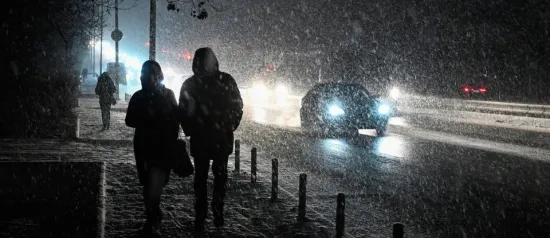
Will there be enough gas and electricity this winter? What Ukrainians need to prepare for in the new heating season
Ukraine is approaching another heating season whilst its energy infrastructure comes under constant attack. Whilst the authorities report on gas reserves and the commissioning of new power generation capacity, experts point to disputed figures and problems with connecting new capacity, and in some places power cuts lasting between 10 and 20 days.
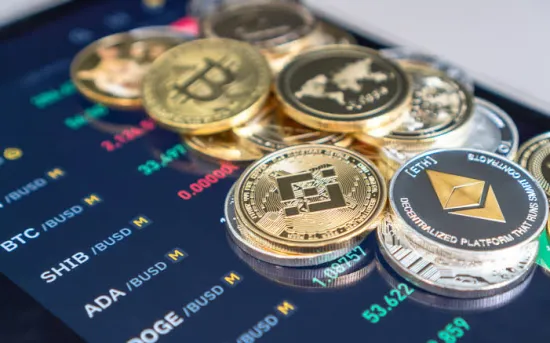
The legalisation of cryptocurrency: how does it (not) work in Ukraine?
Ukraine is actively moving towards legalising the cryptocurrency market, but for the time being, cryptocurrency transactions remain in a ‘grey area’ of regulation. ThePublic spoke to Yakov Voronin, a lawyer and managing partner of the Yakov Voronin Law Firm, Chairman of the Public Oversight Council at the Economic Security Bureau and Chairman of the Committee on Customs and Tax Law at the National Association of Advocates of Ukraine, Yakov Voronin.

The NBU has published a macroeconomic review: what is happening with inflation, the economy and public finances
In May, headline inflation in Ukraine slowed to 8.2 per cent year-on-year, thanks to an increase in the supply of certain raw food products. At the same time, core inflation accelerated to 7.9 per cent, as businesses continued to factor rising labour, energy and logistics costs into their prices, as well as the impact of the previous depreciation of the hryvnia. According to the National Bank’s estimates, headline inflation continued to slow in June, whilst core inflation continued to rise.
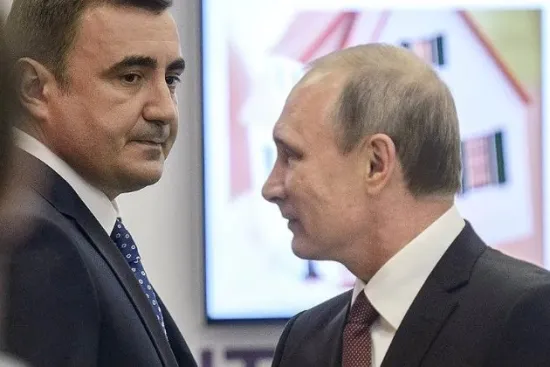
There is talk in the Kremlin of a successor to Putin: who is Alexei Dyumin and why is he being touted as the frontrunner?
Alexei Dyumin has once again found himself in the spotlight amid reports that discussions about Vladimir Putin’s possible successors are becoming increasingly common in Russian political circles.

PrivatBank has launched an important feature for sole traders: what is it all about?
PrivatBank has added a new service to its ‘Privat24’ all-in-one app. Entrepreneurs can now manage their finances, accounting and mandatory payments directly from their smartphone.
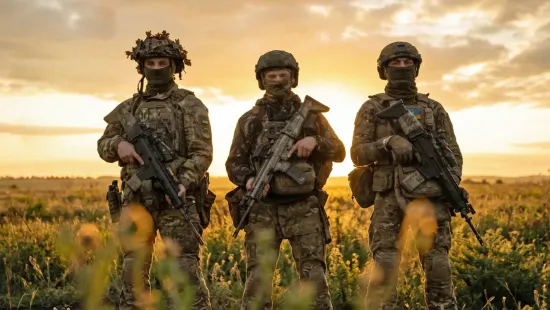
New combat allowances for military personnel: the Ministry of Defence has explained who is eligible for the additional payments
The Ukrainian Defence Forces have introduced an updated mechanism for calculating additional financial allowances for military personnel. The new rules set out which allowances are payable for different types of combat missions, who is eligible to receive them, and how participation in such missions will be verified
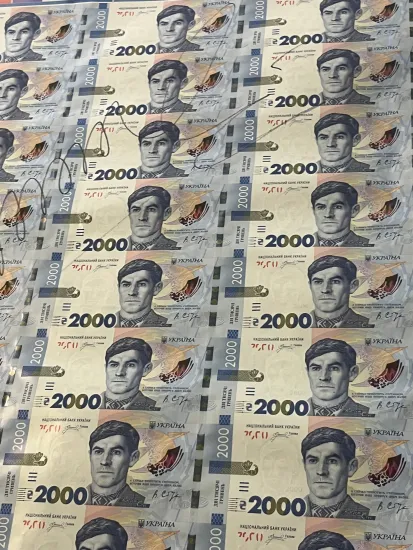
The new 2,000-hryvnia banknote: when will it enter circulation and will it affect prices?
The National Bank of Ukraine has announced the expansion of its banknote series and the introduction of a new 2,000-hryvnia note into circulation. It will enter circulation on 4 September 2026
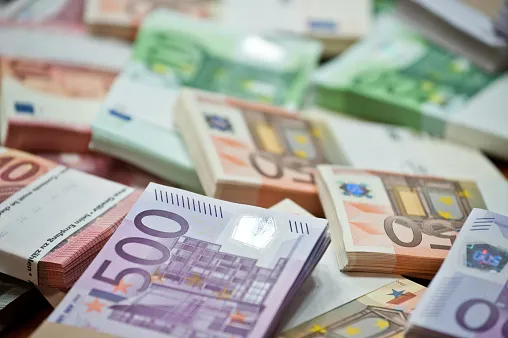
Kharkiv is to receive €15 million from the EBRD to restore its district heating system
The funds from the EU loan and grant will be used to purchase up to 22 modular gas-fired boiler houses with combined heat and power (CHP) units, as well as a further five CHP units for existing boiler houses.
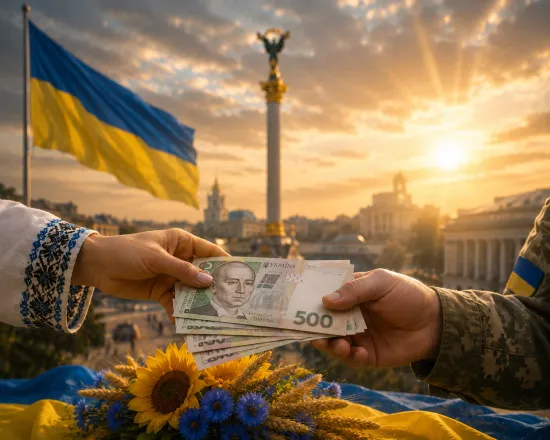
Ukrainians to receive financial assistance ahead of Independence Day: who will receive the money
In 2026, Ukraine expanded the list of citizens who will automatically receive a one-off cash payment ahead of Independence Day. Most recipients do not need to make a separate application to the Pension Fund

