In Latvia, residents are attacking power companies’ drones, mistaking them for military drones

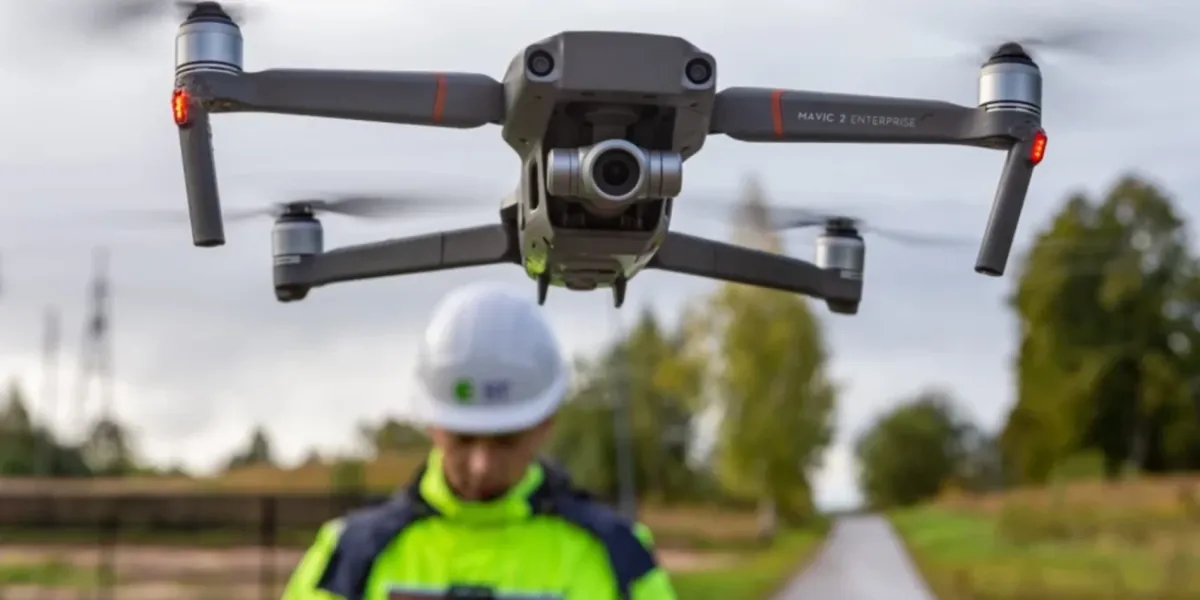
This has been reported by Lente. Sadales tīkls itself announced at the end of June that, from July, it would begin regular inspections of overhead power lines using drones and helicopters.
Attempts to damage drones with stones and water
According to the publication, some residents are attempting to ‘neutralise’ the drones themselves. They are throwing stones and wooden objects at them, trying to knock them down with jets of water, and threatening the operators.
The energy company stresses that such actions can damage expensive equipment and pose a danger to staff and people in the vicinity. An uncontrolled drone, after being struck, could fall onto a house, a car, a road or the power line itself.
The company has urged residents not to attempt to bring down suspicious drones themselves. First and foremost, they should check whether Sadales tīkls specialists are working nearby, and in the event of a genuine threat, contact the police.
Why do power companies use drones?
Drones are used to inspect power lines, pylons and other equipment. The cameras enable the detection of damage, hazardous trees, worn-out components and other faults that could cause an accident or a power cut.
The information gathered is analysed in real time. This helps to identify where repairs are needed more quickly and to plan network maintenance in advance.
Drones are also deployed following storms and other natural disasters. Rather than sending a team on foot into the forest or hard-to-reach terrain, the damaged section can be located from the air, enabling a faster restoration of the power supply.
By 2026, the plan is to inspect around 10,000 kilometres of power lines using drones.
How to recognise a utility company’s drone
Sadales tīkls explained that their drones fly along power lines and are not used to monitor private homes or gardens.
Quadcopters with four propellers are used for these inspections. They fly relatively close to the power grid and do not leave the power line’s safety zone.
The operator is nearby and can see the drone at all times. This is a Sadales tīkls employee or a contractor who has been authorised to carry out the task. They must be wearing work clothes and, upon request, show their ID or documentation authorising the task.
The routes for scheduled flights are published on the company’s website. Landowners whose land the route will pass over are notified in advance by email or SMS, provided they have left up-to-date contact details in their customer account.
Following accidents or storms, flights may be carried out without a pre-announced route, as the location of the damage is not known in advance. However, even in such cases, the operator must remain on site and carry the necessary official documents.
Why Latvians are afraid of drones
The tense reaction to drones has intensified following a series of actual airspace violations in the Baltic states.
In the spring of 2026, several drones entered Latvian airspace from Russian airspace. According to preliminary assessments by Latvian officials, these may have been Ukrainian strike drones heading for targets in Russia that veered off course, likely due to the operation of Russian electronic warfare systems.
In May, one such drone exploded at an oil depot in Rēzekne, damaging empty storage tanks. Following these incidents, Latvia began to strengthen its anti-drone defences along the borders with Russia and Belarus.
However, these incidents do not mean that every quadcopter flying over private property is military in nature. Sadales tīkls urges people to first check the flight path, the presence of an operator and any service markings, rather than attempting to shoot down the drone themselves.
Follow us on Telegram.