Over 90% of deferrals will be automatically extended: who doesn’t need to visit the Administrative Services Centre

This has been reported by the Ukrainian Ministry of Defence.
When will the deferral be automatically extended?
The system will check whether the grounds on which a person was granted a deferral remain valid. If the necessary information is available in the state registers and contains no errors, a new deferral period will be set automatically.
It does not matter how the person applied for the previous deferral:
- via the ‘Reserve+’ app;
- via an administrative services centre.
There is no need to reapply simply because the previous deferral period has ended.
The deferral will be extended until the end of the current mobilisation period, as set out in the presidential decree. However, it cannot remain in force for longer than the legal grounds for it remain valid.
For example, if the deferral was granted on the grounds of study, it will remain in force for as long as the person retains the relevant status as a student or postgraduate student.
How to check whether your deferral has been extended
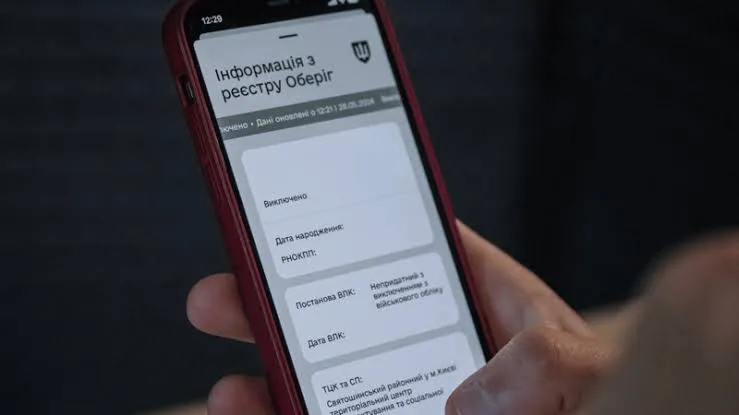
‘Reserve+’ users should receive a notification regarding an update to their details. The new period can be checked in the detailed information section of the electronic military registration document.
The document may contain the phrase ‘until the end of mobilisation’ instead of a specific date. This means that the deferral remains valid until the end of the current mobilisation period.
If mobilisation is extended again, the system will re-check the grounds for the deferral. Provided the registers contain up-to-date data, the deferral will be updated automatically without human intervention.
The ‘Reserve+’ app itself does not make decisions on granting or extending deferrals. It merely displays the information entered into the state register.
Who is eligible for an automatic extension of their deferral
Automatic verification is provided for 22 categories of persons liable for military service:
- people with disabilities;
- those temporarily unfit for military service;
- parents of three or more children;
- parents who are raising a child under the age of 18 on their own;
- parents of a child with a disability under the age of 18;
- parents of a seriously ill child who has not been recognised as having a disability;
- parents of an adult child with a Group I or II disability;
- people who care for a seriously ill family member;
- guardians of a person declared legally incapacitated;
- people whose husband or wife has a Group I or II disability;
- people whose husband or wife has a Group III disability;
- people whose parents or whose spouse’s parents have a Group I or II disability;
- people who care for a second- or third-degree relative with a disability;
- male and female military personnel who have a child;
- undergraduates and postgraduate students;
- staff at higher education and vocational training institutions;
- teachers at general secondary schools;
- people whose close relatives have been killed or are missing in action during hostilities or martial law;
- relatives of Heroes of Ukraine, posthumously awarded for their bravery during the Revolution of Dignity;
- people deprived of their personal liberty as a result of Russian aggression;
- servicemen released from captivity;
- people aged between 18 and 25 who have signed a one-year contract for military service.
Being included in this list does not automatically guarantee an extension. The system must find sufficient information in the registers to confirm the right to a deferment.
Why a deferral may not be extended
The main reason is a lack of the necessary information in the state registers or errors in personal details.
Problems are most likely to arise for people who:
- have a father or mother with a Group I or II disability;
- are caring for a seriously ill relative;
- are bringing up three or more children;
- are bringing up a child with a disability under the age of 18.
The lack of an automatic renewal does not mean that a person has lost their entitlement to a deferral. The system may simply not have been able to find confirmation or cross-reference information from different registers.
What details need to be checked
For automatic renewal, it is important that personal and family details are entered correctly and match across different government systems.
The Ministry of Defence advises checking:
- the correctness of your surname, first name and patronymic;
- date of birth;
- your tax identification number;
- details of marriage, children and other family members;
- details of any recognised disability;
- information on family relationships.
Family details must be correctly entered in the State Register of Civil Status Acts.
If the deferral is due to the disability of the father or mother, it is advisable for the birth certificate to include the tax number of the relevant parent. Without this, the system may find it difficult to automatically establish the family relationship.
Up-to-date information on disability must be contained in the Pension Fund’s registers or the Unified Information System for the Social Sector.
Separate conditions apply to parents with multiple children. Automatic renewal may not take place if a person has arrears in child maintenance payments exceeding the amount due for three months.
What to do if the deferral has not been renewed
First, you should check the information in ‘Rezerv+’. If the new deadline has not appeared but you are still entitled to the deferral, you need to check whether the details have been entered correctly into the relevant registers.
Where automatic renewal is not possible, the documents must be submitted to any convenient Administrative Services Centre.
Applications for granting or extending a deferral are no longer submitted to the territorial centres for social support and services.
Automatic renewal and a new deferral in ‘Reserve+’ are different services
Automatic renewal applies to a deferral that has already been granted, where the grounds for the deferral remain valid.
Applying for a new deferral via ‘Reserve+’ is a separate procedure. It is currently available to 11 categories of citizens.
In particular, the following groups can submit an application online:
- people with disabilities;
- students and postgraduate students;
- staff at educational institutions;
- parents of three or more children;
- representatives of other categories whose details can be verified via government registers.
Therefore, a person may fall into a category for which automatic deferral is provided, but may not be able to apply for such a deferral via the app for the first time.
The Ministry of Defence plans to gradually expand the list of grounds on which a new deferral can be obtained online.
Follow us on Telegram.