Foreign cars are flooding into Russia via China, circumventing sanctions

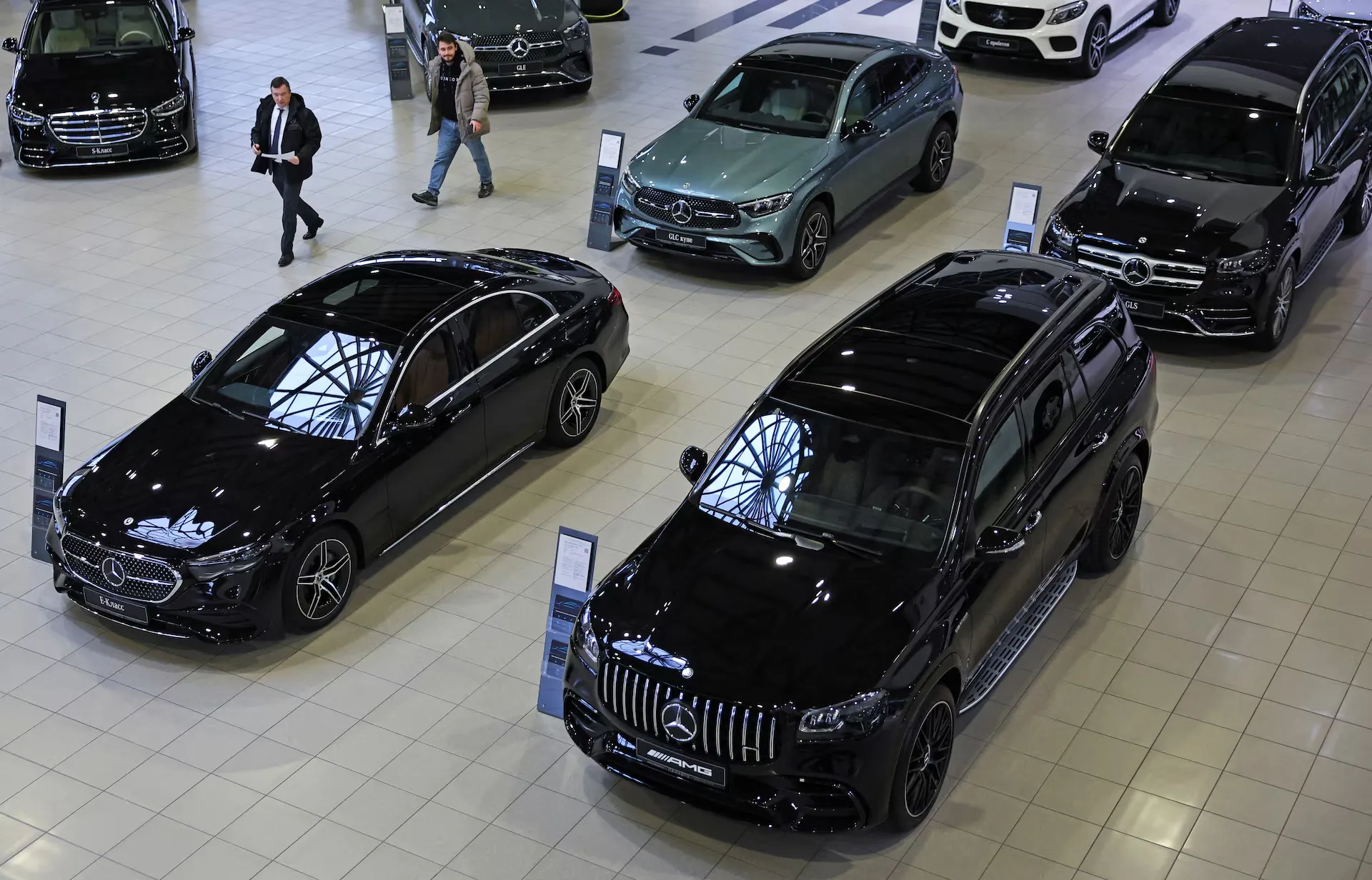
Following Russia's full-scale invasion of Ukraine in 2022, the EU, the US, Japan and South Korea imposed sanctions on the Russian automotive sector. Car manufacturers from these countries announced the suspension or significant restriction of their activities in the Russian market. However, according to registration data and research by the Russian company Autostat, trade in foreign cars continues through so-called parallel or grey channels, Reuters reports.
This involves tens of thousands of cars, including Toyota, Mazda, and German brands Mercedes, BMW, and Volkswagen. Most of the cars are manufactured in China at joint ventures of international concerns or delivered there from other countries, after which they are shipped to Russia.
One particular scheme involves registering new cars with zero mileage as used cars. Dealers in China first register the car as sold and then export it as used. This allows them to bypass the need to obtain the manufacturer's permission to supply to Russia. According to a former exporter from Sichuan province, this method greatly simplifies exports.
In China, such cars are sold at a discount, but in Russia they are sold at prices close to those of new cars. According to Autostat, in 2025, almost 130,000 cars from brands from countries that have imposed sanctions were registered in Russia. Almost half of them were manufactured in China. Since 2022, more than 700,000 such cars have been sold in Russia.
Last year, Russians purchased about 30,000 Toyotas, of which almost 24,000 were made in China. Almost 7,000 Mazdas, mainly made in China, were also sold. Hybrid models are particularly popular.
Among German brands, nearly 47,000 new BMW, Mercedes and Volkswagen Group cars, including Audi, Porsche and Skoda, were registered in 2025. More than 20,000 of them were manufactured in China. The rest were manufactured in Europe but, according to analysts' estimates, often passed through China.
The Mercedes G-Class, costing around €120,000, is particularly popular among the Russian elite. Transport documents also show that Mercedes GLC 300 and BMW X1 xDrive25i models were imported through Chinese intermediaries.
Car manufacturers say they are banning exports to Russia and imposing contractual restrictions on dealers. At the same time, they acknowledge that tracking violations is difficult and requires the involvement of third parties. Sanctions law experts note that it is virtually impossible to completely shut down such schemes.
Overall, car sales from countries that have imposed sanctions have fallen from over one million in 2021 to about one-eighth of that figure. At the same time, the share of the Chinese supply channel is growing.