UNESCO issued a statement on the attack on Lviv without mentioning Russia

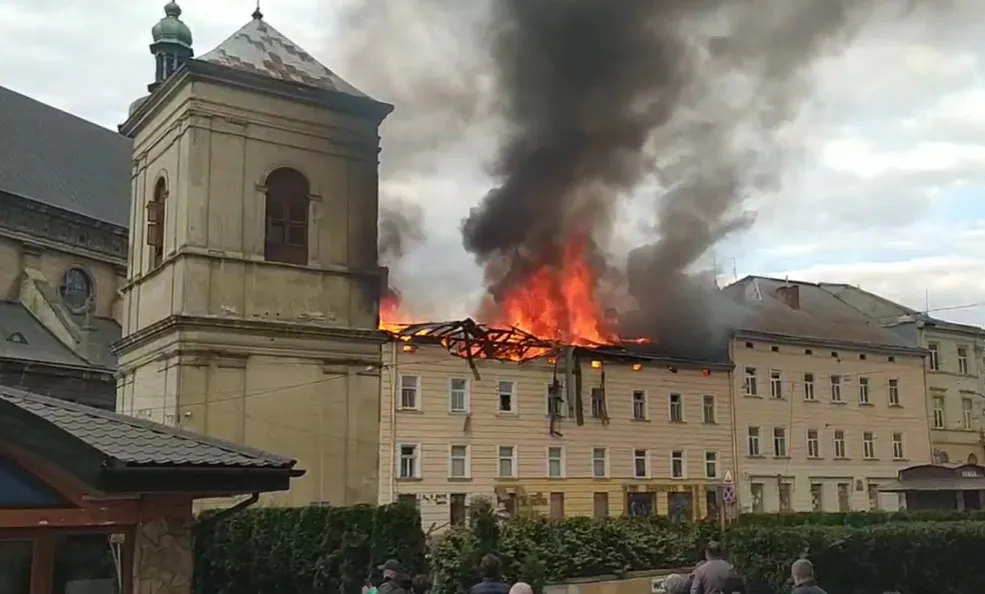
The organisation stated that it was “deeply concerned by the strikes”, recalled the international conventions on the protection of cultural heritage, and called on “all parties” to safeguard cultural sites.
“UNESCO is deeply concerned by the strikes on 24 March that hit a building in the Bernardine Monastery area within the ‘Lviv – Historic Centre’ World Heritage site.” UNESCO recalls that cultural property is protected by the 1954 Hague Convention and the 1972 World Heritage Convention. All parties must protect heritage and refrain from any actions that cause damage to cultural property. UNESCO stands ready to support the authorities with assessments, protective measures and emergency assistance,” the organisation’s statement reads.
However, the statement does not specify that the strike on Lviv was carried out by Russia, although it refers to a Russian missile strike.
Ukrainian media have sharply criticised this stance, as UNESCO’s wording that ‘all parties must protect cultural sites’ creates the impression that there are ‘two sides’ responsible for the strikes on Lviv.
Such “diplomatic neutrality”, rather than clearly identifying the aggressor, blurs responsibility for the strikes on civilian infrastructure and cultural heritage.
The historic centre of Lviv has been on the UNESCO World Heritage List since 1998. The strike on the area near the Bernardine Monastery was one of the few instances of damage to World Heritage sites in Lviv during the Russian war.
Strikes on historic sites, cultural heritage experts stress, can be regarded as violations of international humanitarian law and the Hague Convention for the Protection of Cultural Property in the Event of Armed Conflict.