Possible scenarios for Iran's development after the war with the US and Israel

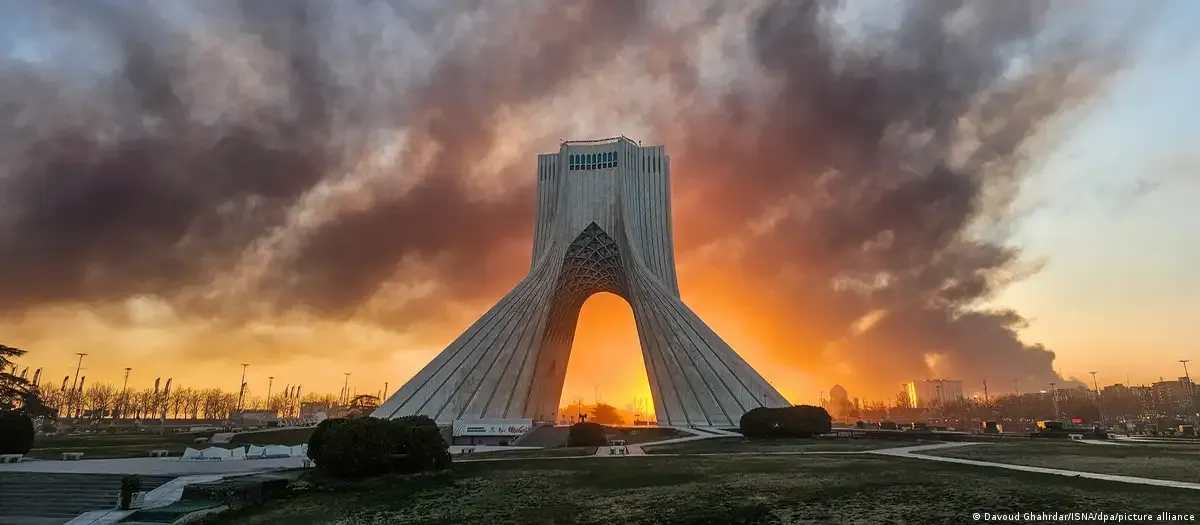
The war between the United States, Israel and Iran began on 28 February after strikes on Iranian targets. The further development of events and the political future of Iran after the end of hostilities remain uncertain.
After the air strikes began in Tehran, some residents climbed onto the roofs of their houses and applauded. According to analysts, some Iranians are willing to accept destruction and civilian casualties if it leads to the fall of the theocratic regime. This was reported by The Public https://thepublic.info/ with reference to Deutsche Welle.
US President Donald Trump appealed to Iranians, who held mass anti-government protests in January, to take action.
"When we are done, take your power. It will be yours. This is probably the only chance for several generations," he said.
A few hours after these statements, information appeared about the death of Iran's Supreme Leader Ali Khamenei as a result of the strike. Despite this, the state system of power continues to function, and politician Ali Larijani has taken over the leadership of the country.
The further course of the war and the political future of Iran remain unclear.
One possible scenario involves a change in the top leadership without a complete overhaul of the political system. Donald Trump told The New York Times that he has "three very good options" for Iran's future leadership, but did not name any specific names.
The Trump administration has already applied a similar model in Venezuela. In early January, American special forces removed the country's leader, Nicolás Maduro, after which a political agreement was reached with his deputy, Delcy Rodríguez, who became interim president.
"What we did in Venezuela, I think, is the ideal scenario for Iran," Trump said.
Kornelius Adebar, an analyst at the German Council on Foreign Relations, believes that Iran could form a new leadership based on the influence of the Revolutionary Guard and try to establish new relations with the US.
"It's the same scenario as in Venezuela. You change the top leadership and get much less change than people expected," he said.
At the same time, it is unclear whether the US actually supports this scenario. Donald Trump has also suggested that the Iranians themselves could rise up and change the political system.
Harvard Kennedy School professor Pejman Asadadeh suggests that war could lead to the fall of the current regime. According to him, it is also possible that the system of power could be preserved with certain changes.
In such a scenario, the Assembly of Experts could elect a pragmatic successor to Ali Khamenei. The new leadership could focus on economic recovery, stabilisation and public administration reforms, as well as changing foreign policy towards de-escalation.
Burchu Ozturk, an expert at the British think tank RUSI, noted that a pragmatic course by Iran's new leadership could include reducing tensions with the United States.
"A pragmatic course for whoever emerges at the helm of Iran after this war could be to de-escalate with the United States in order to obtain economic relief and reduce the daily costs for millions of Iranians," she said.
Another scenario envisages a hardening of the regime's policies. In this case, the leadership could rally around a more radical leader.
The Guardian journalist Julian Borger suggested that after the strikes, the new leadership may decide that nuclear weapons are the only guarantee of the state's survival.
"The opposition will be suppressed with increasing brutality, and the regime may increasingly resemble North Korea," he wrote.
Separately, experts are considering the possibility of the opposition coming to power. Two weeks before the war began, about 250,000 people in Munich took part in a demonstration in support of Reza Pahlavi, the son of Iran's last shah.
Pahlavi has stated that he has no intention of restoring the monarchy and advocates transforming Iran into a democratic state.
Analysts Mark Dubowitz and Ben Cohen of the Foundation for Defence of Democracies noted that he is preparing for a possible political transition.
At the same time, they emphasise that there is no certainty as to who would rule Iran if the current regime fell. The country has a complex ethnic structure, which includes Azeris, Kurds, Arabs, Baluchis and other groups.
The issue of internal stability also remains open. Iran has both a regular army and a Revolutionary Guard. Many analysts believe that the latter has greater influence.
The Revolutionary Guard controls its own land, sea and air forces, as well as the secret services and a significant part of the economy. The European Union recognised this structure as a terrorist organisation after its involvement in suppressing anti-government protests in January.
During the initial phase of the war, Donald Trump called on the Iranian army, Revolutionary Guard and police to lay down their arms. However, experts see no signs that these structures have lost control.
Burchu Ozturk suggests that after the war, internal tensions between different security forces may increase.
"This could manifest itself in increased institutional divisions," she said.
According to her, one possibility is a rift between the Revolutionary Guard and the regular army. Another scenario could involve internal disputes within the Revolutionary Guard itself.
In this case, these forces may find themselves in different political camps, creating the risk of internal conflict.
The country's ethnic diversity could be an additional factor of instability. On the eve of the war, five Kurdish organisations united to oppose the Iranian regime and spoke out against the possibility of Reza Pahlavi's temporary leadership.
Analysts note that if the current regime falls, Iran may face a large number of political and security challenges.