NASA has launched Artemis II on a lunar flyby for the first time in 53 years

This has been reported by NASA.
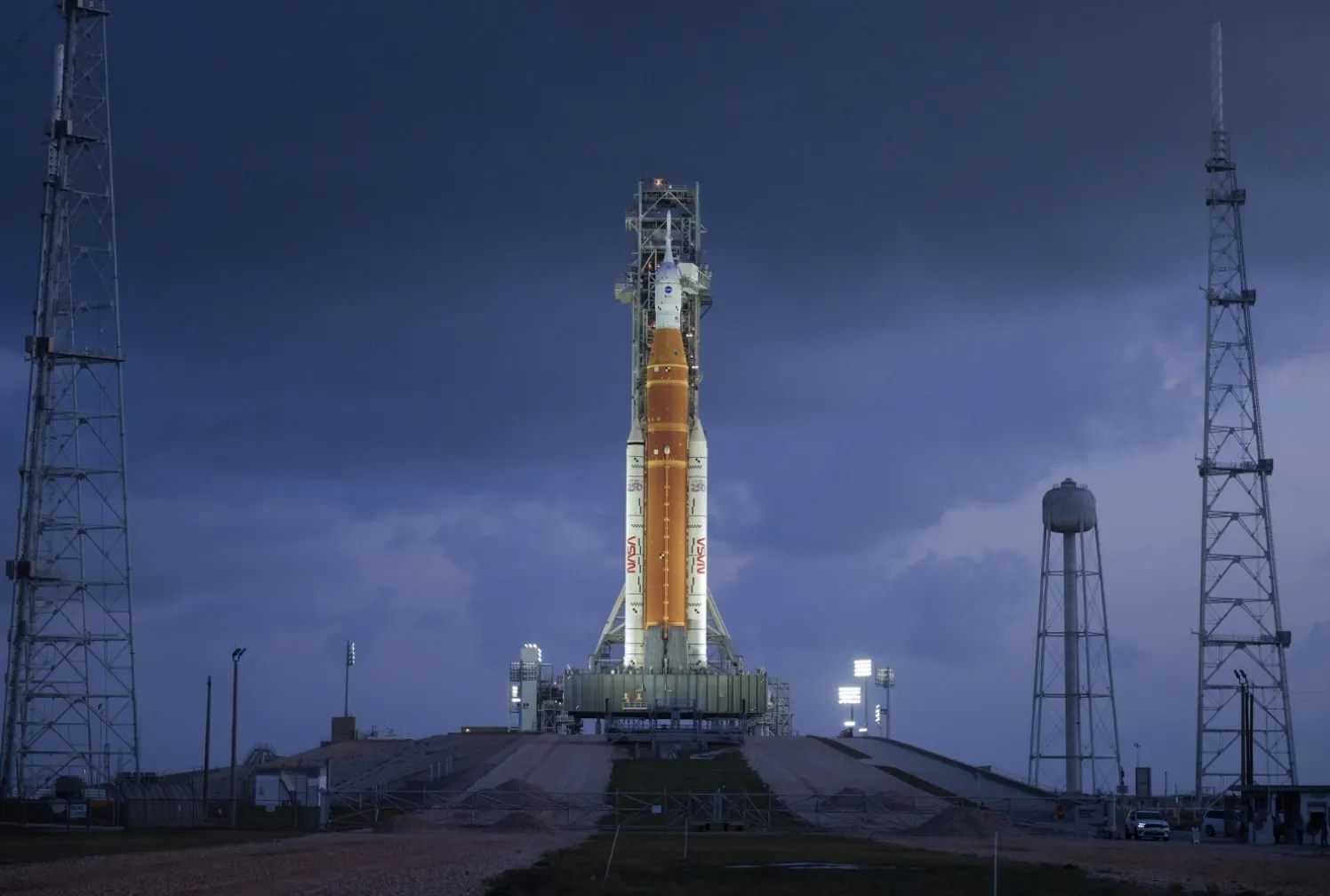
On the night of 2 April, Kyiv time, NASA launched the Artemis II mission from the Kennedy Space Centre in Florida. The Space Launch System rocket launched the Orion spacecraft with a crew of four – Reid Wiseman, Victor Glover, Christina Koch and Jeremy Hansen. This is the first crewed lunar mission since the Apollo programme.
The mission is set to be the first manned test of the SLS and Orion combination in deep space. Its main objective is to test the spacecraft’s systems with people on board and prepare for the next stages of the Artemis programme, which aim to return humans to flights around the Moon and future landings.
The crew comprises mission commander Reid Wiseman, pilot Victor Glover, and mission specialists Christina Koch and Canadian Jeremy Hansen. The mission also marks a series of symbolic firsts: Glover will become the first Black astronaut on a lunar mission, Koch the first woman, and Hansen the first Canadian and the first non-American on such a flight.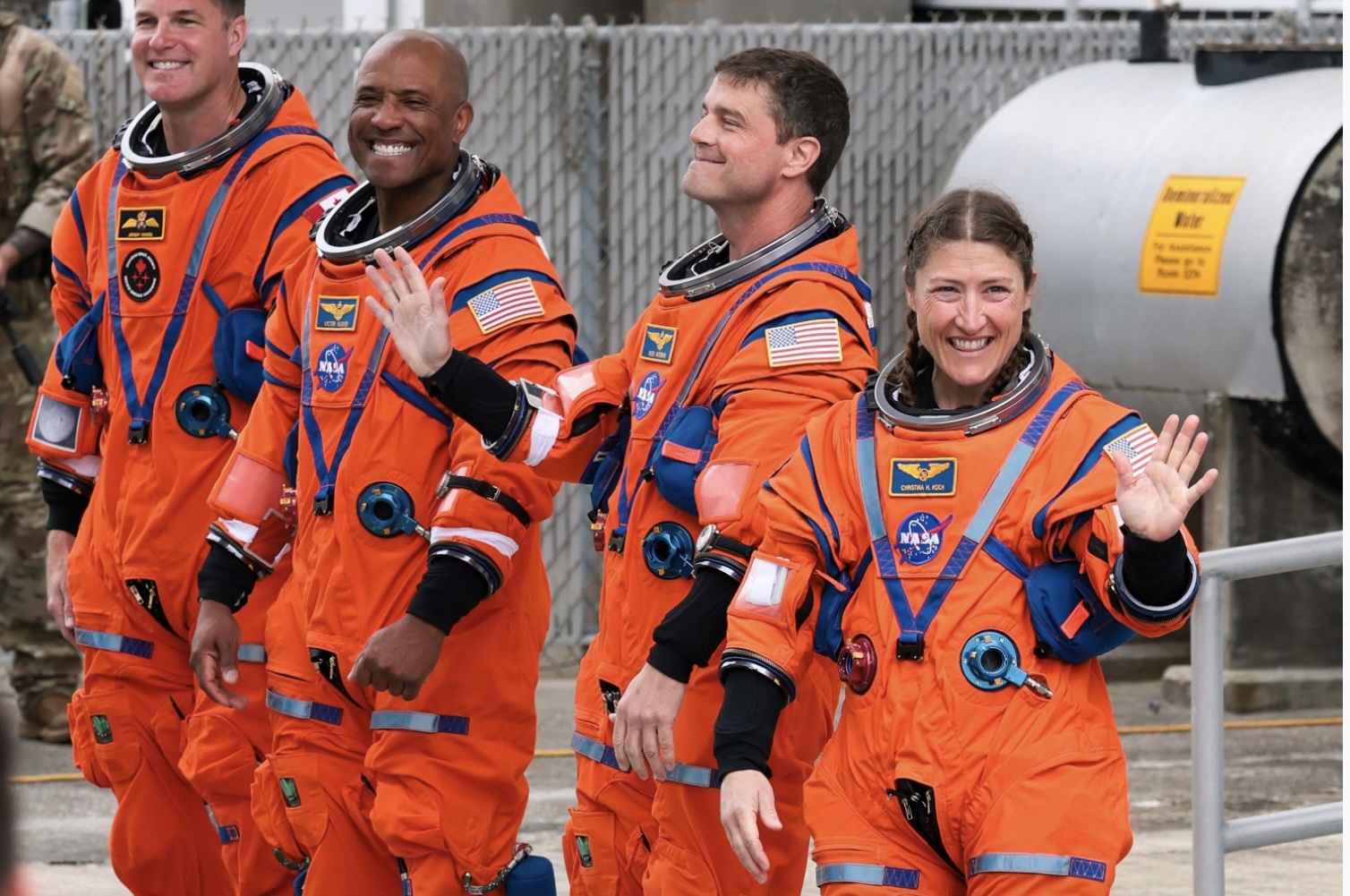
Before launch, Jeremy Hansen said that the crew was setting off “for the sake of all humanity”.
How the mission will unfold
According to the plan, for the first one or two days the crew will operate in high Earth orbit, where they will test the life support systems, propulsion, navigation and communications. After that, Orion is to perform a manoeuvre to enter the trajectory to the Moon.
The spacecraft will then head towards the Moon on a free-return trajectory, fly around its far side and begin its return journey without a separate landing phase. During this phase, the crew is expected to travel approximately 252,000 miles, or 406,000 kilometres, from Earth, making it the longest human spaceflight to date and surpassing the Apollo 13 record.
On the return journey, the astronauts will continue testing the spacecraft’s systems. One of the mission’s key objectives is to test the capsule’s heat shield during atmospheric re-entry at a speed of around 40,233 kilometres per hour. Afterwards, Orion is scheduled to splash down in the Pacific Ocean, where the crew will be met by rescue teams.
The previous Artemis I mission was unmanned. It was launched on 16 November 2022, and the expedition itself lasted 25 days, 10 hours and 53 minutes. Following this, NASA identified the cause of the loss of some charred material from Orion’s heat shield and adjusted the re-entry profile for Artemis II, rather than the shield’s design itself.