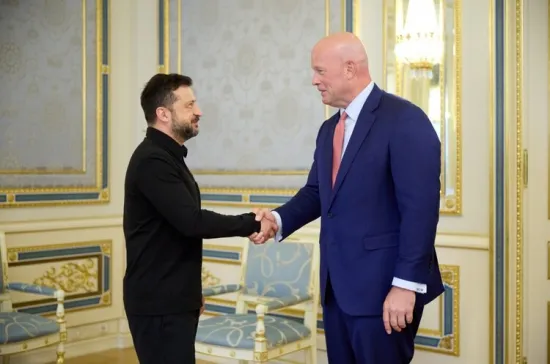
NATO countries have not agreed on 0.25% of GDP for military aid to Ukraine

This is according to The Telegraph.
What Rutte proposed
NATO Secretary General Mark Rutte was promoting a plan under which Alliance countries would allocate 0.25% of their GDP to military aid for Ukraine.
He had hoped that the allies would be able to agree on this proposal at the upcoming NATO summit in Ankara.
However, this week Rutte admitted that the plan did not have sufficient support.
“I don’t think this proposal will be put forward,” he told journalists, without naming the countries that had opposed it.
Who opposed it
According to The Telegraph, the UK, France, Spain, Italy and Canada opposed the initiative.
A NATO source described their position as follows: “They are not particularly enthusiastic about this idea.”
At the same time, at least seven NATO countries supported the plan. All of them are already spending more than 0.25% of their GDP on military aid to Ukraine.
As decisions within the Alliance require the consent of all member states, opposition from several capitals effectively blocked the initiative.
The UK’s position
For London, this situation has dealt another blow to its reputation as one of Ukraine’s key allies.
Earlier this week, the British government had already been criticised for easing some of the sanctions against Russian energy supplies.
This concerned temporary exemptions for the purchase of aviation fuel and diesel produced from Russian oil in third countries.
At the same time, the UK’s overall military contribution remains one of the largest. In terms of the volume of aid to Ukraine, it is second only to the US and Germany.
However, London’s support falls short of the proposed level of 0.25% of GDP.
Prime Minister Keir Starmer has pledged to allocate at least £3 billion a year to Ukraine. This amounts to approximately 0.1% of GDP.
Who is being criticised for contributing less
At present, most of the criticism is directed at France, Spain, Italy and Canada.
They have repeatedly been accused of not doing enough compared to smaller allies.
According to the Kiel Institute, the Netherlands, Poland, the Nordic and Baltic countries are already providing military support to Ukraine at a level of 0.25% of GDP or higher.
Rutte previously stated that aid to Ukraine within NATO is unevenly distributed.
According to him, many allies “are not spending enough when it comes to supporting Ukraine”.
A shift in the US approach
The discussion follows a shift in the US approach to aid for Ukraine.
Donald Trump halted significant free aid deliveries to Ukraine and switched to selling American weapons to Kyiv using funds from European allies.
Because of this, Rutte insists that Europe must take on more responsibility for supporting Ukraine.
Ahead of the NATO meeting in Sweden, Prime Minister Ulf Kristersson also called on allies to back up their statements of support for Ukraine with real money.
“I would very much like to see more countries that speak so highly of Ukraine also back up their words with money,” he said.
What they’re saying in London
The British Foreign Office stated that London continues to discuss with allies all proposals that could help NATO best support Ukraine.
At the same time, according to The Telegraph, the UK has not expressed specific support for the 0.25% of GDP plan.
Ukraine’s accession to NATO
Swedish Defence Minister Paul Jonsson stated that Ukraine has the right to join NATO.
He said that Ukraine’s combat experience and rapid development of military technology could significantly strengthen the Alliance, even despite objections from certain states.
He made this statement at the GLOBSEC forum in Prague.
Earlier, on 9 April, NATO Secretary General Mark Rutte stated that a number of countries, including Germany, Slovakia, Hungary and the US, are currently holding back Ukraine’s accession to the Alliance.
According to him, the issue of Ukraine’s membership is not being considered in the short term.
Follow us on Telegram