Scientists have developed a bio-glue that can bond fractures in three minutes

Dmitro Shevchuk
Dmitro Shevchuk Executive Editor
Scientists have developed a bio-glue that can bond fractures in three minutes

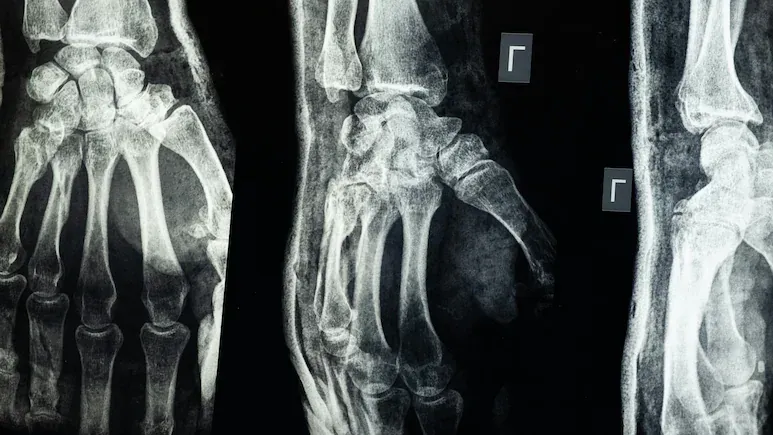
Chinese scientists have developed a bio-adhesive for bone regeneration, inspired by the natural mechanisms of oysters.
 

A group of Chinese researchers from Zhejiang Province in eastern China has introduced an innovative product called "Bone-02" bone glue. Inspired by oysters, this glue can treat fractures with a single injection and bond shattered bone fragments in just three minutes, reports the local publication Zhejiang Online.

The group leader, Lin Xianfen, deputy chief orthopedic surgeon at Sir Run Run Shaw Hospital at the renowned Zhejiang University, stated that the glue provides precise fixation within two to three minutes, even under conditions of heavy bleeding. In one of the tests, the procedure was completed in less than three minutes, whereas traditional treatment would require a large incision for the implantation of steel plates and screws, writes Zhejiang Online.

Laboratory tests confirmed that "Bone-02" performed well in terms of safety and effectiveness. It demonstrated a maximum bonding strength of over 400 pounds (more than 180 kg), shear strength of about 0.5 MPa, and compressive strength of approximately 10 MPa. These properties suggest that it could replace traditional metal implants while reducing the risk of foreign body reactions and infections, according to the report.

Another feature of "Bone-02" is that it can naturally be absorbed by the body as the bone heals, eliminating the need for a second surgery to remove implants, reports local media.

 

Share tittle
Science
In Japan, rare crested ibises, which had become extinct in the country several decades ago, have been reintroduced into the wild
Science

In Japan, rare crested ibises, which had become extinct in the country several decades ago, have been reintroduced into the wild

For the first time in several decades, eight crested ibises – a species that became extinct in Japan in the last century – have been released into the wild.

01.06.2026
A nature reserve is to be established near the Ukrainian Antarctic research station 'Akademik Vernadsky'
Science

A nature reserve is to be established near the Ukrainian Antarctic research station 'Akademik Vernadsky'

Ukraine has secured the establishment of a new specially protected area in Collins Bay, located near the Akademik Vernadsky station in Antarctica. The initiative was approved following three years of intensive international negotiations.

25.05.2026
The State Special Communications Service is calling for increased funding for Ukrainian crypto technologies
Science

The State Special Communications Service is calling for increased funding for Ukrainian crypto technologies

The State Service for Special Communications and Information Protection of Ukraine plans to develop a domestic industrial base for cryptographic solutions and to support research institutions.

25.05.2026
Artificial intelligence will be able to create its own next generations by the end of 2028
Science

Artificial intelligence will be able to create its own next generations by the end of 2028

Over the next 12 months, artificial intelligence, working in collaboration with humans, could make a scientific discovery that wins a Nobel Prize.

22.05.2026
A laboratory has opened in Japan where medical experiments are carried out by robots
Science

A laboratory has opened in Japan where medical experiments are carried out by robots

Tokyo University of Science in Japan has opened a laboratory where medical experiments are carried out by robots without human involvement.

11.05.2026