Germany has provided Ukraine with €94 billion in support since the start of the full-scale war.

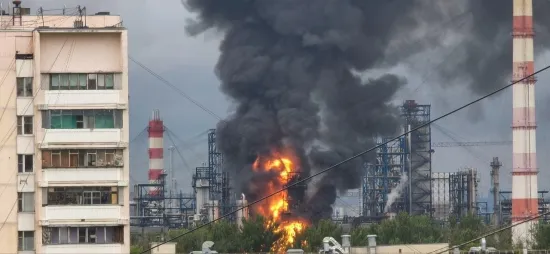
Berlin emphasises that Russian aggression has caused enormous losses and humanitarian consequences, and that in the current winter, the coldest since the start of the war, Russia is striking civilian targets and energy infrastructure in an attempt to deprive towns and villages of electricity, heat and water. In response, Germany has expanded its emergency energy aid and is strengthening its air defence to protect critical facilities from new attacks.
Among its priorities in the field of energy and heat supply, the German government is financing the repair and maintenance of electricity and heating facilities through the KfW development bank, supplying spare parts and helping to rebuild destroyed power plants. At the same time, air defence is being strengthened through the purchase and provision of air defence systems. The German Foreign Office is also involved in the physical protection of Ukrainian nuclear power plants and supports the IAEA in its expert missions.
A separate block of support concerns humanitarian aid. It is implemented in coordination with international organisations and non-governmental structures to quickly deliver medical aid, food, clean water and other necessary resources, especially to people near the front line. Germany also finances demining, mapping of mines and unexploded ordnance, as well as mine safety information campaigns.
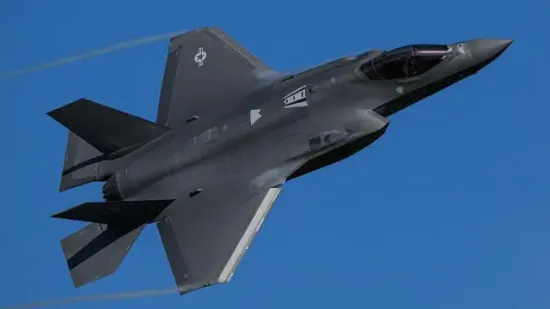
In the military section, Berlin notes that the aid includes the supply of weapons and equipment from both Bundeswehr warehouses and industry, funded by government programmes. This includes air defence systems, artillery, combat and armoured vehicles, protected transport, small arms, ammunition, medical supplies and protective equipment. It is also reported that more than 24,000 Ukrainian military personnel have undergone training in Germany since the start of the war.
The German government separately emphasises its support for Ukrainian refugees. Since the start of the full-scale war, more than 1 million Ukrainians, mainly women and children, have been given protection in Germany. The federal government provides financial assistance to the states and communities for the accommodation and provision of people, in particular through compensation payments and the provision of state-owned real estate for housing. Ukrainians can also receive state support, access to language courses, retraining programmes and employment assistance through employment centres. The Germany4Ukraine portal is available for online document and application processing, and the free Nummer gegen Kummer hotline is available in Ukrainian and Russian. According to a German study, a little over half of Ukrainians in Germany are employed three years after arriving, and the Federal Employment Agency publishes monthly statistics.
In the economic sphere, Berlin has declared its support for Ukraine's stability through programmes for small and medium-sized businesses and the development of vocational education. The UkraineConnect instrument, launched with an initial volume of €45 million, provides loans for investments by companies from Germany and Europe, and Ukrainian businesses can take advantage of preferential financing. In addition, Germany provides significant grant contributions through an account managed by the IMF to strengthen the capacity of the Ukrainian state. As part of its historical responsibility, Germany also supports victims of Nazism, in particular Holocaust survivors in Ukraine, through the Jewish Claims Conference.
Germany's participation in coordinating reconstruction and reforms is highlighted separately. To this end, the national platform Rebuilding Ukraine and the G7 platform for donor coordination are working. Berlin is developing mechanisms to attract private capital, in particular through the European Flagship Fund for the Reconstruction of Ukraine, and supports the transformation of the Business Development Fund into an institution modelled on a development bank. Germany also advises Ukraine on reforms on the path to EU accession, finances demining, strengthens the State Emergency Service and supports the work of recording and documenting war crimes.
In the field of healthcare, projects are supported in Ukraine and for refugees in Germany, including telemedicine, prosthetics and rehabilitation, as well as the evacuation of the wounded for treatment. In the field of education and science, support is provided for vocational guidance programmes, information about studying in Germany through NAKU, and, from July 2025, the development of a German-Ukrainian university network with the participation of the DAAD. Support for culture and independent media is emphasised separately, in particular through special programmes for the protection and preservation of cultural values and the Hannah Arendt initiative for Ukrainian journalists.