President of Estonia Karis: Russia may never change and the threat will return

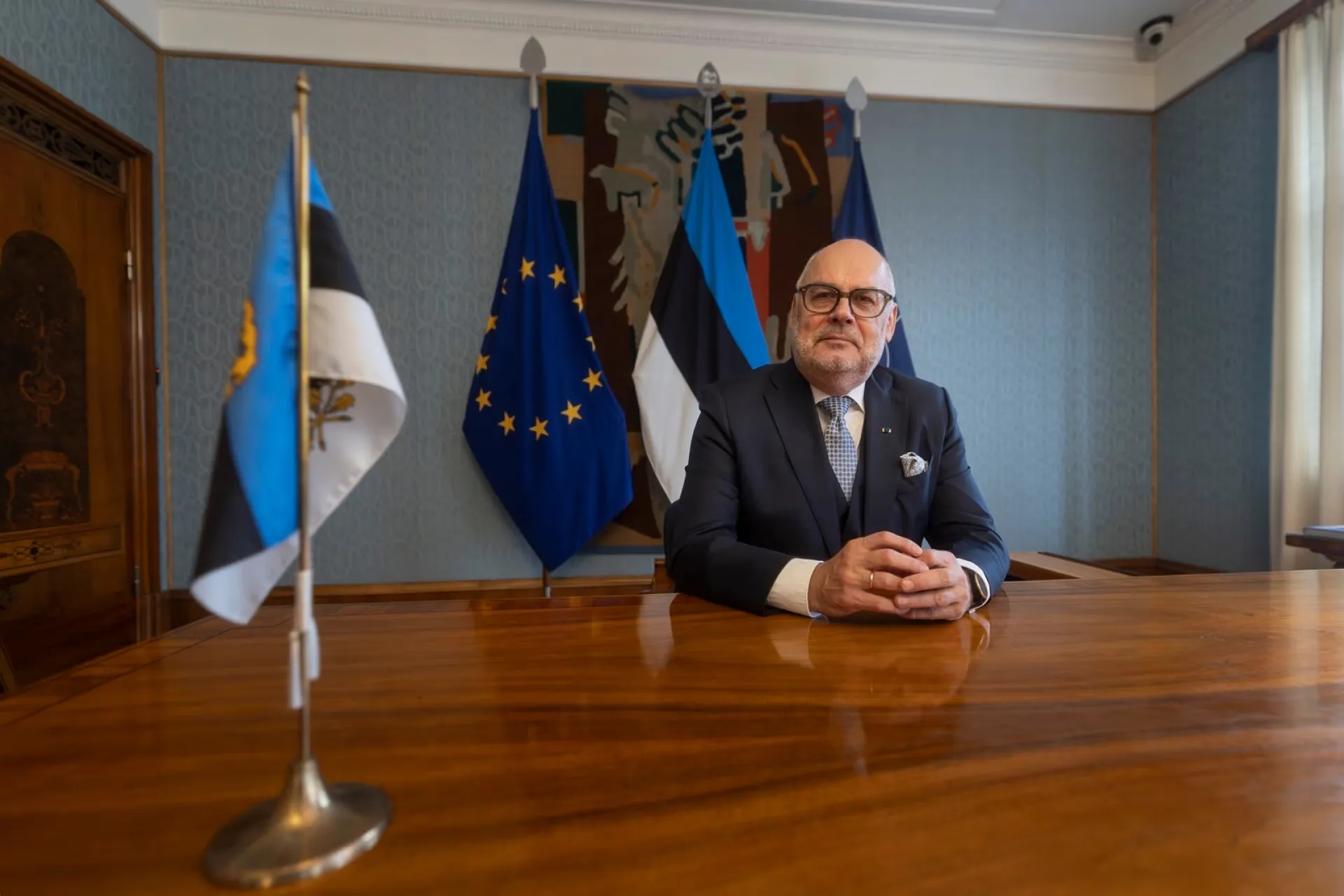
Estonian President Alar Karis believes that Russia may not change even after a possible change of government. He said this in an interview with the Finnish newspaper Ilta Sanomat, emphasising that aggressive cycles in Russian politics are repeated at intervals of decades.
According to Karis, it is difficult to negotiate with Vladimir Putin, as he is convinced that he will win the war against Ukraine. Even if the leadership in the Kremlin changes, this does not guarantee the emergence of a more peaceful leader. The Estonian president reminded that authoritarian regimes often come to power democratically, but then curtail freedoms. This was reported by The Public with reference to Ilta Sanomat.
Caris highlighted the role of Finnish President Alexander Stubb as one of the key European interlocutors of the United States. According to him, Finland knows Russia well, has practical experience in deterrence, and can offer the United States concrete solutions, particularly in the field of security and defence technology. That is why Stubb, according to Karis, has become an important voice for Europe in Washington.
The Estonian president stressed that security is a matter of survival for the small Baltic states. Estonia, together with Latvia and Lithuania, is building the Baltic Defence Line with bunkers and anti-tank barriers on the border with Russia. According to Karis, the country does not have the resources for a protracted war like the one waged by Ukraine, so it is focusing on deterring the enemy directly on the border.
Estonia plans to spend 5.4 per cent of GDP on defence in 2026, which is one of the highest figures in NATO. Karis emphasised that the level of investment in security will determine the willingness of allies, including the United States, to remain in Europe.
Speaking about possible peace talks on Ukraine, the Estonian President stressed that the West cannot recognise the territories occupied by Russia. He recalled that during the Soviet occupation of the Baltic states, the majority of the world did not legally recognise them as part of the USSR, and this principle remains key.
Karis also warned that even if the war against Ukraine ends, Russia will continue its hybrid pressure on the West. According to him, history shows that Moscow takes advantage of any weakness of its neighbours and tries to expand its influence.
Estonian President Alar Karis has admitted the possibility of financial assistance to Hungary to pay fines for the early termination of energy contracts with Russia. Karis reminded that Hungarian Prime Minister Viktor Orban recently visited Moscow to guarantee further supplies of cheap Russian gas. According to the Estonian president, some of the agreements between Budapest and Moscow may be valid until the 2040s, which creates a long-term dependence on Russia.
The Estonian president stressed that Hungary should abandon such contracts, even if it requires financial costs. He suggested that other European countries could help Budapest cover the fines to speed up the transition away from Russian energy.
Karis's statement comes against the backdrop of EU decisions on energy security. In early December, the EU Council and European Parliament negotiators agreed on a plan to phase out Russian gas imports by the end of 2027. At the same time, Viktor Orban has already announced his intention to challenge these plans in court, calling them a threat to the Hungarian economy.