The Cuban President has responded to Trump: the US has no right to attack the island

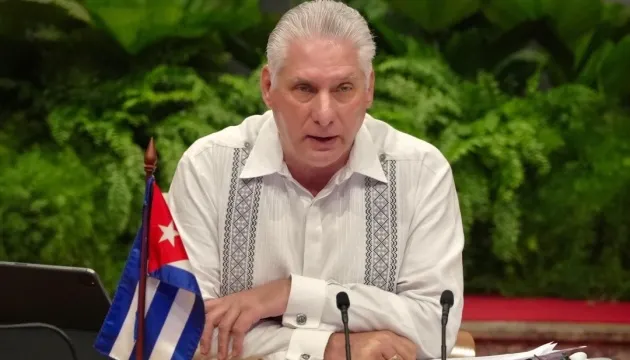
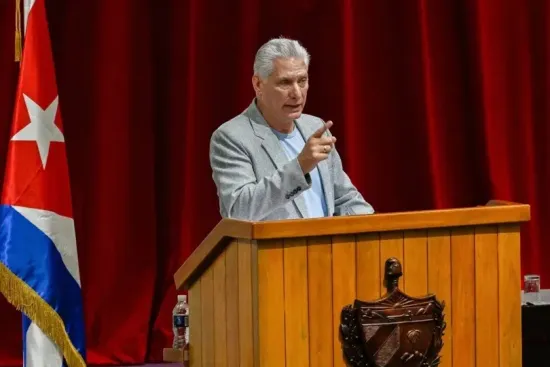
Díaz-Canel made these remarks in an interview with NBC News.
In an interview with American television, Díaz-Canel stated that he sees no legal or political justification for a US attack on Cuba or for a ‘surgical operation’ to remove the country’s leadership. He added that such a scenario would come at a high cost to the region in terms of security, and that Cuba itself would defend itself in the event of an attack.
His response to the possibility of a forceful regime change was the most forceful of all. Díaz-Canel made it clear that Havana takes such signals seriously and is prepared to resist, even if the cost is high. For the Ukrainian reader, this is an important detail: in the Caribbean region, the talk is no longer simply of sanctions or diplomacy, but of the risk of a direct military scenario.
This statement did not come out of the blue. As early as 13 March, Reuters reported that Cuba had opened negotiations with the US against the backdrop of a severe energy crisis caused by the American blockade on oil supplies. Díaz-Canel spoke at the time of dialogue as a means of seeking solutions to bilateral problems, but without demands to change the country’s political system. As early as 22 March, Cuba’s Deputy Foreign Minister said that the island was preparing for an unlikely but possible military scenario involving the US.
The situation was further exacerbated by the energy crisis. Following the events in Venezuela in early January, Cuba lost key oil supplies, which hit transport, hospitals, manufacturing and the electricity supply. At the end of March, a Russian tanker arrived on the island carrying approximately 700,000 barrels of oil, and Moscow promised another shipment. Reuters noted that this was the first large consignment of oil for Cuba in about three months.
Against this backdrop, Trump also stepped up his rhetoric. Reuters previously reported that he spoke of the “honour” of taking Cuba, and at the end of March declared that “Cuba is finished” and that even a new tanker of oil would not change the situation for the Cuban regime. For Havana, this was a clear signal that Washington views not only economic but also political pressure as a tool for regime change.
Díaz-Canel himself reiterated in the current interview that Cuba is ready for dialogue with the US without preconditions, but will not accept a conversation along the lines of “change your system, and then we’ll talk”. He emphasised that Havana does not demand that America change its system, and therefore does not accept similar demands being made of itself.
It should be recalled that US President Donald Trump stated that he could “take Cuba”, calling it a “great honour”. In response, Cuban President Miguel Díaz-Canel declared the country’s readiness to resist in the event of aggression.