Reuters has learnt of Putin’s reluctance to negotiate and the likelihood of the war escalating

Russian President Vladimir Putin has rejected calls for peace talks with Kyiv, and the latest strikes by Ukrainian drones on Russian oil refineries and ports have only strengthened his resolve to continue the war. This was reported to Reuters by three sources, whom the agency describes as close to the Kremlin.
Two of them, speaking on condition of anonymity, said that Putin is likely to escalate the war, which is now in its fifth year. One of the sources, who, according to Reuters, meets regularly with the Russian president, assessed the likelihood of an escalation in the coming months as “very high”.
The report came after US President Donald Trump stated that Putin wants to end the war and that a resolution to the conflict is “closer than people think”. Last week, Trump held separate telephone conversations with Putin and Ukrainian President Volodymyr Zelenskyy, and also met with Zelenskyy at the NATO summit. According to the Ukrainian president, the two sides discussed “ideas to bring peace closer”.
The White House did not respond to a request for comment from Reuters.
One of the agency’s sources said that Putin had “further entrenched his position” on achieving what he considers to be the key objective: the complete capture of the Donbas. He said the Russian president had recently criticised a group of advisers who had proposed a compromise based on a ceasefire along the current front line. Another source stated that Putin is convinced the Donbas will be captured soon.
In June, Putin publicly rejected Volodymyr Zelenskyy’s proposal to hold a face-to-face meeting and agree on a ceasefire.
Kremlin spokesperson Dmitry Peskov, responding to a query from Reuters, stated that Russia was “ready for a peaceful settlement, but has sufficient capacity to act independently and continue the special military operation”.
In response to an enquiry from the agency, a senior official at the Office of the President of Ukraine reported that Ukrainian intelligence has in recent months been monitoring Russia’s preparations for further military action, rather than for peace. According to him, this involves new operations in Ukraine or a possible attack on another European country.
Some Western military analysts believe that Russia may need a general mobilisation to seize the Donbas, though such a move would be politically unpopular.
Reuters also notes that Russian military experts are increasingly speaking publicly about the possibility of escalation, in particular about potential strikes on targets in Europe, including NATO bases in the Baltic states.
Jack Watling, an analyst at the Royal United Services Institute for Defence Studies, suggested that Russia might resort to isolated attacks to provoke internal disputes within NATO regarding the Alliance’s response.
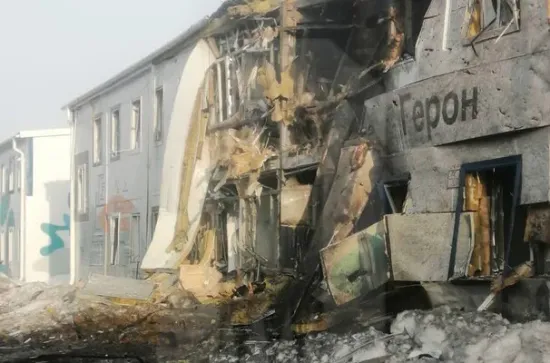
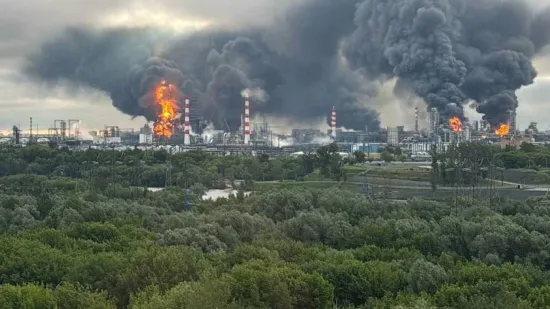
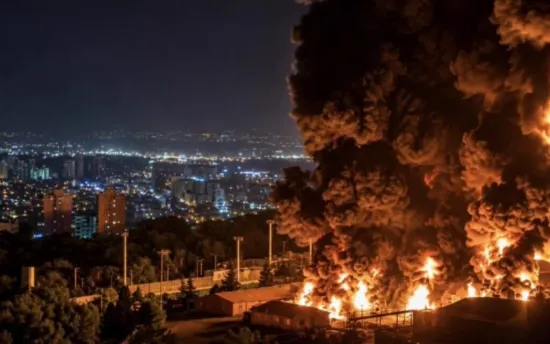
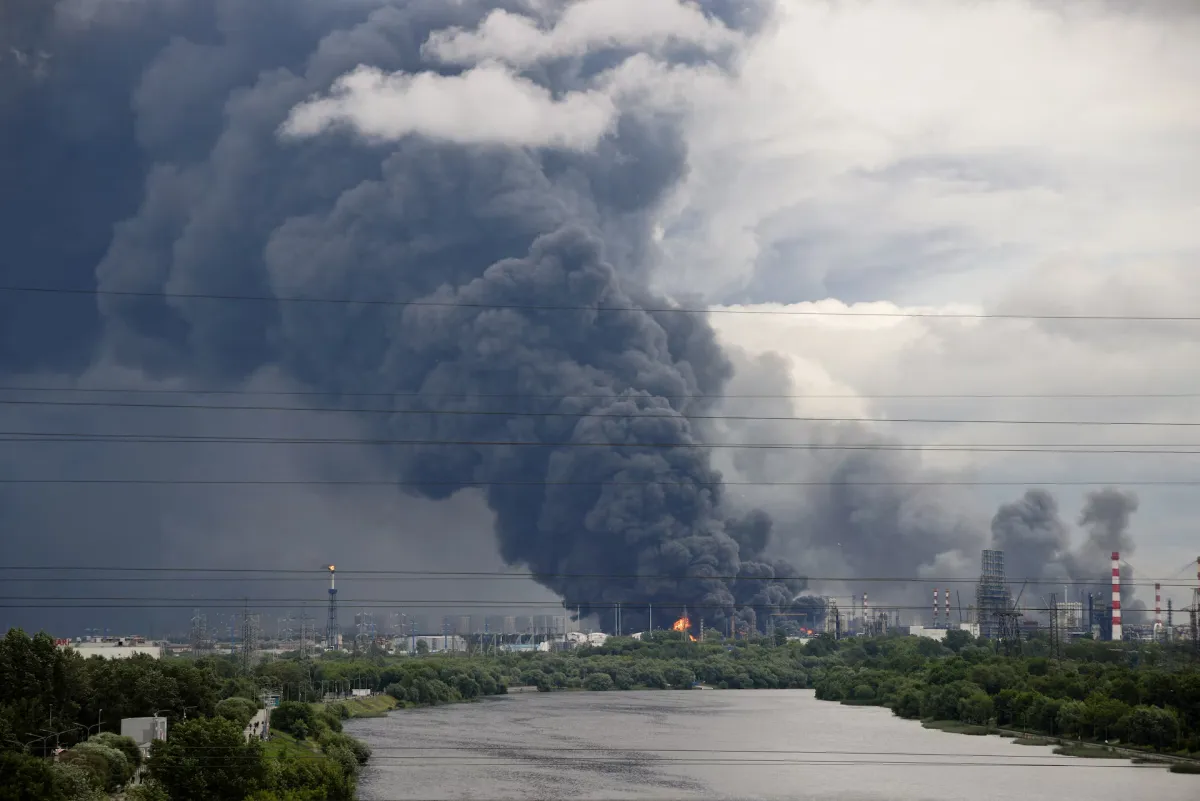
According to Reuters, Ukrainian strikes on oil refineries, ports and oil depots in Russia and the occupied territories have caused a severe fuel shortage. The agency notes that, despite Putin’s high level of support, his approval rating, according to one poll, has recently fallen to its lowest level since the start of the full-scale war.
A source speaking to Reuters, who meets with Putin regularly, claims that Ukraine’s recent successes have only strengthened the Russian president’s resolve to respond more harshly.
Last week, Russia carried out two large-scale drone and missile attacks on Ukraine, including Kyiv. Dozens of civilians were killed in the strikes. Moscow claimed that military targets were the aim.
During a speech to the military, Putin stated that Ukraine’s strikes on energy infrastructure meant that Russia would seek to seize additional Ukrainian territories along the border to create a ‘security zone’.
Andriy Ilnytskyi, a former official at the Russian Ministry of Defence, wrote in a column for *Kommersant* on 29 June that the escalation could begin with the destruction of 30 major industrial facilities in Ukraine, including a steelworks and the port of Odesa. He also suggested the possibility of strikes on NATO bases in the Baltic states and Romania, as well as on companies in the European Union that manufacture long-range drones and missiles for Ukraine.
Commenting on this article, Dmitry Peskov stated that Russia must strengthen its own security and cannot “turn a blind eye” to the militarisation of Europe.
Reuters also notes that the advance of Russian troops on the front line has slowed this year. According to estimates by the Centre for Strategic and International Studies, since the start of the full-scale invasion, around two million military personnel have been killed, wounded or are missing in action, of whom approximately 1.4 million are Russian casualties. At the same time, the agency emphasises that neither side officially publishes figures on its military casualties.
According to one of Reuters’ sources, establishing control over the whole of Donbas is a matter of principle for Putin.
“He needs some sort of victory,” the source told the agency.