Russian regions enter 2026 with a deepening financial crisis

Artur Romanchenko
Artur Romanchenko Journalist
Russian regions enter 2026 with a deepening financial crisis

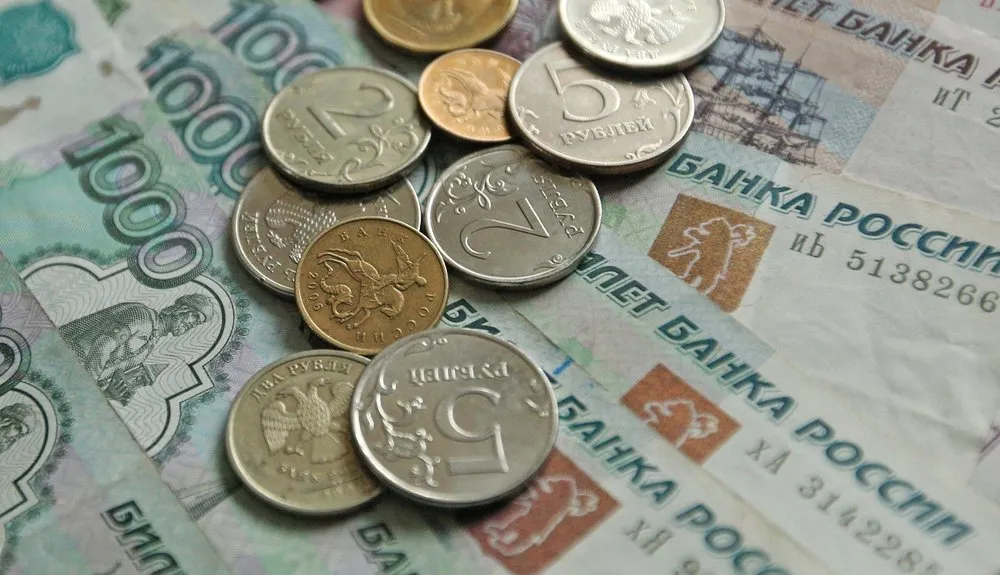
russian rubles
Sanctions, the loss of markets and reduced transfers have led to a sharp deterioration in the financial situation of Russia's regions. Budget deficits are growing, and support from the centre is weakening due to the war against Ukraine.

Russian regions are starting 2026 amid a deepening financial crisis that is increasingly exposing the structural weakness of their budgets. The combined pressure of sanctions, the loss of foreign markets and the deterioration of the global economic environment have led to a situation where even meeting basic social obligations is becoming problematic. This is reported by the Foreign Intelligence Service of Ukraine.

The most vulnerable are traditionally subsidised subjects, in particular Kalmykia, Mari El and Pskov region. For decades, they have relied on federal transfers for their survival, but these revenues are now declining and access to credit is narrowing. Chronic debt and a lack of investor interest create the risk of a full-blown budget crisis with no obvious way out.

Problems are rapidly spreading to industrial regions. Coal mining areas, including the Kemerovo region, could become one of the main sources of budget losses in 2026. The fall in global coal prices, sanctions pressure and the eventual loss of the European market are leading to a projected 4.1 per cent decline in gross regional product and a budget deficit of around 44 billion rubles. In Khakassia, the situation is exacerbated by a combination of unprofitable mines, dependence on non-ferrous metal prices and limited hydropower capacity.

Metallurgical regions are also losing financial stability. In the Irkutsk Region, falling aluminium and coal prices are creating a projected budget deficit of around RUB 40 billion, while the protracted crisis at Rusal's enterprises leaves the local authorities with no room for manoeuvre. In the Vologda Oblast, the economic situation is exacerbated by the conflict between the regional authorities and the owner of Severstal, which has effectively blocked the update of economic growth forecasts.

Additional pressure is created by regions with specific risks. The Astrakhan region expects a 2.1 per cent decline in gross regional product, with negative dynamics continuing until at least 2028 due to the depletion of oil and gas fields. Kursk and Belgorod regions, which used to benefit from cross-border trade with Ukraine, have become frontline territories and are completely dependent on subsidies.

The general trend for the regions of Russia is becoming increasingly tougher. The federal centre, which has limited resources, is concentrating its funding on the war against Ukraine, while domestic demand and investment activity are not growing. In such circumstances, the regions are left face to face with budgetary problems, without real support and without clear economic prospects.
Share tittle
Politics
Budanov's approval ratings have risen: Fesenko cites the main reason
Politics

Budanov's approval ratings have risen: Fesenko cites the main reason

Political analyst Volodymyr Fesenko stated that Kirill Budanov’s approval ratings began to rise following his appointment as head of the President’s Office and his active involvement in the negotiation process.

05.06.2026
The dismissal of Education Minister Lisovyi could be considered by Parliament as early as next week
Politics

The dismissal of Education Minister Lisovyi could be considered by Parliament as early as next week

The Verkhovna Rada may consider the dismissal of Oksen Lisovyi, the Minister of Education and Science, as early as next week. MPs cite the situation regarding the National Multidisciplinary Test (NMT) and the academic workload placed on final-year students during the war as among the reasons for their criticism.

05.06.2026
President Zelenskyy’s letter to Putin: the Foreign Ministry has outlined the next step
Politics

President Zelenskyy’s letter to Putin: the Foreign Ministry has outlined the next step

Ukraine will formally submit President Volodymyr Zelenskyy’s open letter to Putin via diplomatic channels. The Foreign Ministry has stated that the document contains a proposal to end the war and an invitation to a face-to-face meeting.

05.06.2026
Zelensky calls on Putin to hold talks, while the Kremlin insists on Moscow
Politics

Zelensky calls on Putin to hold talks, while the Kremlin insists on Moscow

The Kremlin has stated that it has seen Volodymyr Zelenskyy’s open letter to Putin, but that the Russian president has yet to be briefed on it. Meanwhile, Kremlin spokesperson Dmitry Peskov has once again invited Zelenskyy to visit Moscow.

05.06.2026
Trump backed a meeting between Zelenskyy and Putin following an open letter
Politics

Trump backed a meeting between Zelenskyy and Putin following an open letter

US President Donald Trump has said it would be “wonderful” if Volodymyr Zelenskyy and Vladimir Putin were to meet to discuss ending the war.

05.06.2026
Economy
Restrictions on petrol sales have already been imposed in 20 regions of Russia
Economy

Restrictions on petrol sales have already been imposed in 20 regions of Russia

Restrictions on petrol sales and fuel shortages have spread to at least 20 regions in Russia, including Moscow and St Petersburg. Restrictions have also been introduced in the temporarily occupied territories of Ukraine.

05.06.2026
Carriers have called on the government to step up the fight against the black market in international transport
Economy

Carriers have called on the government to step up the fight against the black market in international transport

Industry transport associations have appealed to the Prime Minister of Ukraine, Yulia Svyrydenko, calling for the introduction of systematic measures to combat illegal international passenger transport. The industry reports significant losses to the budget and risks to passengers.

05.06.2026
Women in Ukraine earn less than men: in which sectors is the pay gap the widest?
Economy

Women in Ukraine earn less than men: in which sectors is the pay gap the widest?

The average salary in Ukraine in the first quarter of 2026 was 28,885 hryvnias. However, the figures for men and women differ significantly, with the gap exceeding 47% in certain sectors.

04.06.2026
In 2026, over 2.1 billion hryvnias were allocated for the construction and repair of shelters in Kyiv
Economy

In 2026, over 2.1 billion hryvnias were allocated for the construction and repair of shelters in Kyiv

The city authorities have allocated 2,148,145,000 hryvnias for the construction of new civil defence shelters and the renovation of existing ones in 2026. In 2025, almost the same amount was allocated for construction alone.

04.06.2026
200 million tonnes of cargo have been transported via the Ukrainian maritime corridor
Economy

200 million tonnes of cargo have been transported via the Ukrainian maritime corridor

Since the launch of the Ukrainian maritime corridor in 2023, 200 million tonnes of cargo have been transported via it, of which 118 million tonnes is Ukrainian grain.

04.06.2026