Russia has redeployed air defence systems from the front line to Moscow due to an increase in drone attacks

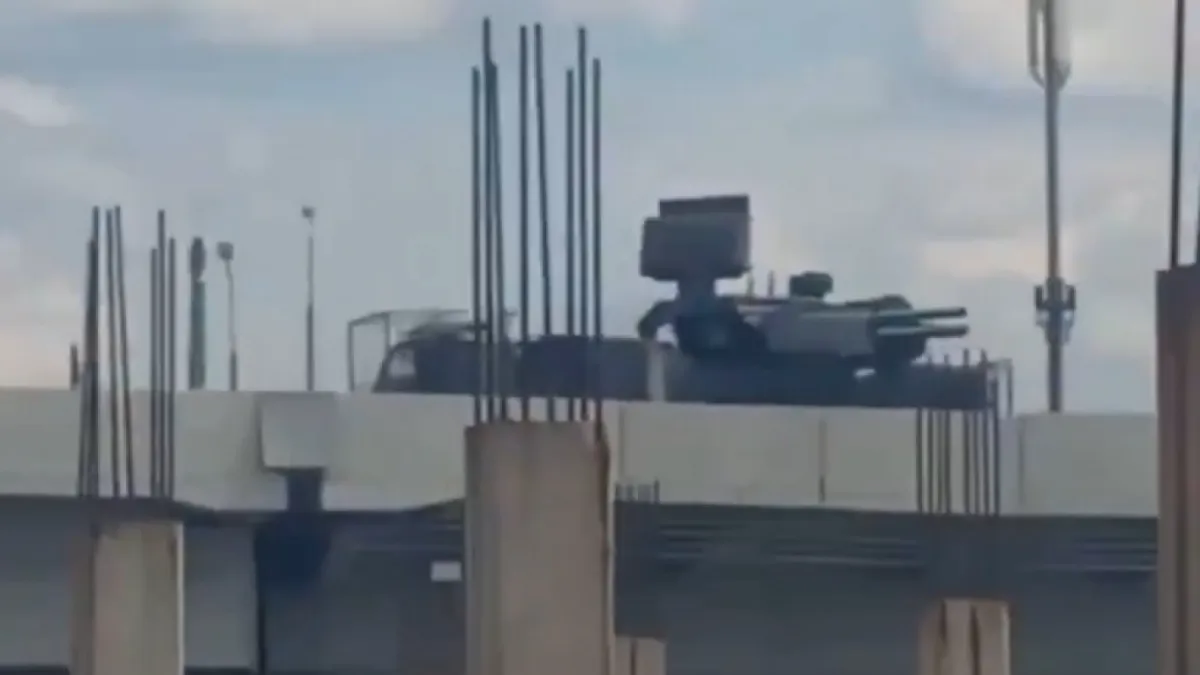
Russia has redeployed an air defence system from the front line to Moscow to bolster the capital’s defences amid a rise in attacks by Ukrainian drones, reports The Telegraph.
The new ‘Pantsir’ anti-aircraft missile and gun system has been installed on a tower near the Moscow oil refinery, which came under attack from Ukrainian drones last week.
The system has been positioned a few hundred metres from the Kapotnya oil refinery. The facility supplies around 40 per cent of Moscow’s fuel and is located approximately 10 miles from the Kremlin.
Despite three rings of air defence around Moscow, the Russian capital remains vulnerable to drone attacks.
On Monday, a wave of drone attacks led to the temporary suspension of operations at all four of Moscow’s main airports.
Last month, one of the drones breached Russian air defences and struck a luxury residential complex four miles from the Kremlin.
Analysts note that the Russian air defence system, which was designed to counter aircraft and conventional missiles, is struggling to adapt to massive swarm attacks by long-range drones.
The cockpit of the new Pantsir system is protected by a metal structure. Such protection is typically used on systems deployed near the front line to defend against short-range attack drones.
Ukrainian military experts believe this may indicate that the system has been moved directly from the combat zone.
Photos published online also show that only two of the six standard missiles are visible on one side of the launcher. This may indicate a shortage of interceptor missiles.
According to Robert Brovdi, commander of Ukraine’s Unmanned Systems Forces, Moscow is defended by over 100 air defence launchers and 50 mobile ‘Pantsir’ systems.
On 18 June, the Moscow oil refinery came under attack during the largest drone strike since the start of the war. Following the strike, the lid of one of the tanks was blown into the air, and a cloud of smoke formed over the city.
A separate tower housing a ‘Pantsir’ system, located nearby in a wooded area, was also intended to protect the facility. However, footage released shows that the system’s missiles may have struck the refinery itself.
Ukraine launches drones towards Moscow and other regions of Russia almost daily. According to the Russian side, most of them are shot down.
Vladimir Putin has not publicly commented on the latest attacks, despite growing concern in Moscow.
Kyiv has also increased the frequency of large-scale strikes, often launching repeated attacks on the same targets within a few days of each other. This allows it to identify weaknesses in the air defence system and deplete Russia’s defence resources.
On Sunday, Ukrainian hackers breached the Telegram account of Moscow’s mayor, Sergei Sobyanin. The message ‘Moscow will burn’ appeared several times in the posts, along with a link to a fundraising campaign for Ukrainian drones.
The threat extends beyond Moscow. In St Petersburg, which has also recently been subjected to drone attacks, the authorities have announced the installation of new concrete shelters at four locations in Kronstadt, where the headquarters of the Russian Baltic Fleet is based.
In Crimea, the occupying authorities have announced the suspension of fuel sales to the public due to a shortage caused by recent strikes on logistics routes supplying the peninsula.
Meanwhile, Russia continues its air strikes on Ukraine. On Monday, three members of the same family, including a 13-year-old boy, were killed when a drone struck a house in the Sumy region.
Ukrainian President Volodymyr Zelenskyy has stated that Russia may intensify its attacks on Ukraine.
“Putin is growing weaker. He is weakening politically, on the battlefield and physically. That is precisely why he may intensify his attacks on us, on our people, with missiles and drones,” said Zelenskyy.