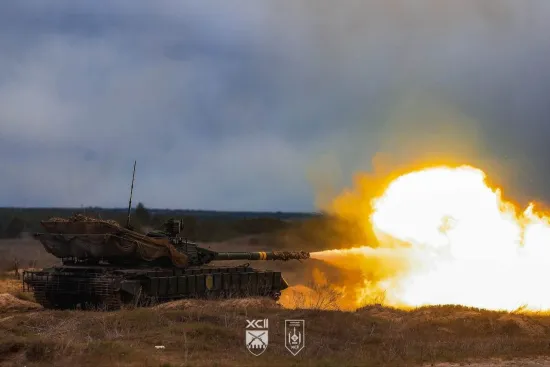
The US and Iran have been exchanging blows for a second day amid fears that the ceasefire could collapse

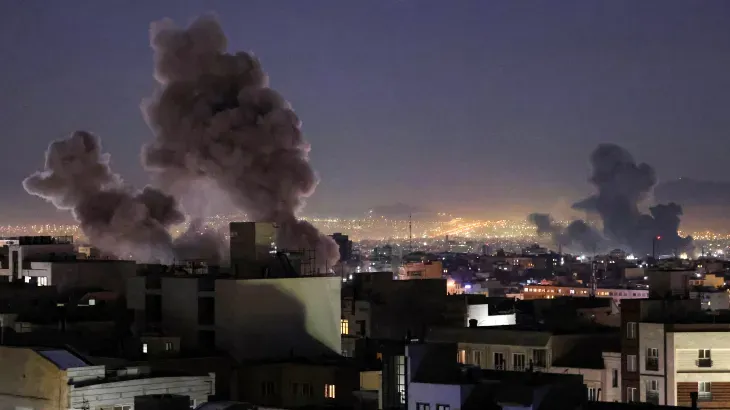
The escalation began after an American Apache helicopter was shot down near the Strait of Hormuz earlier this week. Following this, the two sides carried out a series of reciprocal strikes on Iranian territory and US military bases in the region, according to Reuters.
The events have become the most serious test for the fragile truce reached in April. It was intended to bring an end to the war that began in late February following large-scale joint US and Israeli air strikes on Iran.
The US military stated that the latest strikes targeted military surveillance systems, communications equipment and air defence facilities on Iranian territory. Washington explained its actions as a response to what it called Tehran’s unprovoked and prolonged aggression.
According to Donald Trump, the strikes will cease shortly, but the US is prepared to resume large-scale bombing if the Iranian leadership does not immediately sign an agreement with the United States.
Following the US president’s statement, oil prices rose by nearly three dollars and continued to rise during Asian trading.
US Central Command reported the operation’s conclusion approximately four hours after it began, shortly after midnight Tehran time.
The Islamic Revolutionary Guard Corps announced retaliatory strikes on 18 US military targets at airbases in Kuwait and Bahrain, as well as on the US Navy’s Fifth Fleet in Bahrain. Later, the Iranian side reported a second strike on Al Azraq airbase in Jordan, during which 12 ballistic missiles were fired at the US facility.
The Kuwaiti army stated that air defence systems had repelled enemy air targets. The Bahraini King’s media adviser reported that the country’s air defence forces had intercepted and destroyed the Iranian air attacks.
Iran’s Joint Chiefs of Staff also warned of their intention to open fire on any vessels attempting to pass through the Strait of Hormuz. Iranian media reported that two American ships had been fired upon.
Meanwhile, US Central Command denied reports of the strait being closed or of its ships being hit. It stated that commercial shipping continues to pass through the Strait of Hormuz despite Iran’s threats.
Iranian news agencies reported explosions in several cities across the country, including Sirik, Karghan, Bandar Abbas, Minab, Karaj and Varamin.
US Defence Secretary Pete Hagset described the strikes as an attempt to force Iran to agree to a deal to end the conflict.
“We will deliver a powerful blow to them tonight, and we hope that Iran will make the right decision. If we have to negotiate with bombs, we will negotiate with bombs,” he said.
Despite attempts by negotiators to end the war, the US and Iran have already exchanged blows on several occasions since the ceasefire came into effect. Donald Trump has repeatedly stated that an agreement is close, but there are no signs of a breakthrough as yet.
The day before, the US military struck air defence systems and radar stations near the Strait of Hormuz following an incident involving a downed helicopter. In response, Iran attacked US bases in Jordan, Kuwait and Bahrain with missiles and drones. According to a US representative, no significant damage was reported.
Tehran accused Washington of striking reservoirs that supply drinking water to ten villages. Iranian Foreign Ministry spokesman Esmail Baghai called this a war crime and a gross violation of human rights.
The war has already led to the deaths of thousands of people and disrupted around a fifth of global oil and liquefied natural gas supplies, causing a sharp rise in prices. Iran has restricted traffic through the Strait of Hormuz, whilst the US maintains a blockade of Iranian ports.
The conflict is also creating political difficulties for the White House. Polls show a decline in Donald Trump’s approval rating amid voter dissatisfaction with high fuel prices. Some Republicans fear that the unpopularity of the war could affect the results of the mid-term congressional elections in November.
Meanwhile, fighting continues in Lebanon between Israel and the Iran-backed group Hezbollah. According to Lebanese security sources, Israeli air strikes in the south of the country on Wednesday claimed the lives of at least 13 people. Hezbollah reported new attacks on Israeli forces.
The Israeli military stated that, following air raid sirens in the north of the country, two missile launches were detected near the area where Israeli troops are operating in southern Lebanon.
Tehran’s demands include an end to Israeli strikes in Lebanon, the lifting of sanctions against Iran, the release of billions of dollars in frozen assets, and recognition of its control over the Strait of Hormuz.
Donald Trump insists on an end to restrictions on shipping through the Strait of Hormuz and states that any peace agreement must guarantee that Iran cannot develop nuclear weapons. Iran denies having such intentions.