Russia wants to take the Baltic states to court over the ‘protection’ of Russians

This has been reported by The Moscow Times and in statements from the Russian Foreign Ministry.
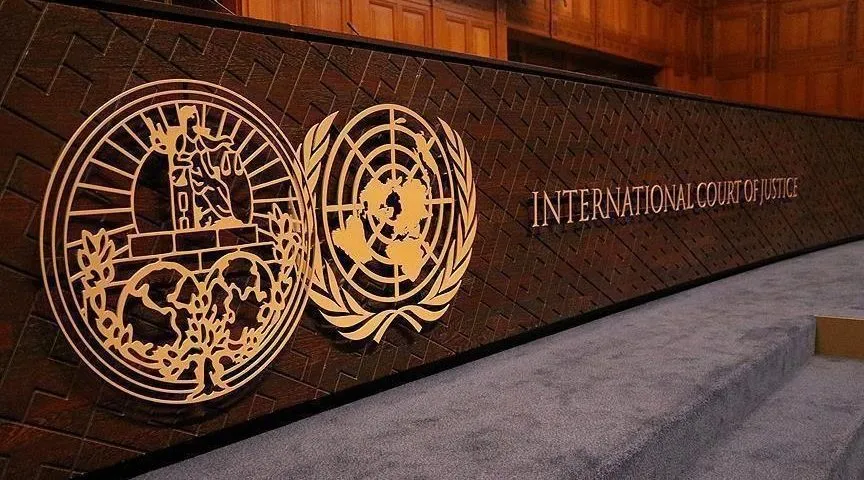
Russia has announced its intention to appeal to the International Court of Justice to allegedly “protect” the rights of Russians in the Baltic states.
The Russian Foreign Ministry claims that the authorities in Latvia, Lithuania and Estonia are allegedly “banning” the use of the Russian language, “rewriting history” and pursuing a “punitive policy of repression and intimidation”.
A representative of the Russian Foreign Ministry stated that attempts to resolve the differences through negotiations have allegedly failed.
“All attempts to resolve differences through negotiations have been fruitless. In view of this, we will obviously have to take our claims to court by appealing to the UN’s principal judicial body – the International Court of Justice,” said the Russian Foreign Ministry representative.
What people are saying about the possible lawsuit
Former UN Deputy Secretary-General Sergei Ordzhonikidze described Russia’s possible appeal to the court as a political move.
According to him, it is difficult to predict when such a case might come to trial and exactly how it would be heard.
He also noted that, for the first time in the history of the UN International Court of Justice, there is no Russian judge on the bench, and the proceedings themselves could take years.
What is known about the International Court of Justice
The International Court of Justice hears disputes between states in accordance with the rules of international law and issues advisory opinions.
Its jurisdiction is optional.
Furthermore, the Court has no direct means of enforcing its rulings.
The context regarding the Baltic states
Following the outbreak of Russia’s full-scale war against Ukraine, the Baltic states restricted entry for Russians and began dismantling Soviet monuments.
Against this backdrop, the Russian Foreign Ministry has repeatedly claimed that the leadership of Latvia, Lithuania and Estonia is guilty of so-called “Russophobia”.
The countries of Northern Europe and the Baltic states have previously condemned Russia’s disinformation campaign and the Russian Federation’s false claims regarding the region.
Russian law on the “protection” of citizens abroad
On 13 May, the Russian State Duma passed, in its second and third readings, a bill on the possibility of using the armed forces abroad to “protect the rights of Russian citizens” in the event of their arrest.
The bill provides that the army may be deployed outside Russia by decision of the Russian president in cases where Russian citizens are arrested or face criminal prosecution.
This also applies to prosecutions ordered by international judicial bodies in which Russia does not participate.
Under current Russian law, the President of the Russian Federation requires the permission of the Federation Council to deploy the armed forces abroad.
Prior to the full-scale invasion of Ukraine in 2022, the Federation Council granted such permission.
The expansion of Vladimir Putin’s powers came after a series of warnings from NATO countries that the Kremlin might be preparing for war with one or more European countries.
Follow us on Telegram