A Picasso masterpiece worth billions is under threat in war-torn Tehran
This is reported in a Bloomberg article.
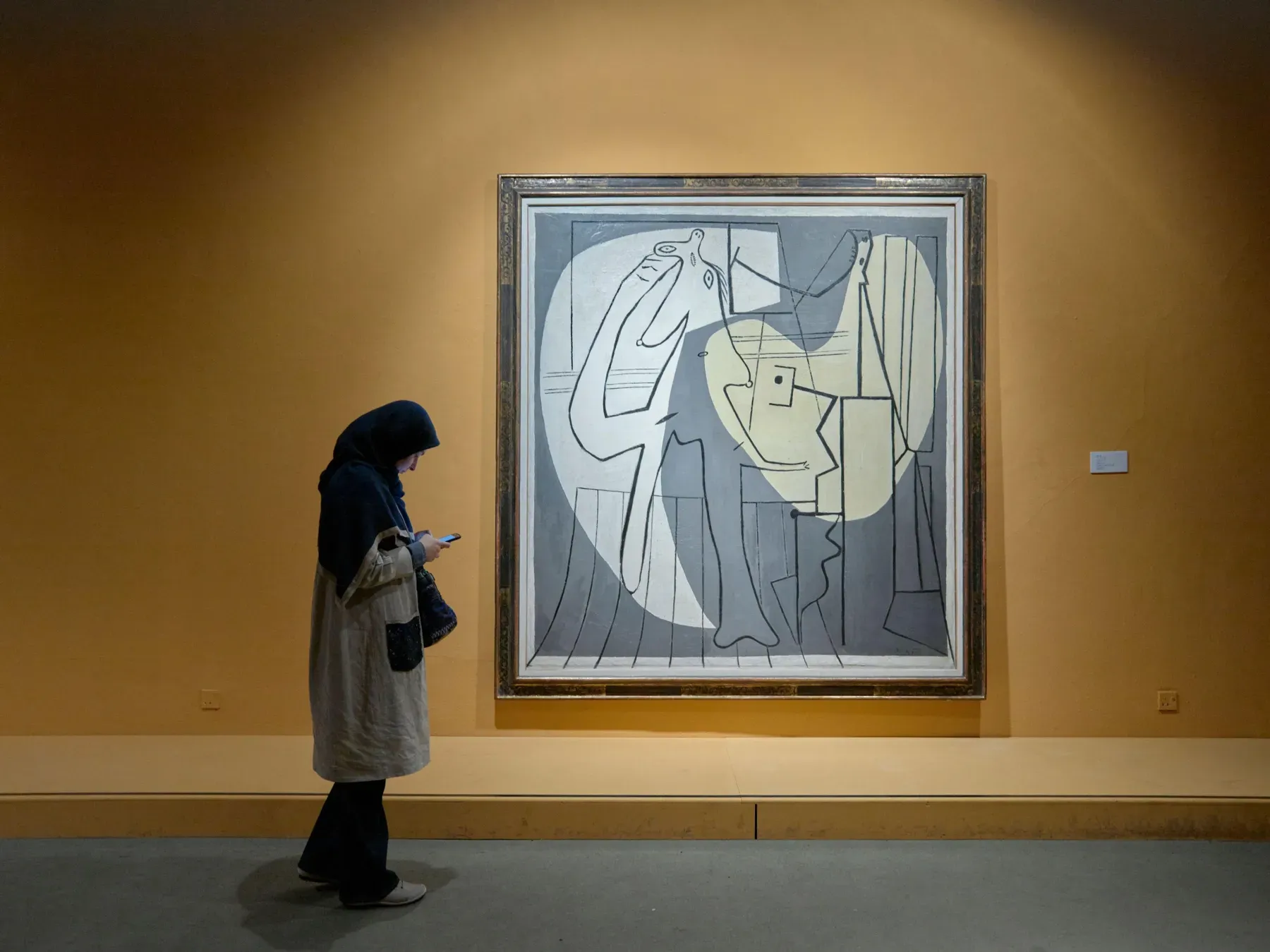
One of Pablo Picasso’s key works – *The Artist and His Model* (1927) – has belonged to Iran for many years and is housed in the Tehran Museum of Contemporary Art. This painting is considered one of the artist’s most important works, yet it is almost impossible to see in person.
Today, attention to the painting has intensified further due to the situation surrounding Tehran itself. The city where the masterpiece is kept is under threat of attack, and with it, one of the most valuable pieces in Iran’s museum collection.
Art historians describe “The Artist and his Model” as one of the pinnacles of Picasso’s oeuvre and, in fact, the central work of his surrealist period. It is this painting that is regarded as a crucial link in the artist’s evolution towards “Guernica” – his most famous anti-war painting.
The work found its way to Iran during the oil boom following the 1973 OPEC embargo. Against the backdrop of a sharp rise in oil revenues, the wife of the Shah of Iran, Farah Pahlavi, began actively building a collection for the future Tehran Museum of Contemporary Art. She sought to make Iran a cultural avant-garde and bought up the most valuable Western works.
“The Artist and His Model” was acquired in 1977 from the Swiss art dealer Ernst Beyeler. At the time, major Western museums were also vying for this work, but it was Iran that managed to purchase it.
The entire collection, assembled for the museum between 1975 and 1977, was valued at approximately $25–30 million, funded by oil revenues. By 2018, the collection was estimated to be worth $3 billion, and it is likely worth even more now.
After the 1979 revolution, Iran stopped purchasing art for the museum. During the revolutionary events, some of the exhibits were damaged: a bullet pierced a sculpture by Henry Moore, and a portrait of Farah Pahlavi by Andy Warhol was slashed with a knife. At the same time, the new authorities preserved most of the collection in the museum’s underground vaults.
From time to time, individual works from this collection did, however, leave Iran for exhibitions. In 2010, ‘The Artist and His Model’ was shown at the Kunsthaus Zürich in Switzerland. At that time, the painting became accessible to the general public for the first time in 78 years.
Since that exhibition, interest in the painting has only grown. In art circles, it was said that without Iranian oil money, this work would likely have ended up at New York’s MoMA alongside “Les Demoiselles d’Avignon” and would have occupied a very different place in the Western canon of Picasso.
Despite the fact that the canvas depicts a nude woman, the Iranian theocratic regime allowed the painting to be exhibited in a museum. In 2025, it became the centrepiece of the exhibition “Picasso in Tehran”, which was visited by 55,000 people over 15 days.
Thus, one of Picasso’s most valuable works remains today not only a museum treasure of Iran, but also a piece whose fate depends directly on the security of the city in which it is kept.
As a reminder, the Picasso painting that ‘disappeared’ in Spain on its way to an exhibition has been found