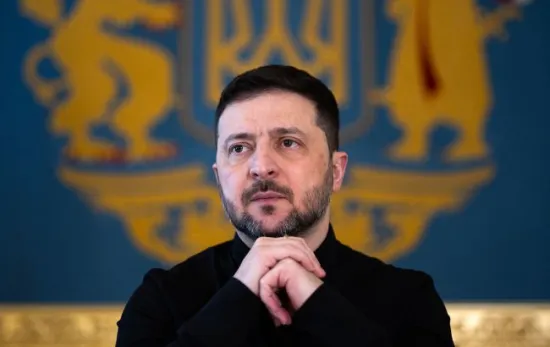
Syrsky on mobilisation, the Joint Staff, the front line and the reform of the Ukrainian Armed Forces’ corps structure

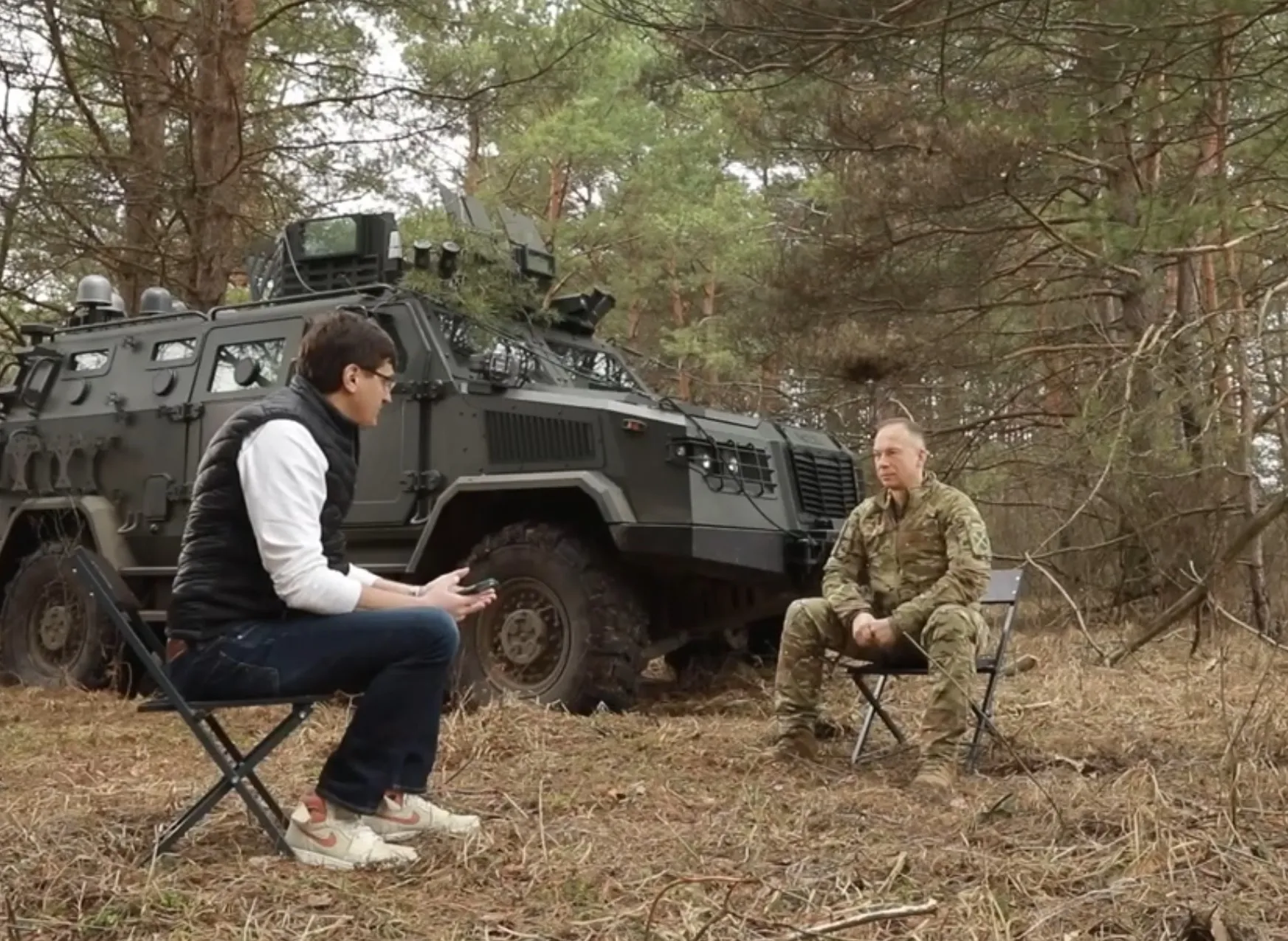
On the army’s primary need
Commander-in-Chief of the Armed Forces of Ukraine Oleksandr Syrskyi stated in an interview with ICTV that the Ukrainian army’s primary need at present is for trained personnel. According to him, whilst two years ago the main requirement was for shells and missiles, now what is needed above all is trained military personnel ready to fulfil their military duty.
He emphasised that mobilisation remains the main source of reinforcements for the Armed Forces. At the same time, he said, this process must be as comfortable as possible for those being mobilised, without violating the law or procedures.
Syrskyi rated the effectiveness of mobilisation measures at 6–7 out of 10. He said he would like to see higher-quality training and a greater number of motivated people who do not leave their units and carry out the tasks assigned to them.
On fair mobilisation and the attitude towards draft dodgers
Oleksandr Syrskyi described the issue of fair mobilisation as complex, but noted that fairness lies in treating all citizens who are required to fulfil their military duty equally.
In his view, there should be no distinction between those subject to mobilisation and those who are not, even if they have every reason to be.
At the same time, the Commander-in-Chief stated that he does not understand men who do everything in their power to evade mobilisation. In his words, this is also a matter of responsibility towards the state.
On deserters and conditions of service
Syrskyi emphasised that he is not in favour of harsh measures to address the issue of desertion. In his view, current legislation is already sufficiently strict towards those who violate it.
According to the Commander-in-Chief, the main reason for desertion is people’s natural fear for their own lives. That is why the transition from civilian to military life must be as painless and comfortable as possible.
He emphasised that this applies first and foremost to the work of territorial recruitment centres. Syrskyi noted that a human approach must be maintained at all stages, and then there will be fewer such problems.
He said that work is currently underway to improve service and training conditions. To ensure the safety of servicemen at training centres, infrastructure and living quarters are being moved underground. The duration of basic training has been increased to 50 days, and an additional 14-day adaptive training course has been introduced. He also mentioned a reduction in the number of issues with food provision.
Syrskyi added that a conscientious approach to training must be mutual. This applies not only to instructors but also to the conscripts themselves, who must understand that their lives and health depend on the quality of their training.
He also reported that mechanisms have already been established for the return of servicemen who previously left their units. According to him, they arrive daily at reserve battalions, from where they are deployed to their original or new units.
On the situation at the front and goals for the year
The Commander-in-Chief stated that this year Ukraine will focus on conducting a strategic defensive operation. Its aim is to contain the enemy, prevent the loss of territory, deplete its forces and resources, create conditions for large-scale offensive operations, build up reserves and ensure high-quality training for military personnel.
At the same time, he said, the Defence Forces will conduct counter-offensive and offensive operations in areas where the enemy is weak.
Syrskyi noted that this is necessary to liberate territories and maintain operational and strategic initiative. According to him, the enemy is currently forced to adapt to Ukraine’s actions and concentrate its efforts where Ukrainian forces are advancing.
On the Oleksandrivka sector and Russia’s plans
Oleksandr Syrskyi reported that in the Oleksandrivka sector, the Defence Forces have already liberated 480 square kilometres of territory. He said this result exceeds the figures from the Dobropillia counter-offensive operation, during which over 430 square kilometres were liberated.
He noted that from 1 March, Russian troops had planned to launch a large-scale offensive across virtually all 13 main sectors. However, he said, due to the active operations of the Ukrainian Armed Forces, the enemy was forced to change its plans and redeploy some of its forces and equipment from the Pokrovsk and Ocheretine sectors to the Oleksandrivka sector.
According to Syrskyi, in 2025 the Russians planned to capture the entire Donetsk and Luhansk regions, a significant part of the Dnipropetrovsk and Zaporizhzhia regions, create buffer zones in the Sumy and Kharkiv regions, and launch operations in the Mykolaiv and Kherson regions.
At the same time, he emphasised that the enemy has not ceased its offensive operations and is, in fact, conducting them continuously, but, particularly in the Pokrovsk direction, is suffering losses and retreating.
On Russian strike aircraft and the enemy’s strength
Syrskyi reported that Russian strike aircraft are carrying out 70–90 strikes on Ukraine every day and deploying between 200 and 300 guided aerial bombs.
According to him, no effective means of countering guided aerial bombs in particular have yet been found, and this remains a serious problem. He identified the destruction of enemy air attack assets, i.e. aviation, as the main means of countering them.
The Commander-in-Chief also warned against underestimating the enemy. He said the enemy is strong and is one of the most powerful armies in the world in terms of numbers and equipment.
On corps-level reform
Oleksandr Syrskyi stated that the reform of the Ukrainian army’s military command structure is currently in its second phase. This refers to corps-level reform.
According to him, corps command structures were established during the first stage. At that time, three corps already existed, and a total of 16 corps were formed, 13 of which are in the Armed Forces and two in the National Guard.
Currently, as Syrskyi said, the formation of corps-level units and the redeployment of brigades with their own specific characteristics are underway. He cited the National Guard brigades as an example. According to him, the first corps is already effectively fully formed and is commanding its own brigades. The third army corps also has its full complement of brigades.
The third stage of the reform, he said, will most likely take place once hostilities have ended.
On the vision of victory
Syrskyi stated that Ukraine’s victory must be just. According to him, this means defeating the enemy, fulfilling the set tasks, and concluding peace on Ukrainian terms.
He emphasised that Ukraine must not lose any territory, whilst Russia must suffer such losses and find itself in such a position that it cannot dictate its own terms.