Sobolev presented new booking rules to Parliament: what will change for businesses

Inna Kramarchuk
Inna Kramarchuk Journalist
Sobolev presented new booking rules to Parliament: what will change for businesses

The updates relate to the salary threshold, sector-specific requirements and quotas for part-time workers
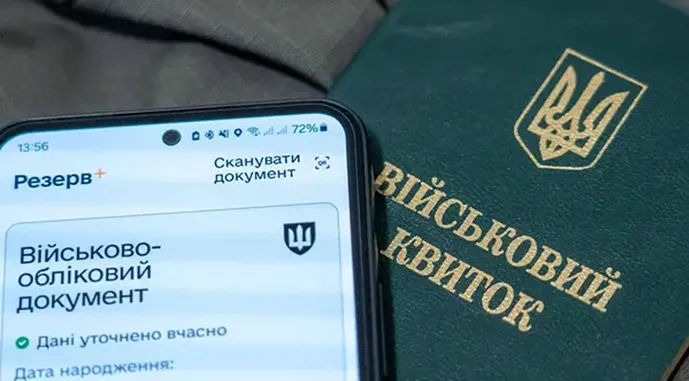
The Cabinet of Ministers has updated its approach to the exemption of conscripts from military service by revising the criteria for identifying critical enterprises and the procedure for confirming their status.

Oleksiy Sobolev, Minister for the Economy, the Environment and Agriculture, announced this during a speech in the Verkhovna Rada.

“The Ministry recognises the strategic need to support businesses, which are currently operating under extremely difficult conditions. At the same time, the reservation system must remain a balanced tool that enables critically important enterprises to continue operating whilst taking into account the state’s defence needs,” he noted.

The minister reiterated that, to be granted the status of a critically important enterprise, a company must meet at least three criteria. Two of these are mandatory: an average salary of at least 25,941 UAH (or 21,618 UAH for enterprises in frontline areas) and no tax arrears. The enterprise may choose the third criterion itself – from among national, sectoral or regional criteria.

According to the minister, 66 state bodies have now approved 164 sector-specific and 225 regional criteria.

The main changes relate to three areas:

  • updating the salary criterion;
  • a review of sector-specific and regional criteria;
  • a new procedure for calculating the quota for part-time workers.

Preliminary estimates suggest that the review of criteria will affect around 20% of enterprises. It is these enterprises that will need to re-confirm their status as critically important in line with the updated requirements. The remaining enterprises, for which the criteria have not changed, will be able to use a simplified procedure – they simply need to submit a certificate of average salary and a tax calculation. This must be done by 10 August.

The procedure for accounting for employees with multiple jobs is also changing. From now on, they will be counted towards the reservation quota for only one place of work – the one where they have the longest period of employment. Businesses that exceed the set quota following this change must bring the number of reserved employees into line within the following week.

Separately, Sobolev drew attention to support for businesses in frontline regions. From September 2025, such enterprises may reserve up to 100 per cent of their workforce. During this period, a further 50,000 people have been reserved across 2,133 enterprises, and the total number of reserved workers in frontline regions has risen to almost 100,000.

“Critically important enterprises currently generate 60 per cent of budget revenue. Therefore, the state’s task is to ensure that such enterprises can continue to operate, pay taxes and support the economy, whilst at the same time ensuring transparency and fairness in the application of the retention mechanism,” the minister emphasised.

Follow us on Telegram

Share tittle
Economy
The government’s debt under the ‘5-7-9 per cent’ scheme could rise to 10 billion hryvnia
Economy

The government’s debt under the ‘5-7-9 per cent’ scheme could rise to 10 billion hryvnia

The government’s debt to banks under the ‘Affordable Loans 5-7-9%’ programme could reach around 10 billion hryvnias by the end of 2026. The National Bank believes that the preferential lending programme needs to be made more targeted, as some businesses are already able to secure loans without state subsidies.

02.07.2026
Italy is to allocate a further €1 million to Ukraine for cyber defence
Economy

Italy is to allocate a further €1 million to Ukraine for cyber defence

Over the next six months, Italy will provide Ukraine with a further €1 million to implement cybersecurity projects. This will bring the country’s total contribution under the Tallinn Mechanism to €2 million.

02.07.2026
Billions without any real competition: what the public procurement audit revealed
Economy

Billions without any real competition: what the public procurement audit revealed

In 2025, the majority of public procurement contracts were, in effect, awarded without any real competition. According to the findings of the Audit Office, the Ministry of Economy’s annual report did not provide a complete picture of public procurement.

01.07.2026
Ukraine and the UAE are launching a free trade area on 1 July
Economy

Ukraine and the UAE are launching a free trade area on 1 July

З 1 липня 2026 року набирає чинності Угода про всеосяжне економічне партнерство між Україною та Об'єднаними Арабськими Еміратами. Документ передбачає створення зони вільної торгівлі та скасування мит для розвитку двосторонньої торгівлі.

01.07.2026
Dozens of reposts by Tsyvinskyi instead of charges: how is the ESBU case against Telegram channels with a million subscribers progressing?
Economy

Dozens of reposts by Tsyvinskyi instead of charges: how is the ESBU case against Telegram channels with a million subscribers progressing?

Six months after the opening of criminal proceedings against a number of Telegram channels, detectives from the Economic Security Bureau of Ukraine (ESBU) had still not announced any charges. Instead, the number of posts on these platforms concerning the director of the Economic Security Bureau has risen significantly, and their tone has changed dramatically: from accusations that Oleksandr Tsyvinskyi was working for hostile intelligence services to his being quoted extensively.

01.07.2026