The government’s debt under the ‘5-7-9 per cent’ scheme could rise to 10 billion hryvnia
According to the National Bank of Ukraine:
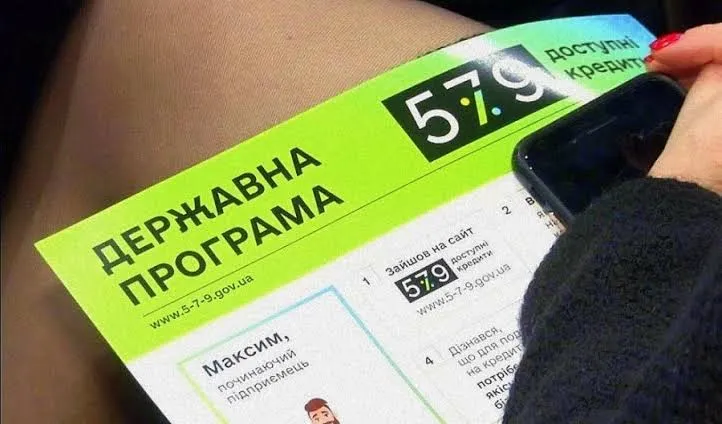
The ‘Affordable Loans 5-7-9%’ programme operates on a compensation basis: entrepreneurs pay a preferential interest rate, and the state reimburses the banks for the difference between this rate and the market rate. It is precisely the accumulation of such compensation payments that gives rise to the state’s debt to the banking sector.
The NBU notes that following the change in the rules, banks will receive less compensation, so budget expenditure in the second half of the year is expected to fall. However, this is not enough to halt the accumulation of debt, which, according to the regulator’s estimates, could rise to around 10 billion hryvnias by the end of the year. By way of comparison, last year this figure stood at around 8 billion hryvnias.
Why the NBU is proposing to review the programme
The National Bank emphasises that preferential lending should, first and foremost, support businesses which, due to the war, are unable to secure financing on market terms.
At the same time, a significant proportion of the programme’s participants already have sufficient financial capacity to service standard bank loans without state subsidies. This is precisely why the regulator believes that the programme should become more targeted, and that budgetary support should focus on those businesses that genuinely need it.
What the government has changed
Despite the need to cut budgetary expenditure, the government is not abandoning the programme.
On 10 June, the Cabinet of Ministers revised its terms. For most categories of borrowers, the amount of compensation paid by the state to banks has been reduced. In particular, the margin on investment loans has been cut for micro, small and medium-sized enterprises, and for sole traders it has been more than halved.
At the same time, the programme has been expanded. From now on, businesses can receive up to 150 million hryvnias in preferential loans for the restoration or reconstruction of property destroyed or damaged as a result of the war. For the first two years, the interest rate on such loans is 0.1 per cent per annum, after which it rises to 5 per cent, 7 per cent or 9 per cent, depending on the business category.
What is the main challenge?
In effect, the government is simultaneously implementing two conflicting policies: it is attempting to reduce budgetary expenditure on interest rate subsidies whilst, at the same time, opening up new opportunities to obtain preferential loans.
This is precisely why the NBU emphasises that the programme’s further development requires a rethink. If state support continues to be provided to all categories of borrowers, the burden on the budget will continue to grow even after reductions in compensation payments to banks.
How many loans have already been granted
The ‘Affordable Loans 5-7-9%’ programme has been in operation since February 2020. During this time, Ukrainian entrepreneurs have received over 154,000 loans totalling nearly 549 billion hryvnias.
Following the outbreak of full-scale war, the programme has become one of the key instruments for supporting businesses. A significant proportion of the loans is directed towards replenishing working capital, financing farmers, relocating businesses and restoring production following Russian attacks.
Will the rules change in future?
So far, the government has not announced any new changes to the programme’s terms. At the same time, the National Bank’s assessment suggests that discussions regarding its future have already begun.
One of the key issues may be a review of the range of recipients of state support, so that budget funds are directed first and foremost towards enterprises that have been hardest hit by the war or are unable to secure financing without state assistance.
Follow us on Telegram