SpaceX carried out its 13th Starship launch and tested Starlink V3 satellites for the first time

This is according to CNBC.
How the launch went
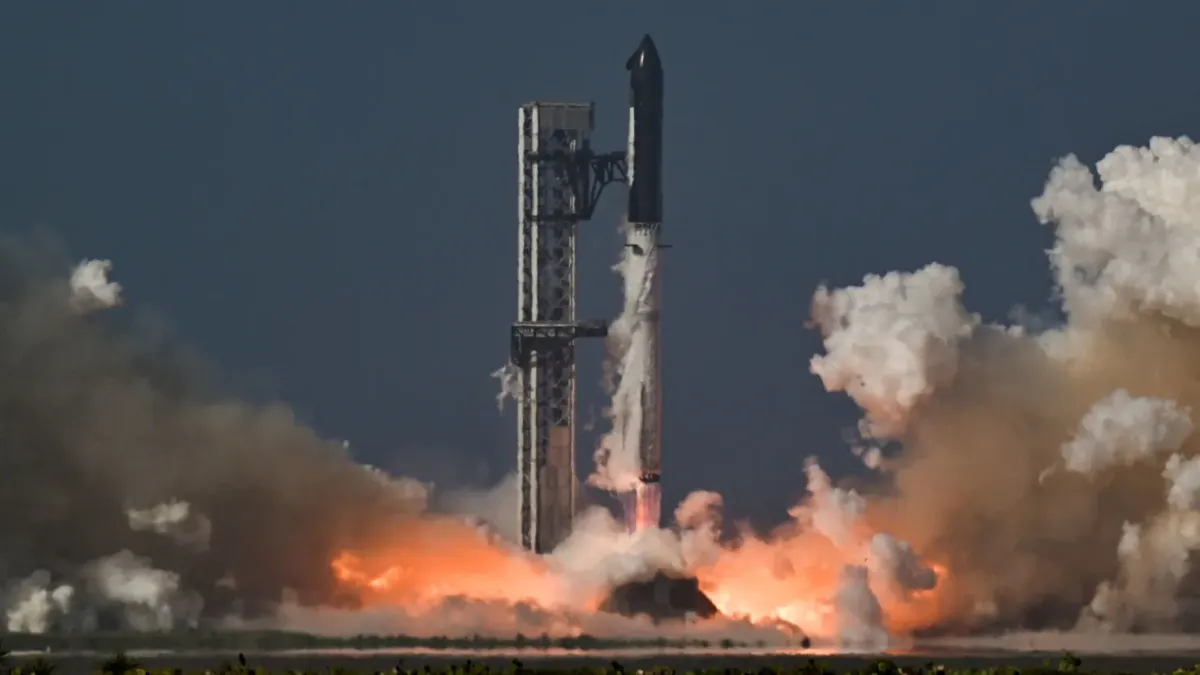
The rocket lifted off from the Starbase launch site in Texas. Approximately two minutes after launch, the Super Heavy booster separated from the spacecraft and carried out a controlled splashdown in the Gulf of Mexico.
SpaceX noted that during the final stage of the landing, not all engines were able to reignite, resulting in a hard splashdown for the booster. Meanwhile, the Starship upper stage successfully splashed down in the Indian Ocean.
The company emphasised that the spacecraft remained intact after re-entry into the atmosphere. This made it possible, for the first time, to obtain comprehensive data on the condition of its heat shield following the flight. During the launch broadcast, SpaceX staff jokingly referred to the mission as the ‘lucky thirteenth flight’.
What was tested during the mission
Approximately 18 minutes after launch, Starship deployed 20 next-generation Starlink V3 satellites into space. This marked the first test of such satellites under real flight conditions. Once the test mission was complete, the satellites were, as planned, due to re-enter Earth’s atmosphere and burn up.
According to SpaceX, the new generation of satellites is set to provide higher bandwidth for the Starlink network and improve satellite internet capabilities.
Why is SpaceX developing Starship?
Starship is the largest rocket ever built for spaceflight. SpaceX aims to make it fully reusable, which should reduce launch costs and increase the payloads that can be delivered into orbit.
In the future, the company plans to use Starship not only to deploy the Starlink satellite constellation, but also in NASA’s lunar programme and for future crewed expeditions to Mars. This latest flight marked the second test of the Starship V3 variant.
Experts point to unresolved issues
Satellite communications market analyst Tim Farrar believes that the latest launch confirmed progress in the development of Starship, but the company is still a long way from achieving full reusability of the rocket.
According to him, difficulties with restarting the Raptor engines during landing remain one of the main challenges. If a similar malfunction were to occur whilst the booster is returning directly to the launch pad, it could result in serious damage to the booster.
Prior to this, SpaceX had postponed the launch twice: one attempt was delayed due to adverse weather conditions, and the other after the automatic system halted engine ignition before the rocket had even lifted off.
Follow us on our Telegram channel