США планують встановити ядерний реактор на Місяці до 2030 року

Margarita Kravchenko
Margarita Kravchenko Journalist
США планують встановити ядерний реактор на Місяці до 2030 року

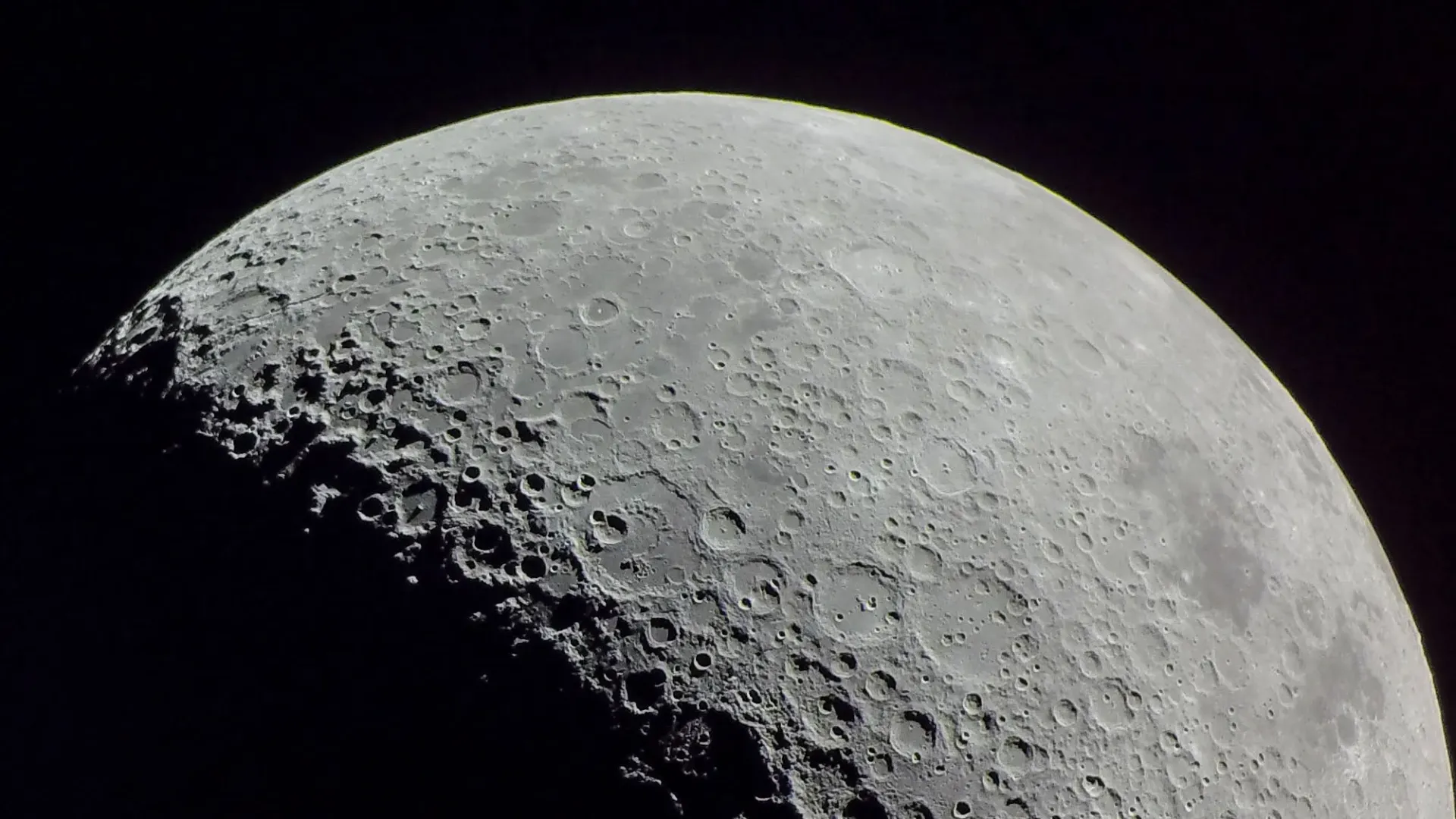
The Moon. NASA
Ядерна енергетика має стати основою для майбутніх місячних баз і підготовки польотів на Марс у межах програми Artemis.

The United States is working on the creation of the first nuclear reactor on the Moon, which is planned to be installed on the satellite's surface by 2030. The project is intended to provide a stable power supply for future lunar bases under the Artemis space programme.

This was reported by Space. Work on the project has been underway for several years, and last December, US President Donald Trump signed a decree obliging the US to prepare a nuclear reactor and the necessary infrastructure for the lunar base by the end of the decade.

On 13 January, NASA and the US Department of Energy signed a memorandum of understanding that officially set a common course for the implementation of this project. NASA Administrator Jared Isaacson said that the return of humans to the Moon and preparations for missions to Mars are impossible without the use of nuclear energy.

According to experts, nuclear plants have a key advantage over solar panels, as they do not depend on long lunar nights and can provide uninterrupted power for many years without refuelling. This makes them critical for long-term missions in deep space.

NASA and the US Department of Energy already have experience in cooperation in the field of space nuclear power. Previously, radioisotope generators provided electricity to the Cassini spacecraft, as well as the Curiosity and Perseverance rovers. The agencies believe that the use of such technologies on the Moon is a logical next step.

U.S. Secretary of Energy Chris Wright emphasised that the combination of science and innovation has traditionally allowed the United States to achieve breakthroughs in space exploration, and the new agreement continues this historical legacy.

Nuclear reactor, Moon, Artemis programme, NASA, space energy, USA
Share tittle
Science
In Japan, rare crested ibises, which had become extinct in the country several decades ago, have been reintroduced into the wild
Science

In Japan, rare crested ibises, which had become extinct in the country several decades ago, have been reintroduced into the wild

For the first time in several decades, eight crested ibises – a species that became extinct in Japan in the last century – have been released into the wild.

01.06.2026
A nature reserve is to be established near the Ukrainian Antarctic research station 'Akademik Vernadsky'
Science

A nature reserve is to be established near the Ukrainian Antarctic research station 'Akademik Vernadsky'

Ukraine has secured the establishment of a new specially protected area in Collins Bay, located near the Akademik Vernadsky station in Antarctica. The initiative was approved following three years of intensive international negotiations.

25.05.2026
The State Special Communications Service is calling for increased funding for Ukrainian crypto technologies
Science

The State Special Communications Service is calling for increased funding for Ukrainian crypto technologies

The State Service for Special Communications and Information Protection of Ukraine plans to develop a domestic industrial base for cryptographic solutions and to support research institutions.

25.05.2026
Artificial intelligence will be able to create its own next generations by the end of 2028
Science

Artificial intelligence will be able to create its own next generations by the end of 2028

Over the next 12 months, artificial intelligence, working in collaboration with humans, could make a scientific discovery that wins a Nobel Prize.

22.05.2026
A laboratory has opened in Japan where medical experiments are carried out by robots
Science

A laboratory has opened in Japan where medical experiments are carried out by robots

Tokyo University of Science in Japan has opened a laboratory where medical experiments are carried out by robots without human involvement.

11.05.2026