The US wants to build a base on the Moon at a cost of $20 billion

Boris Bodnar
Boris Bodnar Journalist
The US wants to build a base on the Moon at a cost of $20 billion

US base on the Moon
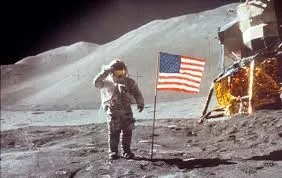
The US space agency NASA has announced that it no longer plans to deploy a space station in lunar orbit. Instead, it intends to build a base on the Moon itself.

This was announced by NASA Administrator Jared Isaacman.

“To get Americans back to the Moon, NASA is moving to an iterative, performance-oriented approach. The goal is not just to get to the Moon, but to stay there,” he said.

During the presentation, Isaacman stated that NASA had committed to sending astronauts “back to the Moon” by the end of Donald Trump’s presidency, according to Space. The White House posted on social media: “America will never give up on the Moon again.”

Furthermore, Isaacman noted that the US has a “real geopolitical rival that is challenging American leadership in deep space”, referring to China.

To ensure a “sustained human presence on the Moon”, the US plans to build a base there. It intends to invest $20 billion in this over the next seven years.

Isaacman also announced a series of changes to the Artemis lunar programme, including the aim to send more robotic landers to the Moon and lay the groundwork for the use of nuclear power on the lunar surface.

In addition to plans to build a lunar base, NASA has also announced that it will develop a brand-new spacecraft, the Space Reactor-1 Freedom, to reach Mars by 2028. It will be designed to deploy ‘helicopters’ on the planet, similar to Ingenuity.

“The goal is clear: to build the foundation for a robust lunar base and take the next step towards Mars,” said Isaacman.

As a reminder, on 1 April 2026, NASA plans to launch the Artemis II mission — four astronauts are set to land on the Moon’s surface for the first time in 50 years.

Share tittle
Science
In Japan, rare crested ibises, which had become extinct in the country several decades ago, have been reintroduced into the wild
Science

In Japan, rare crested ibises, which had become extinct in the country several decades ago, have been reintroduced into the wild

For the first time in several decades, eight crested ibises – a species that became extinct in Japan in the last century – have been released into the wild.

01.06.2026
A nature reserve is to be established near the Ukrainian Antarctic research station 'Akademik Vernadsky'
Science

A nature reserve is to be established near the Ukrainian Antarctic research station 'Akademik Vernadsky'

Ukraine has secured the establishment of a new specially protected area in Collins Bay, located near the Akademik Vernadsky station in Antarctica. The initiative was approved following three years of intensive international negotiations.

25.05.2026
The State Special Communications Service is calling for increased funding for Ukrainian crypto technologies
Science

The State Special Communications Service is calling for increased funding for Ukrainian crypto technologies

The State Service for Special Communications and Information Protection of Ukraine plans to develop a domestic industrial base for cryptographic solutions and to support research institutions.

25.05.2026
Artificial intelligence will be able to create its own next generations by the end of 2028
Science

Artificial intelligence will be able to create its own next generations by the end of 2028

Over the next 12 months, artificial intelligence, working in collaboration with humans, could make a scientific discovery that wins a Nobel Prize.

22.05.2026
A laboratory has opened in Japan where medical experiments are carried out by robots
Science

A laboratory has opened in Japan where medical experiments are carried out by robots

Tokyo University of Science in Japan has opened a laboratory where medical experiments are carried out by robots without human involvement.

11.05.2026