A court in Vienna has definitively refused to extradite Dmitry Firtash to the United States

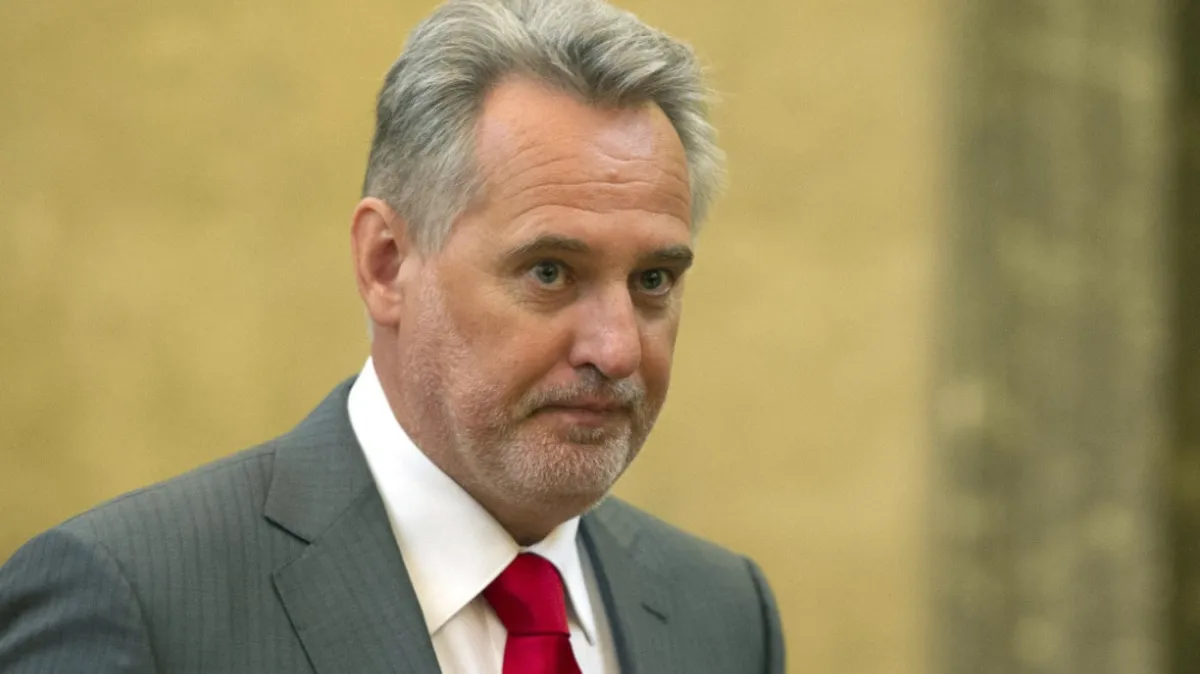
The Vienna High Court of Justice has rejected the prosecutor's request to extradite Ukrainian businessman Dmytro Firtash to the United States. The decision was made on 6 March.
A court representative told the APA news agency that the Vienna prosecutor's office had attempted to reinstate the missed procedural deadline for appealing the first instance court's decision. However, the court rejected this request. As a result, Firtash cannot be extradited to the United States because he has diplomatic immunity as a representative of Belarus.
The decision of the Supreme Regional Court was forwarded to the Vienna Regional Court, and Firtash's lawyers received the relevant notification. According to Austrian criminal procedure law, the refusal to restore the missed deadline is not subject to appeal.
The reason for the final decision was the prosecutor's failure to meet the deadline for filing an appeal. In November 2024, the prosecutor's office filed a late appeal against the decision of the Vienna Regional Court, which recognised that Firtash had diplomatic immunity as an advisor to the Permanent Mission of the Republic of Belarus to the United Nations Industrial Development Organisation (UNIDO).
The court of first instance concluded that the diplomatic notes from the Belarusian embassy in 2021, in which Firtash was named as an advisor to the mission to UNIDO, gave him diplomatic status with the corresponding immunity from criminal prosecution.
At the same time, the court gave the prosecutor's office four weeks to file an appeal instead of the two weeks provided for. Later, the Austrian Supreme Court ruled that this decision was unlawful. Due to the missed deadline, the Vienna Higher Regional Court rejected the prosecutor's appeal on formal grounds and did not consider the case on its merits.
The decision of the Vienna Regional Court, which came into force in December last year, was met with criticism. The Austrian Ministry of Foreign Affairs and the United Nations Industrial Development Organisation (UNIDO) denied Firtash formal accreditation.
Despite this, the court recognised that the diplomatic notes from the Belarusian embassy automatically granted him diplomatic status. The judge noted that, in accordance with the principle of separation of powers, the court was not obliged to agree with the position of the executive branch.
A document from the Austrian Foreign Ministry, obtained by the APA agency, states that this decision is illegal and erroneous in both its outcome and reasoning. The ministry believes that such a practice could make it impossible to deny accreditation to individuals who pose a threat to public safety.
According to APA, Firtash's diplomatic status has caused surprise even among current Belarusian diplomats. Only persons with Belarusian citizenship can be accepted into the Belarusian diplomatic service.
According to Ukraine's sanctions decision, Firtash is only a citizen of Ukraine. His wife Lada has Russian, Ukrainian and Cypriot citizenship.
Former Belarusian diplomat and opposition representative Pavel Latushko told APA that Alexander Lukashenko's regime uses diplomatic immunity to cover up corruption schemes. According to him, Lukashenko sells diplomatic immunity for money. However, he did not provide any evidence to support this statement.
Since 2014, the US has been demanding that Austria extradite Dmitry Firtash in a case of alleged corruption related to an unrealised titanium mining project in India. Firtash himself and his lawyers called the charges politically motivated.
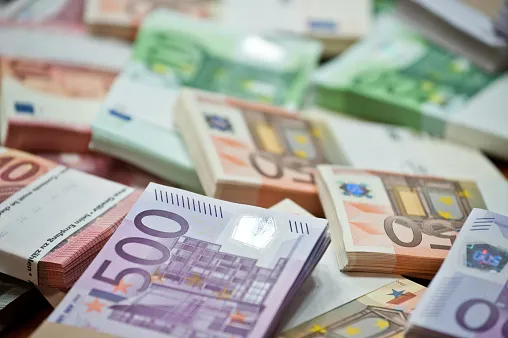
In March 2014, the businessman was detained in Vienna. After paying bail of €125 million, he was released but was not allowed to leave Austria.
After a lengthy trial, the bail was returned in December 2025. Firtash is now free to leave Austria, but if he travels to other countries, he risks being detained again as part of ongoing criminal proceedings in the United States.