The dollar exchange rate in June 2026: an expert’s view

This is according to financial analyst Andrii Shevchyshyn.
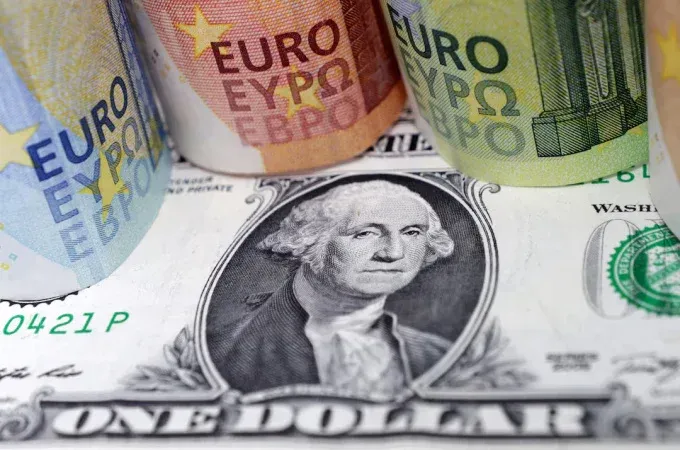
Under the baseline scenario, the dollar exchange rate could remain within the range of 44–45 UAH in June. Shevchyshyn notes that historically, June is often a month when the hryvnia strengthens against the dollar due to seasonal factors.
According to him, once the school year ends, the holiday season begins, more Ukrainian fruit and vegetable produce appears on the market, imports decrease, and prices stabilise.
The analyst cites data from the last 26 years: in 21 cases, the hryvnia strengthened by an average of 0.9% in June. The maximum appreciation was 4.2% in 2008. In only 5 cases did the hryvnia depreciate by an average of 0.6%, with the maximum depreciation reaching 1.4% in 2003.
Base case scenario for the dollar
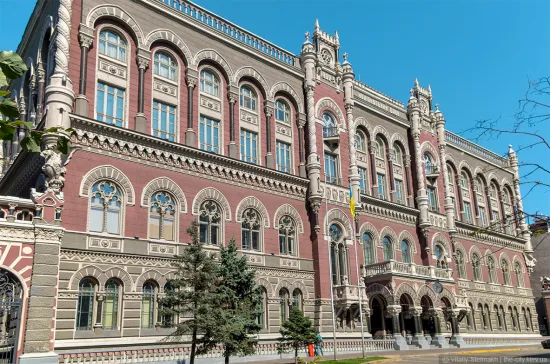
Shevchyshyn believes that, provided external financing resumes in June, the current fiscal and monetary models are maintained, the NBU continues to support the hryvnia’s attractiveness, and there are no critical security risks, the dollar will remain within the range of 44–45 UAH.
At the same time, a fall in the euro on the global market, as was the case in May, could support the dollar.
Regarding the euro, the analyst notes that this currency is seasonally quite volatile in May, with slight downward pressure. As the NBU is preventing the euro from undergoing significant corrections, the exchange rate may remain within a narrow range of 51–51.90 UAH.
Optimistic scenario
Under an optimistic scenario, if the dollar exchange rate falls below 44 UAH, the hryvnia may break out of this year’s upward trend. In that case, the possibility of a return to 43.5 UAH per dollar would open up.
Shevchyshyn believes that such a trend is possible in the event of a sharp strengthening of the euro on the global market. For example, if the US Federal Reserve adopts ‘dovish’ rhetoric.
This could also happen if the NBU takes measures aimed at weakening the dollar and the euro, provided there are significant external inflows and a reduction in security risks.
Negative scenario
A negative scenario, according to Shevchyshyn, could offset the impact of seasonal trends. At the same time, he considers it unlikely due to strict currency restrictions, insufficient hryvnia liquidity and the NBU’s active market control.
The analyst notes that it is impossible to “rock the exchange rate” under such conditions. However, if the NBU sees the materialisation of long-term risks that would require a weaker exchange rate, the market could move to new levels through a controlled devaluation.
Even in such a scenario, the expert estimates that the hryvnia’s depreciation in June could be insignificant – up to 1%. At the same time, he warns that the situation going forward could be more complex.
What signals might precede a negative scenario
According to the analyst, the market may see certain signals before a negative scenario unfolds.
Among these, he cites the Rada’s inaction, the EU’s passivity, and the Ministry of Finance’s more active use of foreign currency and the hryvnia on the domestic market to finance the budget.
Shevchyshyn explains this as a possible signal that financiers are aware of the risk of a lack of external aid in July as well.
Also, according to his forecast, currency sellers may start holding back from selling, exacerbating the shortage. In such a case, the NBU may reduce its interventions in an attempt to preserve foreign exchange reserves.
Follow us on Telegram

Andriy Shevchyshyn is a Ukrainian economist, financial analyst, and expert in the stock market and agricultural assets, as well as the head of the analytics department at Forex Club and Libertex. He was born in Kyiv. He graduated from Taras Shevchenko National University of Kyiv with a degree in ‘Economic Cybernetics’. He graduated in 1995. From 2007 to 2012, he worked at IG TASK as head of the analytical department.
In 2011, he joined the Index Committee at the Ukrainian Exchange. The committee’s responsibilities included assessing and calculating indices for securities and deciding on changes to the list of securities used to calculate the index.
From 2012, for a period of three years, Shevchyshyn held the position of manager and analyst at DTEK LLC — the Donbas Fuel and Energy Company, whose main shareholder is Rinat Akhmetov.
Andriy Shevchyshyn currently works at Forex Club as head of the analytics department. He also heads the analytics department at Libertex.
Andriy publishes his forecasts on websites dedicated to the dairy market and the agribusiness sector. In addition, he contributes articles to various reputable Ukrainian publications, including Obozrevatel, Novoe Vremya, and Komentari.