The fuel crisis in Russia has now spread to at least 78 regions

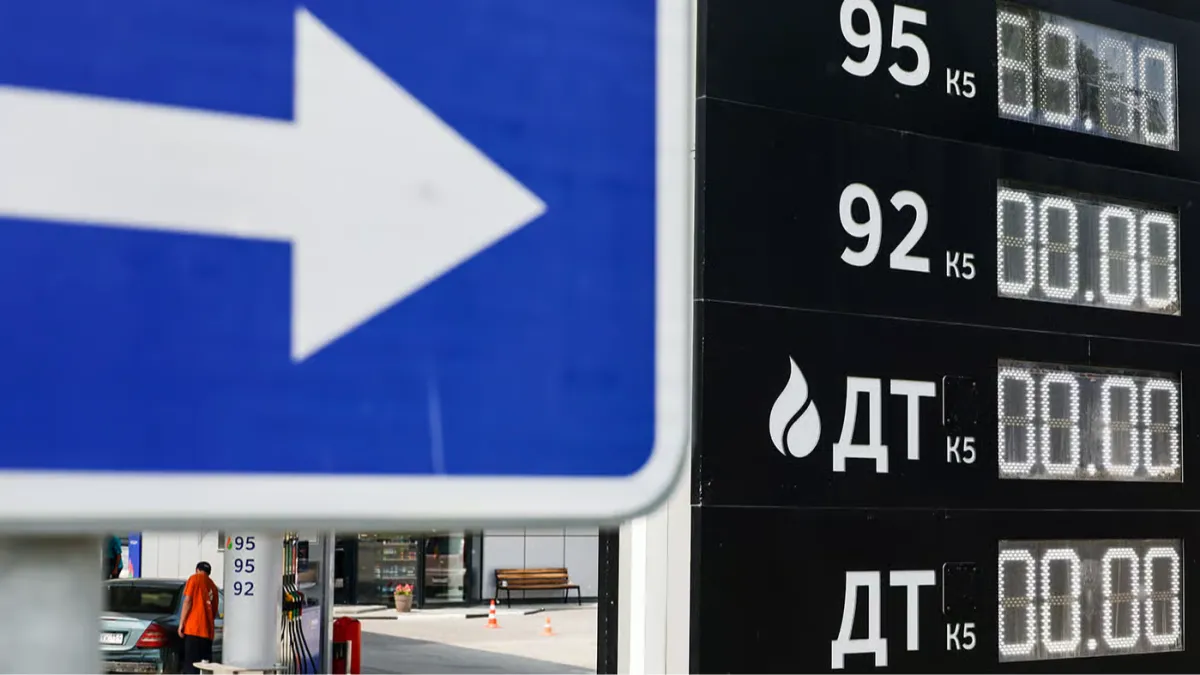
The fuel crisis has now spread to at least 78 regions of Russia, as well as the annexed Crimea and Sevastopol.
On the occupied peninsula, fuel problems have been evident since the beginning of June, whilst in most Russian regions they have worsened since the middle of the month.
According to TMT, the authorities in 36 regions have officially imposed restrictions on petrol sales. Twenty-three regions have officially acknowledged a fuel shortage. In a further nine regions, the restrictions have been imposed by the petrol station chains themselves. In 10 regions, local residents have reported problems.
Russian Deputy Prime Minister Alexander Novak had previously acknowledged that the situation on the fuel market is difficult. He attributed this to the measures that oil refineries have been forced to take.
The shutdown of a number of large refineries in central Russia following drone attacks led to a 25 per cent reduction in petrol production at the end of the second ten-day period of June compared with June last year.
Due to the shortage, the Russian government has authorised refineries to produce petrol and diesel for the domestic market to lower quality standards.
Central Federal District
In Moscow, restrictions on fuel sales have been introduced by Gazpromneft, Lukoil and Teboil petrol stations.
In the Belgorod Region, restrictions have been introduced at Lukoil, Rosneft and Gazpromneft petrol stations.
In the Bryansk region, there is a ban on filling fuel into jerrycans.
In the Vladimir region, queues have formed at petrol stations due to logistical difficulties, and limits are set at 30–60 litres per car.
In the Lipetsk region, petrol sales have been limited to 30 litres per car.
In the Oryol region, a limit of 30 litres per refuelling has been set, rising to 50 litres on motorways.
In the Kursk region, refuelling is permitted only into the fuel tanks of vehicles.
North-Western Federal District
In St Petersburg, a limit of 30 litres applies at Gazpromneft petrol stations.
In the Kaliningrad Region, petrol is sold in quantities of no more than 30 litres, and diesel in quantities of up to 60 litres.
In the Novgorod Region, at ‘Surgutneftegaz’ petrol stations, specific time slots have been set aside for the emergency services.
Southern Federal District
In occupied Crimea, petrol stations have stopped selling fuel to individuals and businesses since 21 June. Only state services are being supplied.
Similar restrictions are in place in Sevastopol.
Shortages and sales limits on fuel have also been reported in the Krasnodar Krai, Rostov Oblast and Volgograd Oblast.
North Caucasus Federal District
In Dagestan, a limit of up to 20 litres of petrol and 50 litres of diesel per vehicle is in place.
In Karachay-Cherkessia, localised shortages have been reported due to rising demand.
In North Ossetia-Alania, 19 out of 90 petrol stations are completely out of fuel.
Volga Federal District
Restrictions are in place in Mordovia, and the Penza, Samara, Saratov and Ulyanovsk regions, as well as in Tatarstan, Udmurtia, Chuvashia and Bashkortostan.
In most regions, limits of between 30 and 100 litres have been set, depending on the type of fuel.
Ural Federal District
Restrictions have been introduced in the Sverdlovsk, Kurgan and Tyumen regions, as well as in the Khanty-Mansi Autonomous Okrug and the Yamalo-Nenets Autonomous Okrug.
Limits on petrol sales are generally set at 40 litres per vehicle.
Siberian Federal District
In the Tomsk Oblast, shortages have been reported in four districts.
In the Irkutsk region, Rosneft petrol stations have set a limit of up to 50 litres for private individuals.
In the Novosibirsk region, restrictions on fuel sales are in place at petrol stations.
In the Omsk Region, fuel is only dispensed directly into the car’s tank. The limit is 40 litres of petrol and 80 litres of diesel.
Far Eastern Federal District
Restrictions are also in place in the Amur Region, the Sakhalin Region, the Trans-Baikal and Primorsky Krais, Yakutia, Tuva and the Khabarovsk Krai.
In a number of regions, fuel is dispensed only into the vehicle’s tank, whilst sales into jerry cans are restricted or prohibited.
According to the source, only five regions in Russia have not yet reported a fuel crisis.