The fuel crisis in Russia is reaching new heights

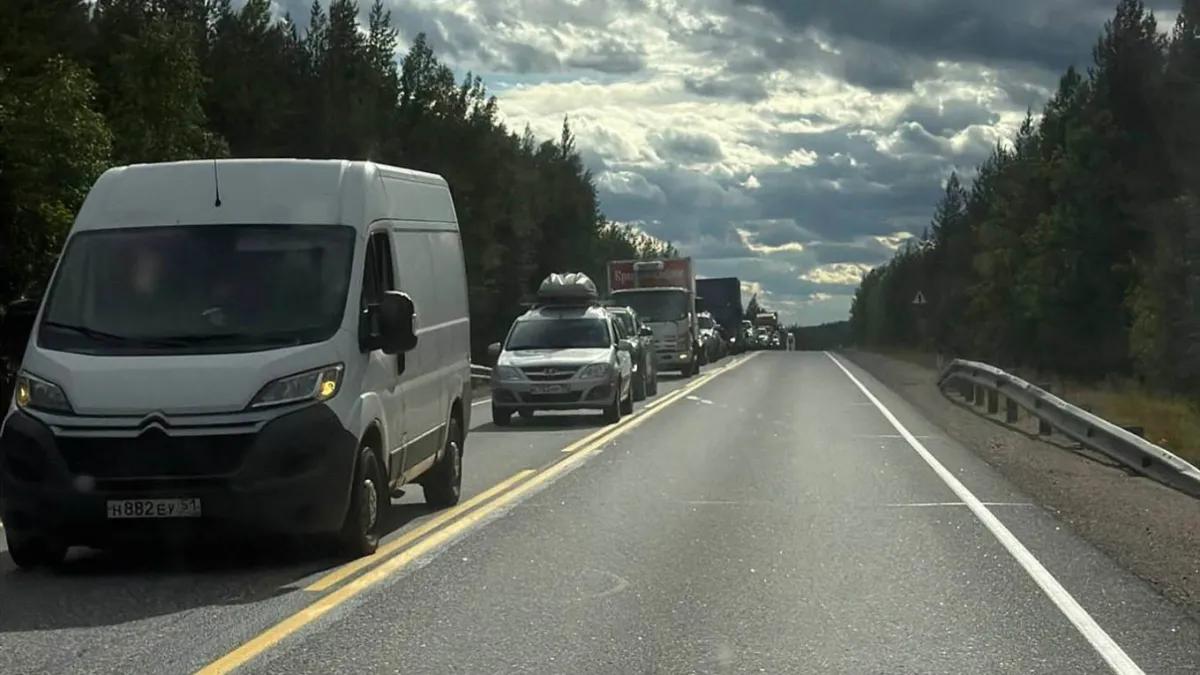
In Moscow and the Moscow Region, Russia’s largest oil companies have tightened restrictions on fuel sales due to the worsening fuel crisis.
At Gazprom Neft petrol stations in the capital, customers are limited to a maximum of 30 litres of petrol or 60 litres of diesel per refuelling. Sales into jerrycans are prohibited. At the company’s motorway service stations, the limit for petrol remains the same, whilst for diesel it is 200 litres.
Restrictions have also been introduced at at least three Lukoil petrol stations in Moscow. At two of these stations, customers are limited to no more than 20 litres of fuel per visit, whilst at another the limit is 30 litres. Sales into jerrycans are also prohibited.
Additional limits are in place at some petrol stations in the Teboil network, which is owned by Lukoil. At one station, customers are allowed to fill up with no more than 30 litres of AI-92 petrol. At another, the limit is set at 20 litres of petrol and 60 litres of diesel per receipt.
The fuel crisis in Moscow and the Moscow Region intensified at the end of May following problems in St Petersburg, Crimea and border regions. During this period, various restrictions were introduced at petrol stations belonging to the ORTK, Gazprom, Lukoil, Rosneft and Tatneft networks. Queues began to form at some petrol stations in the Moscow region.
By mid-June, limits had also been introduced at petrol stations belonging to the largest chains in Moscow itself. At Tatneft petrol stations, a limit of 20 litres of AI-92 and AI-95 petrol and 40 litres of diesel per customer was introduced. At Rosneft stations, a general limit of up to 90 litres per tank or jerrycan was in place.
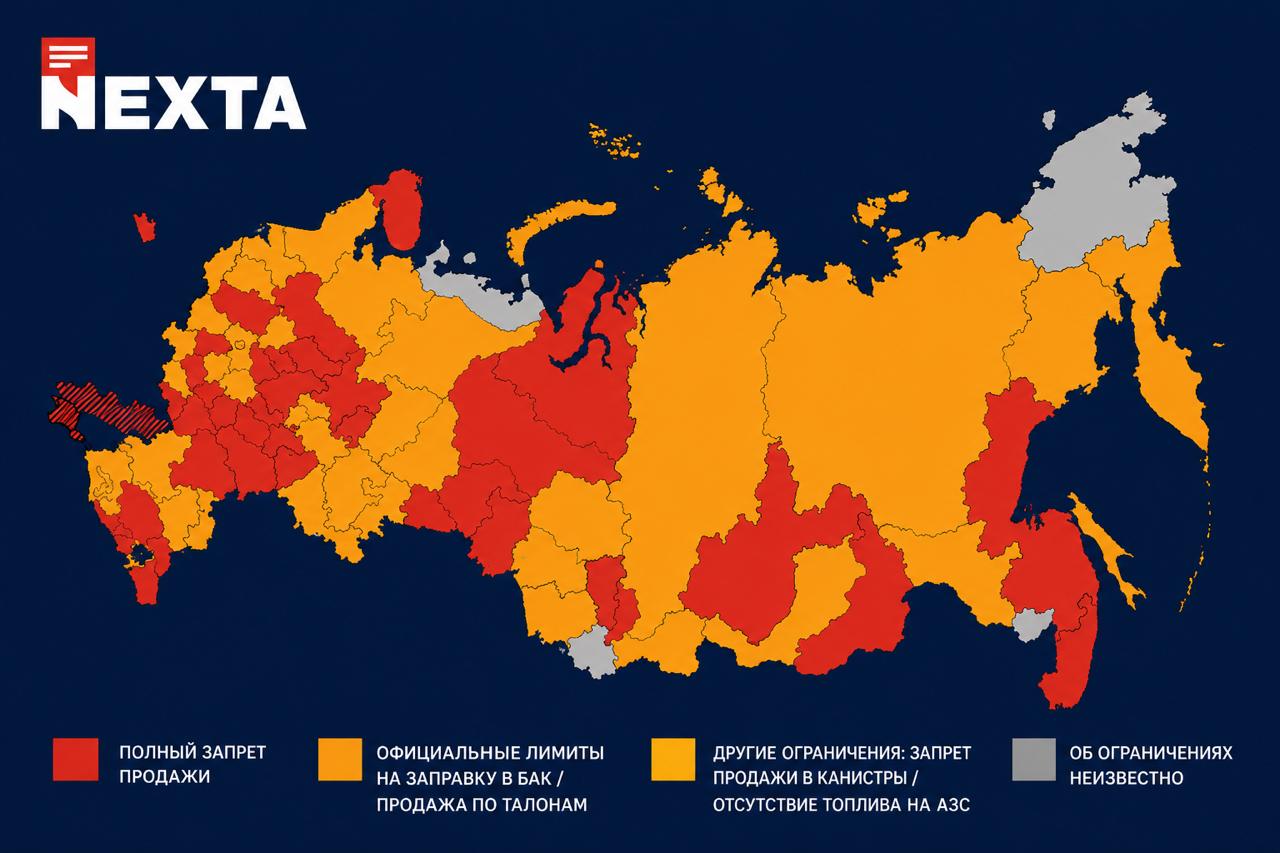
According to NEXTA, restrictions on fuel sales have already spread to 56 regions of Russia. The strictest measures are in place in occupied Crimea and Sevastopol.
The situation is also difficult in Siberia. In Irkutsk, following the introduction of a state of heightened alert due to a petrol shortage, police and Rosgvardia officers have begun taking turns on duty at petrol stations. They are managing the queues, directing vehicles to the pumps, prohibiting the filling of jerry cans and restricting access to petrol station premises. Since these measures were introduced, waiting times in queues have been reduced to 2–3 hours, although drivers previously had to wait 9–12 hours.
In Irkutsk, law enforcement officers have also begun detaining people suspected of reselling fuel at inflated prices. Four such cases have been recorded over the past 24 hours. In one instance, fuel was being resold near a petrol station; in the other cases, sales were organised online. One of those detained was offering petrol at 250 roubles per litre.
In the Novosibirsk region, some petrol stations have temporarily suspended the sale of fuel to private individuals. According to local authorities, certain petrol stations are operating solely under long-term contracts and are also fulfilling municipal and state orders.
Fuel restrictions were introduced in the Novosibirsk region as early as 23 June. Petrol stations were advised to sell no more than 40 litres of petrol per vehicle. The limit on diesel fuel was set at 80 litres in built-up areas and 200 litres on motorways. Sales into jerry cans were restricted to 10 litres.
Among the main measures being introduced in regions across the Russian Federation are a refuelling limit of 20–30 litres per vehicle, a ban on the sale of fuel in jerry cans, and a requirement to refuel exclusively into the vehicle’s fuel tank.
Among the oil refineries that have already come under attack are NORSI in Kstovo, the Moscow Refinery, YANOS in Yaroslavl, and the Ryazan, Perm, Kirysh, Volgograd, Novo-Ufa, Novokuybyshevsk and Syzran refineries.
Russia’s largest refinery, the Omsk Refinery, which produces 5.07 million tonnes of petrol per year, remains effectively the only strategically important plant still operating at full capacity.
Earlier, Russian Deputy Prime Minister Alexander Novak stated that there were sufficient fuel reserves for the domestic market. Andrei Vorobyov, Governor of the Moscow Region, also claimed that the petrol situation in the region was under control.