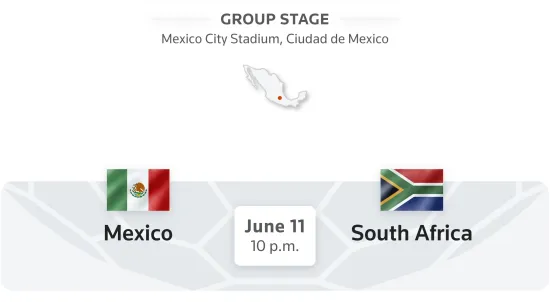
Mexico kicks off the World Cup on home soil hoping to end a 40-year winless run in the knockout stages

The Mexican national team is heading into the 2026 World Cup on home soil without being among the tournament favourites, but hopes to capitalise on the support of the home crowd. The Mexicans reached the quarter-finals in the previous two World Cups held in the country, in 1970 and 1986.
The current squad is not considered one of the strongest in the history of Mexican football. There are few players from the top European leagues in the squad, and one of the most famous players remains 35-year-old striker Raúl Jiménez.
Recently, some fans have expressed dissatisfaction with the team’s style of play. In particular, during goalless draws against Uruguay and Portugal, the national team was booed by its own supporters. At the same time, hosting the World Cup could significantly change the atmosphere surrounding the team, especially if the Mexicans get off to a good start in the opening match against South Africa.
Head coach Javier Aguirre favours aggressive pressing and often employs a formation with a narrow front three, whilst the full-backs provide width.
A favourable draw and home advantage are considered to be among the Mexican team’s strengths. The team will play all their group stage matches at altitude, which could pose additional difficulties for their opponents. The team also displays solid defensive play. Defenders Johan Vázquez and César Montes work well together at the heart of the defence, as demonstrated by the draws against Portugal and Belgium in March.
At the same time, the team does not always show sufficient effectiveness in attack. Other issues cited include a limited selection of centre-backs and the loss of goalkeeper Luis Ángel Malagón, who suffered a ruptured Achilles tendon in March.
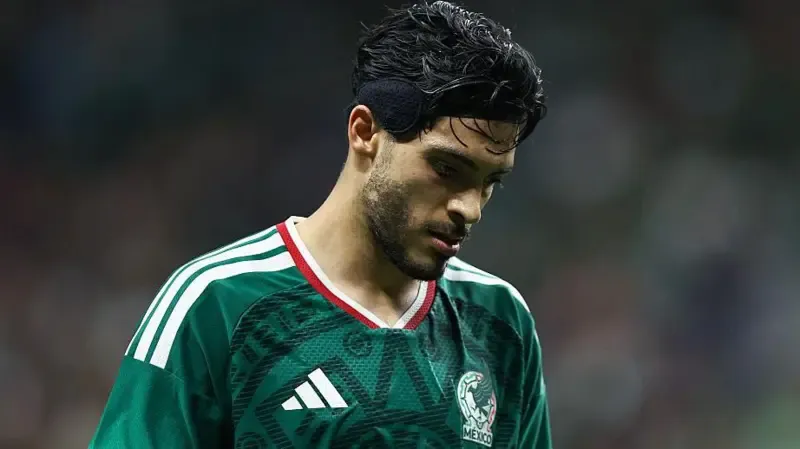
Raúl Jiménez will be the focus of particular attention during the tournament. The Fulham striker failed to score in the three previous World Cups, but started all six matches in those tournaments from the bench. At the home World Cup, he could be given a much more prominent role.
There are also high hopes for 17-year-old midfielder Gilberto Mora from Tijuana. If he plays in the opening match, he will become the sixth-youngest player in the history of the men’s World Cup.
César Montes is considered another key player. The centre-back, who moved to Moscow’s Lokomotiv in 2024, scored three goals at last year’s CONCACAF Gold Cup.
Head coach Javier Aguirre is in his third spell in charge of the national team. Under his leadership, Mexico previously reached the round of 16 at the 2002 and 2010 World Cups. After the tournament, he is set to be replaced by his current assistant, Rafa Márquez, who became the only player in history to have captained his national team at five World Cups.
Mexico has qualified automatically for the 2026 World Cup as one of the tournament’s host nations. For the team, this will be their ninth consecutive World Cup and the third they will host either alone or jointly with other countries.
The Mexican national team is one of the most consistent participants in the World Cup. At the same time, the team has yet to win the World Cup, despite having played 60 matches in the tournament. The last time the Mexicans won a knockout match was 40 years ago.
Between 1994 and 2018, the team exited the tournament at the round of 16 stage in seven consecutive World Cups. At the tournament in Qatar, this run came to an end as early as the group stage.
Over the past year, the team has been actively preparing for the home World Cup. During this time, Javier Aguirre has managed 22 matches and assessed 54 players, fewer than half of whom made the final squad for the tournament.