The head of the customs service has identified the main threat to Ukraine’s budget

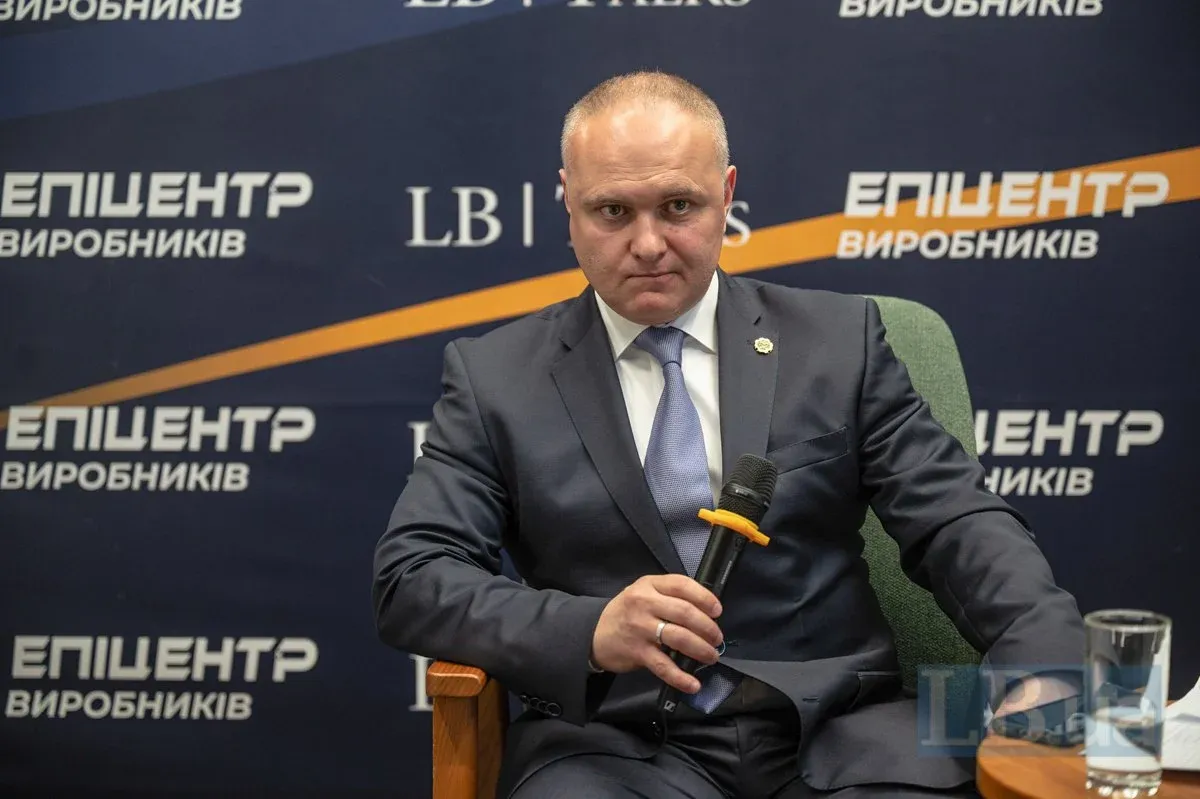
Orest Mandziy spoke about this in an interview with LB.ua as part of the LB.talks project ‘Epicentre of Manufacturers’.
The Head of the State Customs Service, Orest Mandziy, stated that the main threat to Ukraine’s budget at present is “grey imports”. According to him, this refers not only to traditional smuggling, but to more complex schemes involving documents, commodity codes and customs values.
Mandziy noted that traditional smuggling has become riskier for those transporting expensive goods across the border. However, the biggest problem, he said, is posed by “grey” smuggling.
What the head of customs called the main threat
Mandziy identified the “50 shades” of grey imports as the greatest risk. According to him, such schemes can operate through the substitution of UKT ZED classification codes, the under-declaration of customs value, and the substitution of goods in accompanying documents.
He explained that it is precisely such manipulations that allow unscrupulous importers to reduce payments to the budget and create an uneven playing field for businesses operating legally.
According to Mandziy, traditional smuggling remains a problem, but it is now a challenge for those willing to take the risk of losing expensive goods.
What schemes are being detected at customs
The head of the State Customs Service cited abuse during the import of used cars as one example. He said this involves the use of forged Euro certificates for vehicles classified in commodity group 87.
Mandziy reported that during the verification of around 15,000 certificates received from importers, the customs administrations of trading partners confirmed only around 10% of them.
According to the head of customs, putting a stop to such schemes could increase state budget revenues by approximately 100 million hryvnias per month, or over 1.2 billion hryvnias per year.
Changes to car imports
From 1 June, the State Customs Service has changed the procedure for applying the free trade regime to used cars.
Now, an importer bringing used vehicles into Ukraine’s customs territory must pay the full cost, including customs duties. They will only be eligible for the preferential rate after the certificate has been verified and the car’s preferential origin confirmed.
The State Customs Service expects that this will prevent manipulation during car imports, increase budget revenues and create a more level playing field for participants in the domestic market.
What is happening at border customs posts
Mandziy also reported that all border customs posts are currently undergoing a rotation of heads of customs clearance departments.
According to him, this process has been underway for a second week at the Lviv and Volyn customs posts. At the Zakarpattia and Chernivtsi customs posts, the first results were expected by the end of the week. The interview was recorded on 4 June.
Separately, the head of the customs service stated that the agency is preparing for a large-scale assessment of staff. The first phase will involve the deputy heads of the State Customs Service, heads of specialist departments, their deputies, and heads of regional customs offices and customs posts.
According to Mandziy, the key stage of the assessment will be an integrity check. The commission is to comprise 12 members, six of whom will be nominated by international and foreign organisations.
Could all parcels be taxed?
Separately, Mandziy supported the idea of taxing postal and express consignments from abroad. He noted that the relevant legislative initiative is already before parliament and provides for a reduction in the tax threshold to €0.
According to the head of the State Customs Service, Ukrainians received around 75 million postal items last year. Of these, less than 1% exceeded the equivalent of €150 and were subject to customs duty.
Mandziy stated that the customs service supports the position of the Ministry of Finance and the relevant parliamentary committee regarding the taxation of postal and express shipments.
Follow us on Telegram