The Polish Minister of Defence visited Volhynia on the Day of Remembrance for the Victims of the Volhynia Tragedy

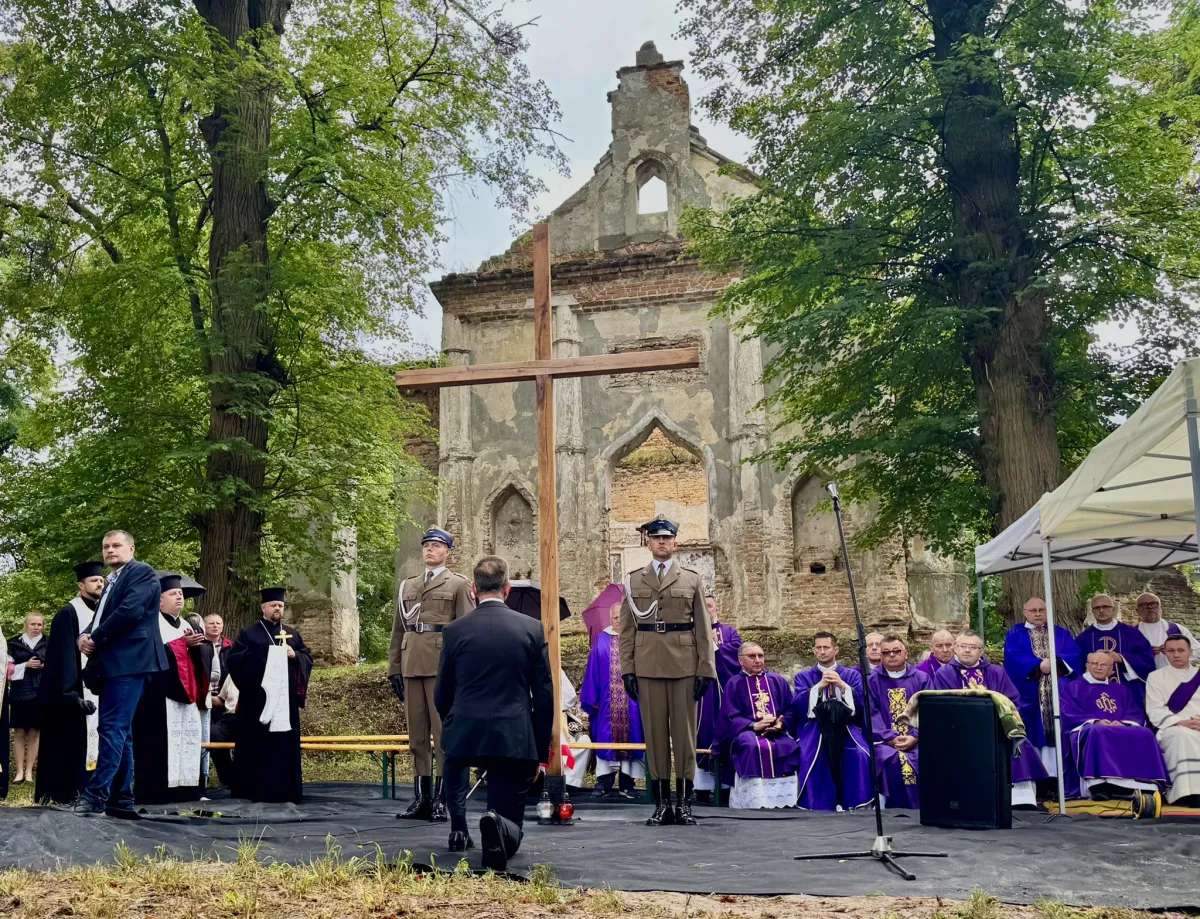
This was reported by Radio Free Europe.
What Kosiniak-Kamysz said
After the service, the minister wrote that Volhynia is a place where history has left a deep mark on the memory of the Polish people. In his words, the victims deserve to be remembered, and historical truth should help the two nations build mutual understanding. On the eve of his trip, Kosiniak-Kamysz also emphasised that the memory of the victims should not become a pretext for revenge.
Why 11 July is a symbolic date
This year, for the first time, Poland is officially marking 11 July as the National Day of Remembrance for Poles — victims of crimes which the Polish state links to the activities of the OUN and the UPA. The Sejm passed the relevant law in June 2025. The date is linked to the events of 11 July 1943, which in Polish historiography have come to be known as ‘Bloody Sunday’.
The visit took place following a political dispute
The Polish minister’s visit comes after several weeks of heated discussions between Kyiv and Warsaw over historical memory.
At the end of June, Polish President Karol Nawrocki announced the decision to strip Ukrainian President Volodymyr Zelenskyy of the Order of the White Eagle. He cited disagreement with a decree awarding an honourable name associated with the UPA to one of the Ukrainian military units as the reason. Subsequently, Zelenskyy stated that Ukraine highly values Poland’s support and is keen to continue cooperation.
During the NATO summit, which took place on 8 July, the presidents of Ukraine and Poland held a separate meeting. Following the talks, both leaders emphasised the need to maintain dialogue and cooperation, despite differing views on certain historical issues.
Why the Volhynia tragedy remains a subject of debate
Ukraine and Poland assess the events in Volhynia between 1942 and 1944 differently. In Poland, the mass killings of the Polish population are officially termed genocide, with primary responsibility attributed to the UPA. In Ukraine, it is emphasised that members of both nations were victims of the conflict, and that the course of events was also influenced by the Nazi occupying authorities and Soviet partisan units.
Estimates of the death toll also differ. The Polish Institute of National Remembrance puts the figure at approximately 100,000 Poles and around 5,000 Ukrainians killed. Some Ukrainian historians estimate the losses differently — around 35,000–40,000 Poles and up to 20,000 Ukrainians.
Follow us on our Telegram channel