The solar eclipse on 12 August 2026: what will be visible in Ukraine

This has been reported by NASA.
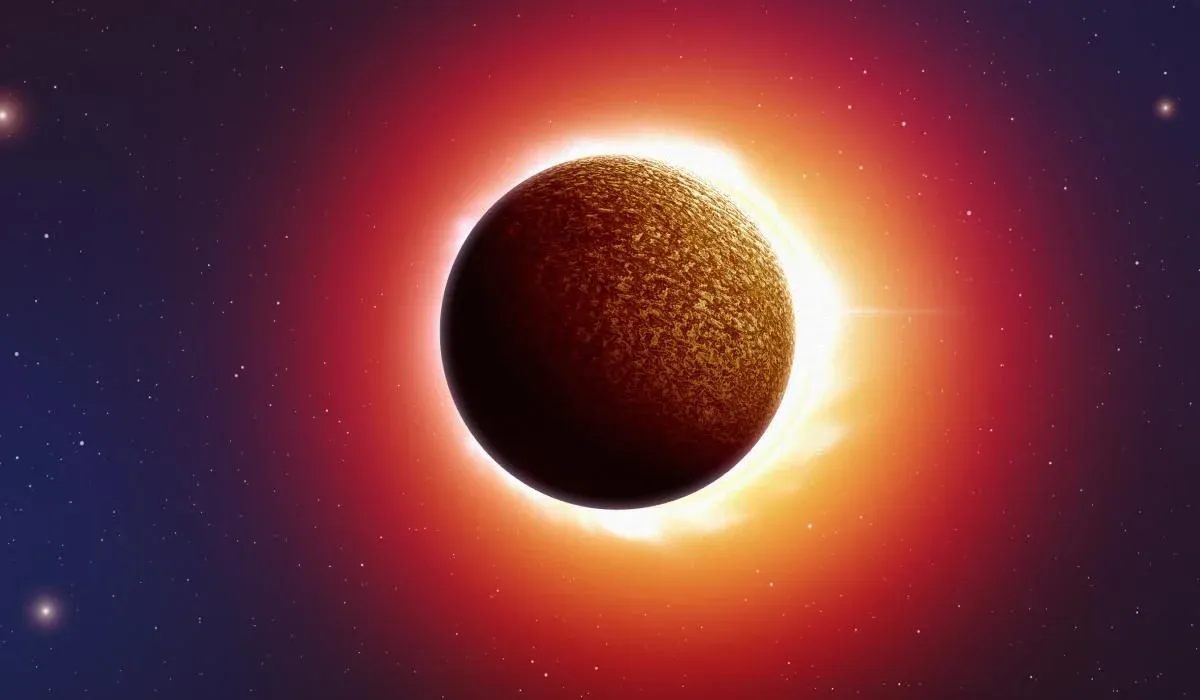
The total eclipse will only be visible within a narrow band through which the Moon’s shadow will pass. It will cover northern Russia, Greenland, the western part of Iceland, the Atlantic Ocean, northern Spain and a small area in north-western Portugal.
In these areas, the Moon will completely obscure the Sun’s disc for a short time. The sky will darken, the Sun’s outer atmosphere — the corona — will become visible, and colours resembling dawn or dusk will appear on the horizon.
For most locations within the path of totality, the eclipse will last less than two minutes. Near its centre, the Sun will disappear for approximately 2 minutes and 20 seconds.
Why this eclipse is described as special
The event is sometimes referred to as ‘the greatest eclipse in nearly 30 years’, but this is not entirely accurate. The eclipse on 12 August will not set a record for duration: the total phase will not exceed two and a half minutes.
Its uniqueness lies elsewhere. This is the first total solar eclipse whose path will cross mainland Europe since the event of 11 August 1999.
On 2 August 2027, a significantly longer total eclipse will take place. Its maximum phase will last more than six minutes and will be visible in North Africa and parts of Southern Europe.
What will be visible in Ukraine
Ukraine does not lie within the path of totality. On the evening of 12 August, the Moon will only partially cover the Sun, with the extent of the eclipse rapidly decreasing from west to east.
In different regions of Ukraine, the event will begin at approximately between 20:10 and 20:19 Kyiv time. The Sun will be low above the western horizon, so an open space free of tall buildings, trees or hills is required for observation. Clouds near the horizon may also completely obscure the eclipse.
The Moon will cover the largest portion of the Sun’s disc in Uzhhorod — around 43.44 per cent. The maximum phase is expected at approximately 20:47.
In Lviv, the area of the Sun covered by the Moon will be around 40.44 per cent, with the maximum occurring at 20:43. The eclipse will begin at approximately 20:17 and remain visible until sunset.
The following maximum coverage figures are forecast for other cities:
In Ternopil — around 26.41% at 20:36.
In Khmelnytskyi — around 16.33% at 20:31.
In Vinnytsia — around 6.85% at 20:24.
In Kyiv — around 2.67% at 20:18.
In Kyiv, the eclipse will be brief and barely noticeable: the Moon will only graze the edge of the Sun’s disc. It will be difficult to see without special equipment and a clear western horizon.
In eastern and south-eastern Ukraine, the Sun will set before the eclipse reaches its most visible phase. In some central and northern regions, the phenomenon will last only a few minutes before sunset.
Where the eclipse will be most visible in Europe
Outside the path of totality, most of Europe will see a deep partial phase. This will cover the United Kingdom, Ireland, France, Belgium, the Netherlands, Germany, Denmark, Norway, Sweden, Poland, the Czech Republic, Austria, Switzerland, Italy, Slovenia, Croatia and the Balkans.
In Dublin, the Moon will cover almost 94 per cent of the Sun’s disc; in London, over 91 per cent; and in Paris, around 92 per cent. Despite the very deep phase, the Sun will not disappear completely in these cities.
In Berlin and Vienna, most of the Sun’s disc will be obscured — up to around 85 per cent. In Oslo, the figure will be around 83 per cent, in Stockholm nearly 81 per cent, and in Kraków over 60 per cent.
In many European cities, the peak of the eclipse will also occur in the evening, when the Sun is low in the sky. Even being within the path of totality does not guarantee a clear view if the western horizon is obscured by terrain, buildings or clouds.
How to view the solar eclipse safely
In Ukraine, the Sun will remain partially visible throughout the eclipse. You must not look at it without protection, even when the Moon covers more than 40 per cent of the Sun’s disc.
NASA advises using eclipse glasses or handheld solar filters that comply with the international standard ISO 12312-2. Ordinary sunglasses, tinted glass, photographic film or CDs do not provide adequate protection.
You must not look at the Sun through a camera, binoculars or a telescope without a special solar filter attached in front of the lens. The optics concentrate the light and can damage your eyes or the equipment in a matter of seconds.
A safe alternative is indirect observation. For example, an image of the Sun can be projected onto a white sheet of paper through a small hole in a piece of cardboard. You should look at the projection, not directly through the hole at the Sun.