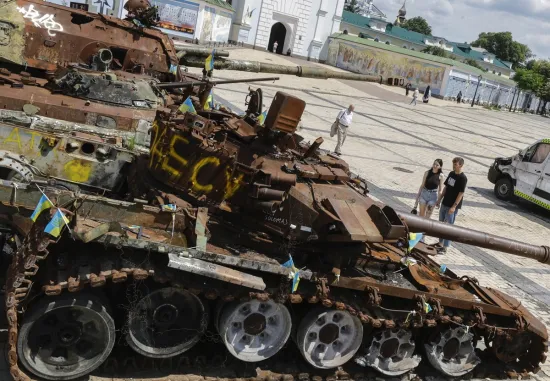
The war is returning to Russia: Bloomberg has identified five challenges weighing on Putin’s regime

Bloomberg reports on this, analysing the main factors that are gradually weakening the Kremlin’s position.
1. Ukrainian strikes are reaching deep into Russia
Ukraine has significantly expanded the scale of its strikes on Russian territory. Drones and long-range missiles regularly target military and energy facilities not only near the border but also deep within the country.
According to Bloomberg’s estimates, in 2026 more than half of Russia’s regions – home to over 70 per cent of the country’s population – had declared an air raid alert at least once.
One of the most high-profile examples was the strike on the Omsk oil refinery in Western Siberia – more than 2,500 km from the Ukrainian border.
The publication notes that this has been made possible by the rapid development of Ukrainian long-range systems; for example, the Ukrainian ‘Flamingo’ missile is capable of striking targets at a range of up to 3,000 km, whilst the modernised ‘Neptune’ cruise missile can strike targets up to 1,000 km away.
2. Strikes on oil refineries have caused a fuel crisis
According to estimates by the International Energy Agency, in June Russian refineries were processing just 3.8 million barrels of oil per day, compared with 5.4 million barrels in June 2025.
This resulted in fuel shortages, supply disruptions across almost the whole of Russia, queues lasting several hours at petrol stations and a rapid rise in the black market.
As of 6 July, the average price of petrol in the Russian Federation had jumped by 14 per cent to 74.01 roubles per litre, which significantly exceeds the official inflation rate (4.49 per cent).
To avoid an even greater shortage, the Russian authorities banned the export of petrol, diesel and aviation fuel, and were also forced to encourage imports.
Furthermore, in the last three months alone, the Russian government has paid oil refineries around $8.2 billion in subsidies to ensure they sell fuel domestically.
3. The Russian economy has all but ground to a halt
Although military production is still growing, most civilian sectors are cutting back on output and investment.
In the first quarter, capital investment fell by double-digit rates due to high interest rates.
The reason lies in the very model of the war economy:
- huge military spending is fuelling inflation;
- the Central Bank is forced to maintain high borrowing costs;
- a severe labour shortage is driving up wages, but at the same time fuelling inflationary pressure;
- Ukrainian strikes on industrial enterprises further complicate the situation.
Meanwhile, the Russian Ministry of Finance acknowledges that government spending and the budget deficit will once again exceed previous forecasts.
4. The Kremlin has failed to achieve its diplomatic objectives
Bloomberg points out that following the summit between Donald Trump and Putin in Anchorage in August 2025, the Kremlin had expected the US to persuade Kyiv to make significant concessions. However, this did not happen.
US-mediated talks between Russia and Ukraine reached an impasse as early as February 2026, when the Trump administration shifted its focus to the Middle East and the war with Iran.
As a result, Moscow failed to secure a political settlement that would have allowed it to end the war on terms favourable to itself.
5. Putin’s popularity is falling
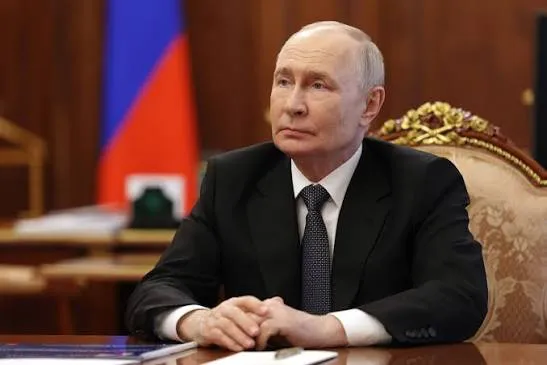
Opinion polls also show a deterioration in public sentiment within Russia. According to the state-run VTsIOM centre, Putin’s approval rating fell by 4.4 percentage points to 72.3 per cent in the two weeks leading up to 10 July.
The independent Levada Centre reported that the president’s approval rating fell to 74 per cent in June, the lowest figure since the start of the full-scale war.
The proportion of Russians who believe the country is on the right track fell from 61 per cent to 52 per cent.
Bloomberg attributes this to growing dissatisfaction over Ukrainian strikes, mobile internet disruptions, regular communication blackouts and the deterioration of everyday life.
The publication concludes that none of these issues, taken individually, currently poses an immediate threat to Putin’s regime. However, their combined impact – strikes on Russian territory, the fuel crisis, the economic slowdown, the diplomatic deadlock and the gradual decline in public support – is undermining the image of stability and total control that the Kremlin has sought to maintain throughout the war.
Follow us on Telegram