‘Flamingo’ strike on VNIIR-Progress: potential disruptions to arms production in Russia (VIDEO)


This was reported by Defense Express.
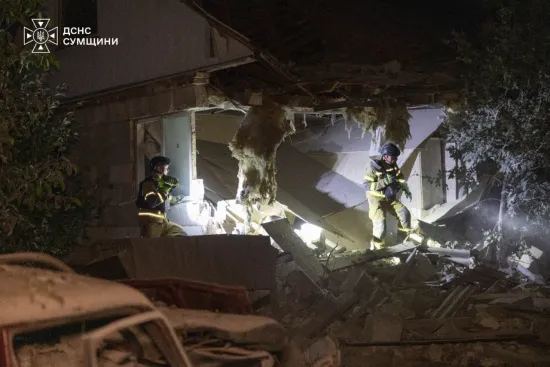
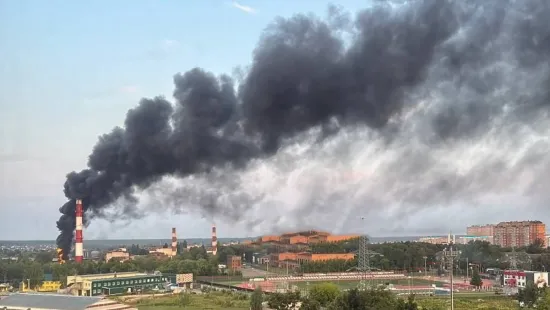
During the night of 4–5 May, the 19th Missile Brigade ‘Saint Barbara’ launched an attack on the VNIIR-Progress JSC facility, located more than 900 km from the Ukrainian border.
According to Defense Express, FP-5 “Flamingo” cruise missiles were used to strike the plant. In the morning, the facility was also attacked by Ukrainian long-range drones.
VNIIR-Progress JSC is part of the ABS Electro group. The plant manufactures electronics, including hardware and software complexes for relay protection and automation, automated process control systems, electronic components, electrical products and radio-electronic equipment.
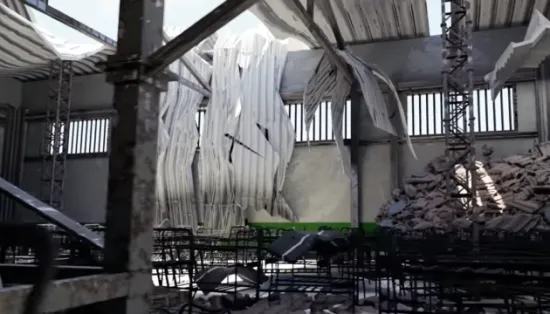
According to the publication, attempts were made to protect the plant from Ukrainian long-range drones, including the installation of a protective structure over the building. However, this did not prevent the facility from being hit.
Watch the video on Facebook
Why VNIIR-Progress is important to the Russian Federation
Defense Express notes that one of the key product categories of VNIIR-Progress for the war against Ukraine is the “Kometa-M” anti-jamming satellite navigation antennas.
These are multi-element antennas that the Russian Federation installs on its long-range weapons for navigation.
According to the publication, “Kometa-M” is used in UMPC kits for aerial bombs, known as KABs, in ‘Shahed’-type drones, ‘Orlan-10’-type reconnaissance UAVs, new ‘Banderol’-type cruise missiles, variants of the ‘Iskander’ OTRK ballistic missiles, X-101 cruise missiles and other types of weaponry.
In parallel with the development of Ukrainian electronic warfare capabilities, the Russian Federation was forced to increase the number of elements in the “Kometa-M” antennas.
Whereas the standard number was initially four elements, there can now be up to 16.
What consequences are possible following a strike
According to Defense Express, if Russia loses the ability to produce “Kometa-M” antennas, this could pose a serious problem for its long-range weapons.
In that case, Russia risks being left without its own navigation antennas for a significant proportion of its missiles, drones and aviation munitions.
At the same time, the publication notes that Russia sometimes uses Chinese CRPA antennas in its products. Theoretically, if it loses production of the “Kometa-M”, Russia could try to switch to Chinese equivalents.
China already has 16-element antenna variants similar to the modern “Kometa-M”. However, a sudden switch to other components, according to Defense Express, could cause significant delays in the production of long-range weapons.
It is also unclear whether China will be able to quickly meet all of Russia’s requirements for such antennas.
What is known about the state of the plant
Defense Express emphasises that there is currently no question of a complete halt to the production of “Kometa-M” antennas or other equipment at “VNIIR-Progress”.
The extent of the damage to the facility following the strike is as yet unknown.
According to the publication’s assessment, the plant is likely to continue operations, though there may be some delays in production.
As reported by ThePublic, an analogue of Ukraine’s “Flamingo”: France has developed the Chorus drone with a range of 3,000 km
. Follow us on Telegram