Ukraine hopes to receive a prototype of the European Freyja missile defence system as early as the first half of 2027 – Reuters

This was reported by Reuters, citing David Aloyan, Deputy Secretary of the National Security and Defence Council of Ukraine.
According to Aloyan, the first meeting of the international steering committee, which will assess the costs of researching and developing the system, is due to take place shortly.
“As we are working within a very tight timeframe, we have an ambitious goal – to create an MVP (minimum viable product) as early as the first half of next year. This will be a prototype capable of demonstrating the first practical results,” he said.
The Freyja project was officially launched two weeks ago during a summit in Paris, which brought together the leaders of ten European countries, Ukrainian President Volodymyr Zelenskyy and representatives from more than ten defence companies.
Ukraine is already prepared to provide the project with its own launch system and interceptor missile. As President Volodymyr Zelenskyy previously stated, all that remains now is to complete testing of these components.
At the same time, Kyiv is expecting technological support from its partners, in particular modern radars, sensors, guidance systems and missile control electronics.
The coalition has already been joined by SAMP/T systems manufacturer Eurosam, as well as Leonardo, Thales and Saab.
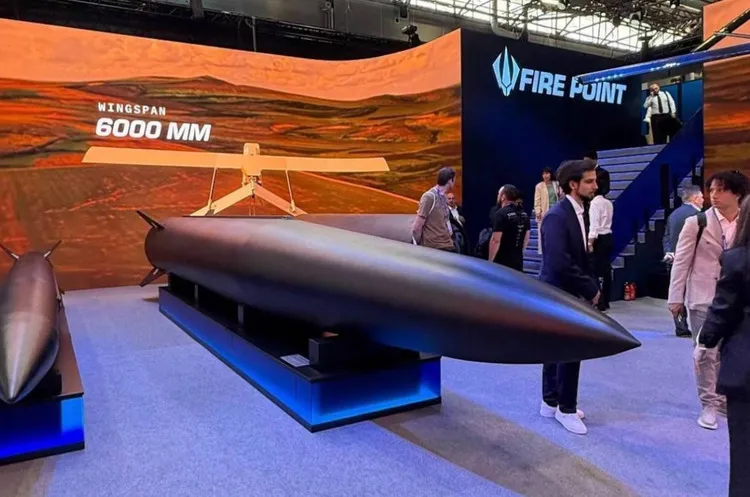
The Ukrainian missile and drone manufacturer Fire Point, which developed the Flamingo cruise missile, has been designated as the project’s lead industrial partner. Last month, the company signed an agreement with the German defence electronics manufacturer Hensoldt to supply radars for Freyja.
One of Freyja’s key features will be its open architecture, which will allow different countries to integrate their own components.
According to Aloyan, countries will be able to choose their own equipment.
“If Denmark wants to use the Weibel radar, that will be possible. If Sweden chooses the Saab system – that’s also no problem,” he explained.
This approach is intended to make the system flexible, speed up its production and reduce dependence on a single supplier.
At present, the only system in Ukraine’s arsenal that has proven its ability to consistently intercept Russian ballistic missiles remains the American Patriot system. However, supplies of these are limited due to high demand, a lengthy production cycle and political factors.
In July, Russia significantly stepped up its ballistic missile strikes on Kyiv and Odesa. Due to a shortage of interceptor missiles, Ukrainian air defence forces were unable to destroy a significant proportion of these targets. This is precisely why the development of the European Freyja system is regarded as one of the key long-term projects for strengthening the missile defence of Ukraine and its European allies.
According to David Aloyan, the creation of a separate international fund to finance Freyja is also currently under consideration. He emphasised that the involvement of private defence companies alongside governments should speed up the project’s implementation and cut through bureaucratic procedures.
“This coalition must be practical, not political,” the official stressed.
It should be recalled that Poland previously proposed that the US and Ukraine jointly produce missiles for Patriot systems in a secure location. No final agreement has yet been reached – Warsaw has merely presented the initiative to Washington.
Follow us on Telegram